
Oktoberfest Beer Tents Guide: Which Tent Is Right for You
Oktoberfest has fourteen big tents and a couple of dozen small ones, and they are not interchangeable — each has its own brewery, band, food and crowd. This is a decision guide: how the tents differ in mood and who they suit, the gentler small tents, the nostalgic Oide Wiesn, the outdoor gardens, and how to pick the right one and get a seat.

Photo: Manoa Angelo / Unsplash

- ✓There are fourteen large tents and around twenty smaller ones — each run by a Munich brewery or host family, with its own band, food specialities and crowd.
- ✓Tents are not interchangeable: some are rowdy, young and famous; others are calmer, older and local — choosing by mood is half the art of a good Wiesn.
- ✓The smaller tents and the outdoor beer gardens are far easier to get into than the headline halls, and the nostalgic Oide Wiesn is the calmest corner of all.
- ✓Read up before you go, pick a couple of tents by atmosphere, arrive early for unreserved seats, and have a backup if your first choice has closed its doors.
How the tents work — and why the choice matters
The 'tents' of Oktoberfest aren't camping marquees — they're vast temporary halls, some seating many thousands inside plus large outdoor gardens, built fresh each year along the festival's main avenues and run by Munich's breweries and famous host families. There are fourteen big tents and roughly twenty smaller ones, and the single most useful thing to know is that they each have a distinct personality. The brewery, the band, the food, the décor and — above all — the crowd vary enormously from one to the next. Walk into the wrong one for your mood and you might find it too rowdy, too touristy or too sedate; walk into the right one and the day makes itself.
So this is a decision guide rather than an encyclopaedia. The exact roster, hosts, capacities and which band plays where can change year to year, so we describe the tents by their established character — the kind of crowd and atmosphere each is known for — rather than quoting figures that date. Use it to shortlist a couple of tents that match what you're after, then check the current year's official tent list for the specifics before you go. Note too that each tent runs its own reservations, and the famous ones are the hardest to get into without one.
The big tents: a character guide
Here's how the major tents are generally known. Reputations are broad strokes — every tent shifts in mood across a day, calmer at lunchtime and wilder by night — but they're a reliable guide to what you're walking into. Treat hosts and details as subject to change and verify the current line-up.
- Hofbräu-Festzelt — the international favourite, famously full of English-speaking visitors and a younger, party crowd; the liveliest, most boisterous of the big tents, with a standing area by the band.
- Schottenhamel — the historic tent where the mayor taps the first keg to open the festival; traditionally popular with younger Munich locals and students.
- Hacker-Festzelt — the 'Himmel der Bayern' (Heaven of the Bavarians), known for its sky-painted ceiling, party atmosphere and a band that leans into rock and pop; a big, fun crowd-pleaser.
- Schützen-Festzelt — a smaller, well-regarded big tent under the Bavaria statue, with a strong food reputation and a slightly more grown-up feel.
- Augustiner-Festhalle — beloved by locals and families for its traditional atmosphere and Augustiner beer still served from wooden barrels (Hirsch); often cited as the most authentically Bavarian of the big tents.
- Käfer Wiesn-Schänke — a smaller, chic, celebrity-favoured tent known for excellent food and late closing; harder to get into and pricier in feel.
- Marstall — one of the more recent tents, with an equestrian theme and a polished, music-forward atmosphere.
- Ochsenbraterei (Spatenbräu) — the 'ox-roast' tent, famous for its spit-roasted ox; traditional and food-focused.
- Fischer-Vroni — the fish tent, smaller and cosy, known for Steckerlfisch (grilled fish on a stick) and a relaxed, characterful mood.
- Löwenbräu-Festzelt, Pschorr-Bräurosl, Winzerer Fähndl (Paulaner), Armbrustschützenzelt and Kufflers Weinzelt (a wine and sparkling-wine tent) round out the big tents, each with its own brewery and following.
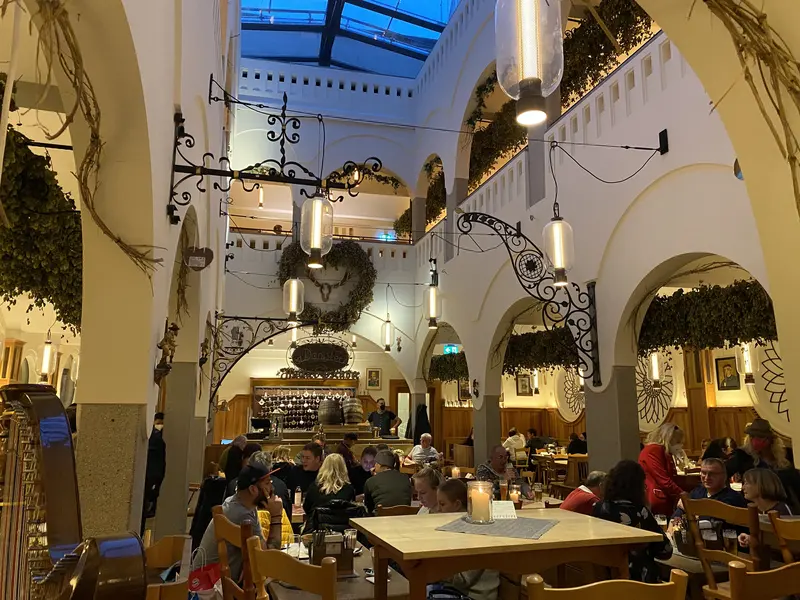
The small tents: easier, calmer, often lovely
Beyond the fourteen giants, around twenty smaller tents line the festival, and they are an underrated secret. They tend to be cosier, more characterful and considerably easier to walk into than the headline halls, which makes them a brilliant fallback when the big tents have closed their doors — and a fine destination in their own right. Many specialise in a particular food or treat: there are tents for roast duck and chicken, for Bavarian cheese (Käse), for Kaiserschmarrn and sweet dumplings, for coffee and cake, for wine and Sekt, and for Münchner Knödelei dumplings.
If your idea of a good Oktoberfest is a relaxed bite and a beer without a wall of noise, the small tents are where to head. They're also a gentler option for families, older visitors, and anyone who finds the scale of the big halls overwhelming. On a busy weekend when the famous tents are turning people away, knowing the small tents exist — and being willing to use them — is the difference between getting a seat and going home thirsty.


The Oide Wiesn: the nostalgic, family-friendly corner
Set slightly apart at the southern end of the grounds is the Oide Wiesn — literally the 'old Wiesn' — a separate, ticketed section that recreates the festival as it once was. Here the rides are vintage and gentle, the music is traditional Bavarian rather than pop, the beer is poured in a calmer historic-style tent (the Tradition tent), and the whole mood is nostalgic and unhurried. It charges a small admission (unlike the free main grounds), which keeps the crowds down and the atmosphere relaxed.
The Oide Wiesn is the obvious choice for families with children, for anyone who finds the big tents too intense, and for travellers curious about the festival's roots. A historic carousel, old-fashioned attractions, folk dancing and a museum-tent of festival history make it a charming half-day. Note that it isn't held every single year — in some years the space is given over to the larger Central Agricultural Festival (the Bavarian agricultural fair, which shares the grounds periodically) — so check whether the Oide Wiesn is running in the year you visit.


The outdoor gardens, and a note on Tracht
Don't overlook the outdoor beer gardens (Biergärten) attached to most of the big tents. On a fine day these open-air terraces are a joy — chestnut-shaded benches, the buzz of the funfair around you, and crucially far easier to get a seat at than the indoor halls, since much of the garden seating is unreserved walk-in. For a sunny afternoon session with no reservation, the gardens are often the smartest move of all: real Wiesn atmosphere, real Festbier, and a fighting chance of a free bench.
Whichever tent or garden you choose, you'll see Tracht everywhere — the Dirndl and Lederhosen worn by locals and visitors alike. It's worn with genuine pride, not as a costume, and while it's never required, it's a lovely way to feel part of the day. You don't dress differently for different tents; the same traditional dress fits the rowdiest hall and the quietest garden alike.


What a session inside a tent is actually like
Knowing the rhythm of a tent helps you choose one and time your visit. Tents open in the morning and run through to late evening in two broad phases. Earlier in the day they're calmer and family-friendly: room to sit, easier service, the band playing traditional Bavarian music, and a genuinely relaxed atmosphere where you can actually hear your table. As the afternoon wears on, the energy builds — the band shifts from oompah to crowd-pleasing singalong pop, the benches fill, the 'Ein Prosit' toasting song rings out every few minutes, and by evening the famous tents are a wall of sound with everyone standing on the benches to toast and sing. The same tent can feel like two different places at noon and at nine.
That arc shapes the choice. If you want the legendary party — flags, songs, a sea of raised Maß — aim for a lively tent (Hofbräu, Hacker) in the evening, and accept that you'll need a reservation or a very early arrival to hold a bench. If you'd rather talk, eat well and soak up the tradition, go to a calmer tent at lunchtime. Inside any tent, the drill is the same: beer is served only to seated guests by the Maß, food is ordered from the same servers, you tip by rounding up, and you stand on the bench (never the table) to toast. Pace the litre glasses, eat as you go, and pick the phase of the day that matches the experience you came for.
- Mornings & early afternoon: calmer, family-friendly, traditional music, easier seats — the relaxed face of a tent.
- Late afternoon onward: the band turns to singalong pop, benches fill, and the famous tents become a full-throated party.
- Service is seated-only, by the litre Maß; order food from the same servers and tip by rounding up.
- Stand on the benches to toast and sing — never on the tables, which gets you ejected.

How to pick a tent — and get a seat
Put it together into a plan. First, decide your mood: a big, loud, international party (Hofbräu, Hacker), a traditional local hall (Augustiner, Schottenhamel), a food-led tent (Ochsenbraterei for ox, Fischer-Vroni for fish), a polished or chic room (Käfer, Marstall), or something calm and characterful (a small tent, the Oide Wiesn, an outdoor garden). Shortlist two or three so you have a backup, because your first choice may well be full.
Then, get the timing right. If you want a guaranteed seat in a famous tent at peak time, you need a reservation, booked months ahead direct with that tent. If you're going without one — as most people do — arrive early, ideally on a weekday, and start with a smaller tent or an outdoor garden rather than the headline halls. Avoid the busiest stretches (Friday and Saturday nights, the first and last weekends), and if a tent has closed its doors when you arrive, don't queue indefinitely — move to your backup. The visitors who have the best Oktoberfest are almost always the ones who chose their tent deliberately and arrived before the crush.

Frequently asked questions
Common questions about the Oktoberfest tents. Verify the current year's tent roster, hosts and the Oide Wiesn's status before you go.
- How many tents are there? Fourteen large tents and around twenty smaller ones, plus the separate Oide Wiesn in years it runs.
- Which tent is best for first-timers? It depends on your mood — Hofbräu for an international party, Augustiner or Schottenhamel for tradition, a small tent or outdoor garden for a calmer, easier-to-enter session.
- Which is easiest to get into without a reservation? The smaller tents and the outdoor beer gardens, especially on a weekday — far easier than the famous big halls.
- Are the tents free to enter? Yes — entry to the main grounds and tents is free; only the Oide Wiesn charges a small admission. You pay for what you eat and drink.
- Which tent has the best food? Several are food-led — the Ochsenbraterei for roast ox, Fischer-Vroni for grilled fish, Käfer and Schützen for refined dishes — but every tent serves the classics.
- Can I tent-hop in a day? You can walk between tents, but a seat in each is the limiter — it's usually better to settle into one good tent than chase several.
At a glance
A quick map of the tents. Reputations are evergreen; confirm the current year's hosts, roster and the Oide Wiesn's status before you visit.
- Big & loud / international: Hofbräu-Festzelt, Hacker-Festzelt.
- Traditional & local: Augustiner-Festhalle, Schottenhamel (the opening tent).
- Food-led: Ochsenbraterei (ox), Fischer-Vroni (fish), Schützen, Käfer (refined).
- Calmer & easier: the smaller tents, the outdoor beer gardens, and the wine tent (Kufflers Weinzelt).
- Family & nostalgic: the Oide Wiesn — gentle vintage rides, traditional music, small admission.
- Strategy: shortlist two or three by mood, arrive early on a weekday, reserve for a guaranteed peak-time seat, and keep a backup.

Oktoberfest Munich: The Complete First-Timer's Guide to the Wiesn
Everything you need for Oktoberfest — when it runs and where, how the fourteen big tents work, whether you need a reservation, what it costs, what to eat and drink, how to get there and where to stay, the etiquette and the traditions, plus a sane first-timer plan. The world's biggest folk festival, explained without the hype.
Read guide
Oktoberfest Tickets & Reservations: What's Free, What to Book
There's no ticket to get into Oktoberfest — but a seat is another matter. Here's exactly how it works: what's free, what a tent reservation actually is, how the minimum-spend vouchers work, how and when to book direct, the no-reservation strategy that lets most people in for nothing, and the reseller traps to avoid.
Read guide
Munich Breweries Guide
The six historic Munich breweries that pour the city's beer and tap at Oktoberfest, the local styles to know, and where to taste each one outside the Wiesn.
Read guide