
 Food & Drink
Food & Drink in Munich
The hub for eating and drinking in Munich — the Bavarian classics to try, the six breweries and the beer-hall-versus-beer-garden distinction, the Viktualienmarkt and the markets, the café and cocktail scenes, and the etiquette that makes a Munich table work.

Photo: Patrick von der Wehd / Unsplash
- ✓Bavaria's beer-garden tradition lets you bring your own food to many traditional gardens and buy only the beer — a radi, a Brezn and a cloth on a communal bench is the local move.
- ✓Six breweries pour Munich's beer: Augustiner, Paulaner, Hacker-Pschorr, Hofbräu, Löwenbräu and Spaten — and Augustiner is the local favourite.
- ✓Weißwurst is a morning ritual, traditionally eaten before noon, peeled not cut, with sweet mustard and a pretzel.
- ✓The Viktualienmarkt by Marienplatz is the city's food heart — a permanent market with its own small beer garden — and the gateway to a deeper market and café scene.
- ✓Hours, prices and which kitchen is open when vary by venue and season; phrasing here is kept evergreen, but verify the specifics on the day.
Say it like a local
Tap to hear each one spoken.
How Munich eats and drinks
Munich's food culture runs on a simple, generous logic: hearty, seasonal, beer-friendly food eaten in good company, ideally outdoors when the weather allows. This is the home of the beer garden and the beer hall, of the litre Maß and the warm pretzel, of roast pork and dumplings and a whole grammar of sausages — and it does all of it with an unhurried, communal warmth that's central to the city's charm. You don't really understand Munich until you've spent a long afternoon under a chestnut tree with a beer you didn't have to queue twice for and a table full of strangers who become, for an hour, your friends.
But it would be a mistake to file Munich under 'beer and sausages' and leave it there. This is a wealthy, cosmopolitan city with a serious restaurant scene, an excellent and growing coffee culture, a confident cocktail bar world, and more vegetarian and vegan options than its meaty reputation suggests. The pleasure of eating here is in the range: a Weißwurst breakfast and a flat white, a market lunch and a tasting menu, a beer-hall dinner and a midnight cocktail, often all within a square mile of the old town.
This hub is the map to all of it. Below you'll find the threads to pull — what to actually order, the beer-hall-versus-beer-garden distinction, the breweries, the markets, the cafés and the bars — each leading to a fuller guide. A couple of evergreen rules underpin the whole thing: opening hours and which kitchen is serving when vary a lot by venue and season, and many traditional places are cash-friendly and reservation-light, so check ahead for anything you're counting on.


The Bavarian classics to try
Start with the dishes that define the city. Weißwurst — pale veal-and-pork sausages, gently simmered, peeled rather than cut, dipped in sweet Bavarian mustard and eaten with a pretzel — is a morning institution, traditionally enjoyed before noon (the old saying is that the sausages 'shouldn't hear the midday bells'). It's a ritual as much as a meal, and doing it properly, mid-morning with a Weißbier, is one of the most enjoyable local things you can do.
For the heartier canon: Schweinsbraten (roast pork) with a dark beer gravy, knödel (bread or potato dumplings) and tangy sauerkraut; Schweinshaxe, the crackling-skinned roasted pork knuckle that's a beer-hall showpiece; Obatzda, a creamy, paprika-spiked cheese spread eaten with bread and radishes in beer gardens; and Leberkäse, a baked meatloaf often served as a Semmel (roll) snack. Pretzels (Brezn) are everywhere and excellent, and the long, paper-thin spiral of salted radish (Radi) is the classic beer-garden nibble. Save room for something sweet: Apfelstrudel, or a Bavarian Dampfnudel.
A note on portions and pacing: Bavarian cooking is generous and rich, built to line the stomach for an afternoon of beer rather than to be elegant, so order fewer dishes than you think you need and share. It's also more seasonal than its stodgy reputation suggests — white asparagus (Spargel) in late spring, chanterelles (Pfifferlinge) in summer, game and pumpkin in autumn, and the carb-heavy comfort food that comes into its own in the cold months. Eating with the season is the easiest way to eat well here, and the markets and chalkboards will tell you what's good right now.
None of this needs a fancy restaurant — much of the best traditional food is found in beer halls, beer gardens, market stalls and unpretentious Wirtshäuser (taverns). Our dedicated guides go deeper on what to order and where, including the full Weißwurst-breakfast etiquette, which is more particular than newcomers expect.


Beer halls, beer gardens and the six breweries
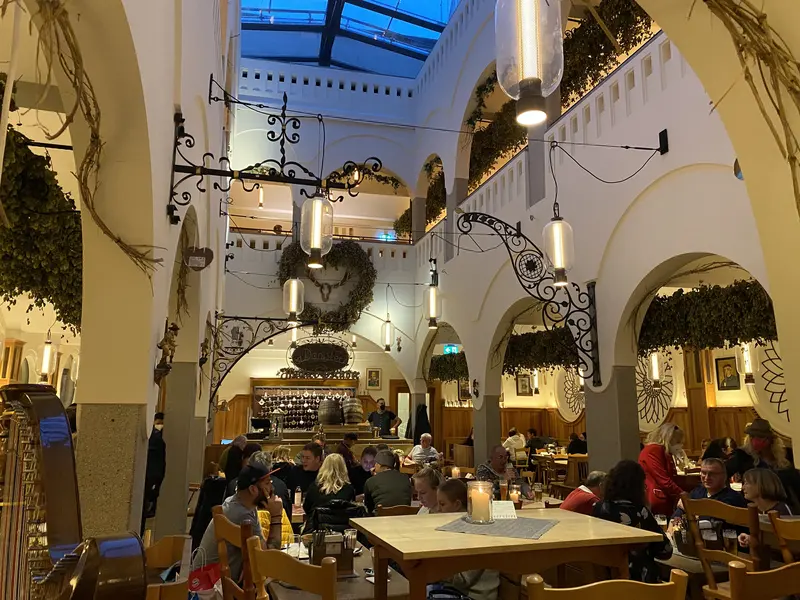
The first thing to grasp is the difference between a beer hall and a beer garden, because travellers often conflate them. A beer hall (Bierhalle) is the big, boisterous indoor (or partly indoor) institution — the Hofbräuhaus is the famous one — with full table service, brass-band Gemütlichkeit, and a kitchen turning out the classics. A beer garden (Biergarten) is the outdoor, warm-weather counterpart: long communal benches under chestnut trees, self-service for both food and beer, and, crucially, the traditional right to bring your own food to the unserved benches and buy only your beer. Those chestnut trees, by the way, were planted to shade the beer cellars beneath before refrigeration existed — which is why Munich's gardens are shaded by them to this day.
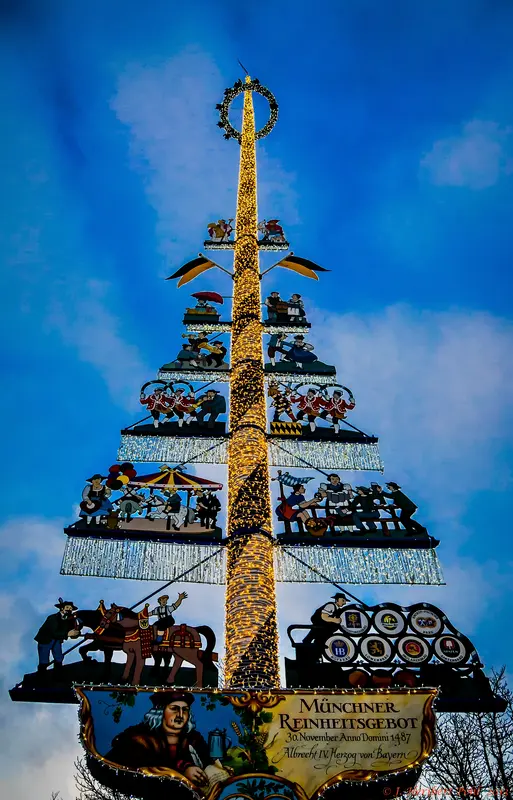
The beer itself comes from six breweries, all entitled to pour at Oktoberfest: Augustiner, Paulaner, Hacker-Pschorr, Hofbräu, Löwenbräu and Spaten. Augustiner — Munich's oldest, still family-run and famously still served from wooden barrels in places — is the local favourite, and a seat under the century-old chestnuts at the Augustiner-Keller is one of the city's great cheap pleasures. The styles to know are Helles (the pale, easy-drinking everyday lager), Weißbier/Weizen (cloudy wheat beer, classic with Weißwurst), Dunkel (dark), and the seasonal heavy hitters: Märzen at Oktoberfest and the potent Starkbier ('strong beer') of the Lenten Starkbierfest.
For a first-timer, the Hofbräuhaus is the spectacle and worth seeing once; the Augustiner-Keller and the English Garden's Chinese Tower garden are where you'll likely have the better time. Order by the Maß (a litre) or a Halbe (a half), expect a deposit (Pfand) on the glass at self-service gardens, and remember the bring-your-own-food rule applies to the traditional self-service benches, not the table-service sections.


Beer-garden etiquette, and the one thing not to get wrong
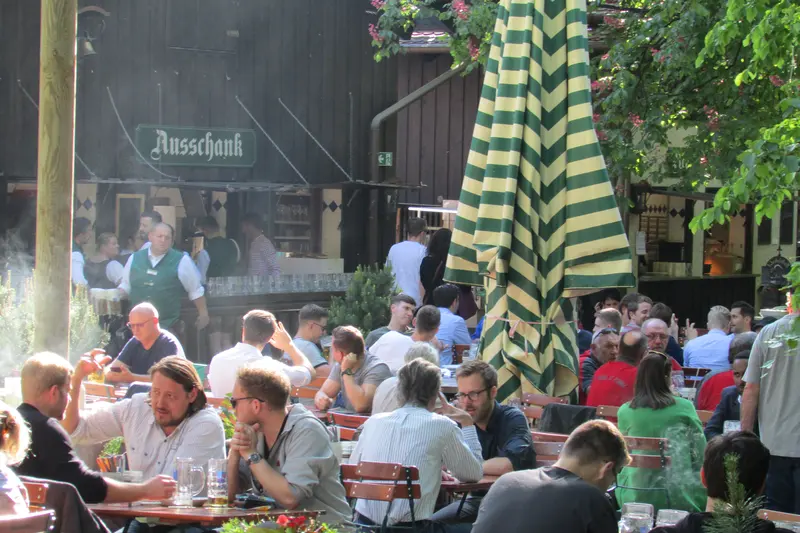
The beer garden runs on a handful of unwritten rules that, once you know them, make the whole experience effortless — and that, ignored, mark you instantly as a tourist. The big one is the bring-your-own-food tradition: at the plain, unclothed communal benches you may spread out your own picnic — a radi, some Obatzda, bread, cold cuts — and buy only the beer. (The tables with cloths and cutlery are the served section, where you order food too; don't unpack a picnic there.) You'll see locals arrive with a cloth, a board and a paring knife for the radish, and settle in for the afternoon.
The rest is common sense with a Bavarian accent. Communal seating means you share long benches with strangers and ask before taking a free spot ('Ist hier noch frei?'). There's usually a deposit on your beer glass that you reclaim when you return it. Keep an eye out for the Stammtisch — a reserved regulars' table, marked with a sign, that's off-limits. And tipping is light and done by rounding up as you pay, often directly to the person serving, not left on the table afterwards.
Our etiquette guide covers all of this and more, including the seasonal rhythm — gardens are a fair-weather pleasure, generally open from spring through autumn and at the mercy of the day's weather — so it's worth a read before your first afternoon under the chestnuts.


Markets, the Viktualienmarkt and where to graze
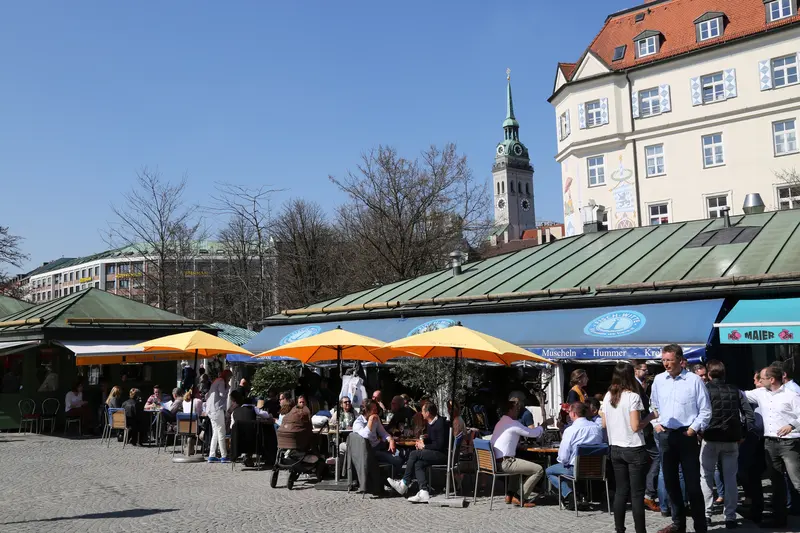
The beating heart of Munich's everyday food life is the Viktualienmarkt, the permanent open-air market a minute's walk from Marienplatz. It has grown from a farmers' market into a beloved institution of food stalls, butchers, bakers, cheese sellers, fish counters, spice and flower stalls — and its own small beer garden in the middle, which rotates its beer among the city's breweries. It's the ideal place to assemble a cheap, excellent lunch: a sausage from a stall, a wedge of cheese, fruit, a pretzel, eaten at a market bench. Go in the morning for the freshest produce and the calmest atmosphere.
Beyond the headline market, the city has a wider market culture worth seeking out — neighbourhood markets and the great travelling fair, the Auer Dult, that pitches up three times a year in the Au with a mix of antiques, household goods and food. For snacks, gifts and picnic supplies, the markets are both cheaper and far more atmospheric than any supermarket, and a useful workaround for Munich's Sunday closures, since most shops shut on Sundays.
These markets also feed the rest of the trip: they're where to buy edible souvenirs (mustards, gingerbread, beer steins and the like) and where to put together the picnic that, under Bavaria's beer-garden rules, you're entitled to carry straight to a communal bench. There's a real satisfaction to the full sequence — buy your radi, bread and Obatzda at the Viktualienmarkt in the morning, then carry the bag to a chestnut-shaded bench in the afternoon and pay only for the beer — that turns a cheap lunch into one of the most enjoyable, and most local, things you can do in the city.

Beyond Bavarian: restaurants, coffee and cocktails
Munich's traditional food is the headline, but it's far from the whole story. The restaurant scene is broad and confident — from neighbourhood Wirtshäuser and excellent international cooking to a serious fine-dining tier with a clutch of celebrated, ambitious kitchens. The more characterful, less touristy eating tends to be a short walk out of the immediate Marienplatz blocks, in districts like the Glockenbachviertel, Isarvorstadt, Haidhausen and Maxvorstadt, where locals actually eat. For anything notable, especially at the top end, book ahead.
The coffee scene deserves special mention because it surprises people: Munich has a strong and growing third-wave café culture, much of it concentrated in the student-and-museum quarter of Maxvorstadt and in Schwabing, where the espresso is taken as seriously as the wine. It's the natural counterweight to a beer-heavy trip — a slow morning over a good flat white and a pastry before the day begins. The bar scene is just as developed: the Glockenbachviertel is the engine room of Munich nightlife, with a confident spread of cocktail bars and wine bars for after dinner.
The point of this hub is that you can eat across all of it in a single Munich day: a Weißwurst breakfast, a third-wave coffee, a market lunch, a beer-garden afternoon, a neighbourhood dinner and a late cocktail, each just a short walk or tram ride apart. Use the guides below to assemble your own version.


Eating well by neighbourhood
Where you eat in Munich matters as much as what, because the food changes character noticeably from quarter to quarter — and the best meals are usually a short walk out of the immediate Marienplatz tourist blocks. The Altstadt is where the big-name beer halls and the classic central institutions sit; it's essential for the spectacle and the markets, but the everyday eating gets better, cheaper and more local the moment you cross the ring. Use the centre for the Viktualienmarkt, a beer hall and a sight-side lunch, then head out for dinner.
For the liveliest contemporary eating and drinking, the Glockenbachviertel and Isarvorstadt are the engine room — independent restaurants, the city's densest run of bars, and the heart of its nightlife, with the Gärtnerplatz at the centre of it all. Maxvorstadt, the museum-and-university quarter, is the place for third-wave coffee, casual student-priced eats and a calmer, cultured café life. Haidhausen, across the Isar, has a village-like, residential charm and excellent unpretentious neighbourhood restaurants. And out west, Westend has quietly become one of the city's more interesting food districts, multicultural and well-priced. Each has its own fuller guide, but the principle is constant: the further you stray from the headline square, the better and cheaper you tend to eat.
This is also how to think about romance and special occasions. The candlelit, intimate side of Munich dining lives mostly in those outer-central quarters — small Glockenbach wine bars, a quiet Haidhausen table — rather than the bustling old-town halls, which is worth knowing if you're planning a dinner for two rather than a boisterous group night.


Food tours, festivals and the seasonal calendar
If you'd rather have it all explained as you eat, a guided food or beer tour is a good first-day move — someone to walk you through the market, the beer styles and the etiquette while you taste your way around. It's especially useful for demystifying the beer-hall-versus-garden distinction and the brewery landscape in one efficient afternoon.
Munich's eating and drinking is also deeply seasonal, organised around a calendar of festivals. Oktoberfest (roughly the third Saturday of September into early October) is the giant, when the six breweries pour Märzen in vast tents on the Theresienwiese. But locals are just as fond of the spring Starkbierfest, the 'strong-beer' season when the breweries tap their potent Lenten doppelbocks, and the smaller Frühlingsfest. The Christmas markets bring Glühwein, roasted chestnuts and Lebkuchen to the squares from late November. Beer gardens, by contrast, are a fair-weather pleasure of the warmer half of the year.
Whenever you come, treat the specifics as things to verify on the day: kitchen hours, which beer a given garden is currently pouring, whether a place takes cards or reservations, and exact festival dates all shift, so check the official sources and the venue before you build a plan around them.


Frequently asked questions about eating and drinking in Munich
What food is Munich famous for? The Bavarian classics: Weißwurst, the pale veal-and-pork sausage eaten before noon with sweet mustard and a pretzel; Schweinsbraten, roast pork with dark gravy and a bread dumpling; crisp-skinned Schweinshaxe (pork knuckle); Leberkäse; Obatzda, a spiced soft-cheese spread eaten with radishes and bread in the beer gardens; and the giant soft Brezn. The drink, of course, is beer — served by the litre Maß and brewed by the six big Munich houses. None of this should cost much: the everyday version is hearty, cheap and everywhere.
What is the difference between a beer hall and a beer garden? A beer hall (Bräuhaus or Keller) is indoors, with table service, brass bands and a boisterous, year-round atmosphere — the Hofbräuhaus is the famous one. A beer garden is outdoors under chestnut trees, largely self-service, and a fair-weather pleasure of spring through autumn. The crucial beer-garden rule is that at the plain, unclothed benches you may bring your own food and buy only the beer; the tables with cloths and cutlery are the served section where you order food too.
Can you eat well in Munich as a vegetarian or vegan? Increasingly, yes. Traditional Bavarian cooking is meat-heavy, but most modern restaurants and many beer gardens now offer good vegetarian options, and the Glockenbachviertel, Maxvorstadt and the Viktualienmarkt are strong for plant-based eating. Obatzda, Kaspressknödel (cheese dumplings), Brezn and Käsespätzle are reliable meat-free traditional choices, and the third-wave café scene is well stocked for vegans.
When is the best time of day or year to eat in Munich? Eat Weißwurst before noon (tradition holds it should be eaten before the midday bells), take a market lunch at the Viktualienmarkt, aim a beer garden at the late afternoon in warm weather, and book dinner for around 19:00 to 19:30, as Munich eats earlier than southern Europe. By season, the warmer half of the year is for beer gardens and the Isar; spring brings the Starkbierfest strong-beer season; late September into October is Oktoberfest; and late November to December the Christmas markets bring Glühwein and roasted chestnuts.
Do Munich restaurants take cards, and should I reserve? Card acceptance has improved but is not universal — some traditional Wirtshäuser and market stalls still prefer cash, so carry some. For notable restaurants, and anything at the fine-dining end, reserve ahead, especially at weekends and during Oktoberfest and the major trade fairs. Beer gardens and large halls rarely need a booking for a casual meal. Confirm current kitchen hours, card policy and festival dates with the venue, as these change.
- Bavarian staples: Weißwurst (before noon), Schweinsbraten, Schweinshaxe, Obatzda, Brezn — and a litre Maß.
- Beer halls are indoor and served; beer gardens are outdoor, self-service and bring-your-own-food.
- Vegetarian and vegan eating is now easy in the modern quarters and at the Viktualienmarkt.
- Carry cash, book notable restaurants ahead, and verify kitchen hours and festival dates before relying on them.

At a glance
What it is: the hub linking every Munich food-and-drink guide, from beer gardens to fine dining.
Must-try: Weißwurst (before noon), Schweinsbraten with dumplings, a Brezn, Obatzda, and a litre Maß.
Know the difference: beer halls are indoor, table-service and boisterous; beer gardens are outdoor, self-service and bring-your-own-food.
The breweries: Augustiner (the local favourite), Paulaner, Hacker-Pschorr, Hofbräu, Löwenbräu and Spaten.
Food heart: the Viktualienmarkt by Marienplatz, for grazing, picnics and gifts.
Don't forget: Munich also does serious coffee, cocktails, international and fine dining — eat across all of it.
- At traditional beer gardens you can bring your own food to the unserved benches and buy only the beer.
- Eat Weißwurst before noon, peeled not cut, with sweet mustard and a pretzel.
- Most shops close on Sundays — use the markets for picnic supplies and snacks.
- Kitchen hours, card acceptance and festival dates vary — verify the specifics before you rely on them.