
Munich Residenz Treasury
How to add the Schatzkammer to your Residenz visit without museum fatigue — what's inside, how long it takes, and the combination-ticket logic that makes it worth it.
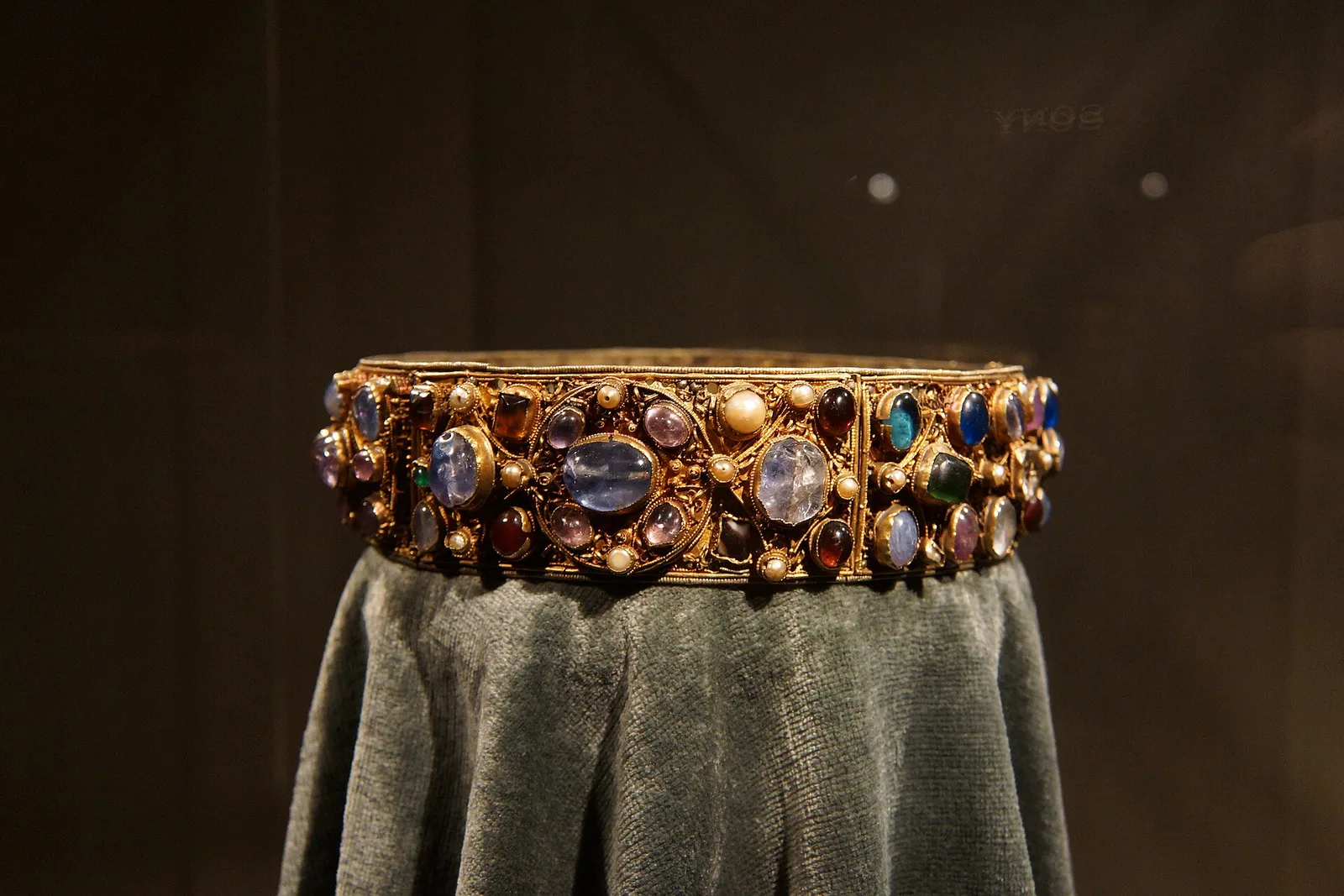
Photo: DALIBRI / Wikimedia Commons · CC BY-SA 3.0

- ✓The Schatzkammer holds a thousand years of Wittelsbach treasure across ten darkened rooms — crowns, reliquaries, goldsmith's work and royal regalia.
- ✓Its single most famous object is the small enamelled-and-jewelled statuette of St George on horseback, made around 1600 — one of the great pieces of European goldsmithing.
- ✓It's compact: most visitors see it well in 45 minutes to an hour, which makes it the easiest add-on to a Residence Museum morning.
- ✓It sits inside the Residenz complex and shares its entrance — a separate ticket, but covered by the combination ticket.
What the Treasury actually is
The Schatzkammer der Residenz — the Treasury — is the strongroom of a dynasty. Where the Residence Museum next door shows you how the Wittelsbachs lived, the Treasury shows you what they treasured: the small, portable, almost unimaginably valuable objects a ruling house accumulates over centuries of marriage, conquest, piety and showing off. It runs to roughly ten rooms, deliberately kept dim so the gold and enamel do the glowing.
The collection spans about a thousand years, from early-medieval crowns and crosses through Renaissance jewels to Baroque tableware and exotic curiosities mounted in gold. It is one of the most important treasuries in Europe, and because everything is small and intensely worked, it rewards slow looking far more than a big state room does — you lean in to a case the size of a shoebox and find a whole landscape rendered in enamel.
The collection grew the way royal hoards do: by inheritance, marriage, war and deliberate acquisition. Duke Albrecht V, the same 16th-century ruler who built the Antiquarium upstairs, was the great founding collector, and he stipulated that the most precious pieces should never be sold or dispersed — a rule that, remarkably, mostly held. Later rulers added regalia, diplomatic gifts and the goldsmith's work of their own age, so the rooms read almost chronologically, walking you forward through the centuries one glowing case at a time.

What to look for
You don't need to know the catalogue, but a handful of pieces are worth seeking out so the visit has shape. Move through the early rooms at a steady pace and let yourself stop properly at these:
- The St George statuette (c. 1586–1600) — a jewelled, enamelled equestrian figure slaying the dragon, gold and rock crystal and hundreds of stones. The signature object of the whole collection.
- The crown and insignia of the Bavarian kings — the early-19th-century regalia made when Bavaria became a kingdom.
- Early-medieval crowns and crosses — including pieces associated with imperial and royal women, among the oldest objects here.
- Reliquaries and devotional gold — the line where faith and craftsmanship meet, often the most intricate work in the rooms.
- Renaissance and Baroque vessels — agate bowls, rock-crystal cups and exotica mounted in gilt, the curiosities of a princely Kunstkammer.
- Insignia of the Order of St George and other devotional regalia — the ceremonial objects of a Catholic ruling house, where statecraft and faith were the same thing.
A little context that makes the rooms come alive
What lifts the Treasury above 'a room full of expensive things' is understanding what these objects were for. Almost none of it was made to be looked at in a glass case. The reliquaries held what the family believed were the physical remains of saints, and were carried in procession; the crowns were worn at coronations that conferred the right to rule; the rock-crystal cups and agate bowls sat in the Kunstkammer, the 'chamber of curiosities' that every Renaissance prince kept to display his wealth, learning and reach across the known world.
Hold that in mind as you go and the rooms stop being a jewellery shop and become a portrait of how power worked. The St George statuette, for instance, isn't just a virtuoso object — St George was the patron of a chivalric order the Wittelsbachs prized, so the piece is a statement of dynastic identity as much as a flex of the goldsmith's art. The early crowns associated with royal and imperial women tell you how the family married upward into Europe's great houses. The Treasury is a thousand years of soft diplomacy you can hold in one glance.
It's also a record of taste changing across the centuries, which is its own quiet pleasure. The medieval pieces are dense, symbolic and sacred, every surface filled; the Renaissance work turns to classical figures, naturalism and the show-off virtuosity of carving a single block of agate into a goblet; the Baroque and later rooms bring exuberance, exotic materials and the global reach of a collecting court — coconut and ostrich-egg cups mounted in gold, lacquer from Asia, curiosities from the edges of the known world. You can watch a thousand years of European craftsmanship evolve in the time it takes to walk a few rooms, which is something very few small museums can offer.

How to add it without museum fatigue
The Treasury's great virtue is that it's short. The Residence Museum can swallow two hours and leave you saturated; the Schatzkammer is a focused 45-to-60-minute hit of brilliance, which makes the order of your visit matter. Our preference: do the Treasury first, while your eyes are fresh and the small objects can still hold your attention, then move into the larger, looser galleries of the Residence Museum afterward.
If you'd rather do the big rooms first, build in a break — step out to the Hofgarten for ten minutes of daylight before you go back in for the gold. The cardinal mistake is saving the Treasury for the end of a long palace morning, when concentration is gone and a case full of masterpieces reads as just more glitter.
It's an excellent rainy-day or short-on-time choice precisely because it's so concentrated. If you only have an hour near the centre and want something memorable, the Treasury delivers more wonder per minute than almost anything else in Munich.
One more practical kindness to your future self: the Treasury is intense in a particular way — small objects, low light, dense detail — and an hour is about as long as most people can really see before the eye glazes. Don't fight that. Pick your five or six pieces, give them real attention, and let the rest wash past. You'll remember the St George you actually looked at far longer than the twenty cases you photographed and never registered.

The order to see it in, and how it's laid out
The Treasury's roughly ten rooms are arranged broadly by period, so the natural way through is also a journey forward in time. You begin among the oldest and most sacred objects — early-medieval crowns, crosses and book covers, the kind of thing that looks almost Byzantine in its density of gold and stones — and move through the high Middle Ages and the Renaissance into the Baroque and beyond. By the final rooms you've reached the 19th-century royal regalia made when the Wittelsbachs swapped the title of Elector for that of King.
Knowing the rough shape helps you pace yourself. The early rooms are dense and demand attention; give them your fresh eyes. The middle Renaissance rooms hold the showstoppers, the St George foremost among them — slow right down here. By the time you reach the later vessels and curiosities your concentration may be flagging, and that's fine; these are easier to enjoy at a stroll. The whole circuit is compact and there's no shortcut to take, but there's also no obligation to read every label, and the rooms are small enough that you won't lose your way.

Tickets, combos and the practical bits
The Treasury is administered by the Bavarian Palace Administration and carries its own admission, separate from the Residence Museum and the Cuvilliés Theatre. If you intend to see more than one of the three, the combination ticket almost always beats buying them individually — it's the standard move for anyone doing museum-plus-treasury. Prices and opening hours shift by season and the palace keeps the usual handful of annual closures, so confirm the current tariff and times on the official site rather than relying on a number here.
Entry is from the same Residenzstraße entrance as the Residence Museum, and the included audio guide covers the Treasury too. Photography rules can change, so check the signage at the door. The rooms are deliberately low-lit for conservation, which is part of the atmosphere but worth knowing if you have low-light vision concerns, and there's little seating, so it's a stand-and-walk visit rather than a lingering one.
On crowds and timing: the Treasury rarely feels packed, but it's a confined space, so a tour group arriving at once can fill a room. Early in the day or late in the afternoon you'll often have whole rooms to yourself, which is when the low light and the glinting cases are at their most magical. If you're combining it with the Residence Museum, doing the Treasury first also means you beat the late-morning group surge.
Is the Treasury worth it for you?
Not every visitor needs every part of the Residenz, so here's a straight read on who the Treasury suits. If you love decorative arts, goldsmithing, gemstones or medieval and Renaissance history, it's close to unmissable — there are few collections of this quality and density anywhere, and the small scale means you can actually take it in. If you're travelling with someone who lights up at craftsmanship and fine detail, this is the room that will win them over.
If, on the other hand, your tastes run to grand architecture and big painted halls, you may get more from the Residence Museum's state rooms and feel the Treasury is a lot of small, dark cases. And if you're already short on time or energy after the main museum, it's an easy thing to drop without guilt — the Residenz is satisfying without it. The combination ticket means you can decide on the day: buy the combo, do the museum first, and only swing into the Treasury if you're still curious.
For families, the Treasury can actually be a hit with the right framing — turning it into a hunt for the dragon-slaying knight, the biggest crown, the strangest cup. The darkness and the glitter have a fairy-tale quality that holds attention better than a long run of furnished rooms. Keep it short, pick a few star pieces, and leave before anyone tires.

At a glance
Quick orientation — verify anything time-sensitive on the official site before you go.
- What it is: the Wittelsbach treasury — crowns, reliquaries and goldsmith's work across roughly ten darkened rooms.
- Where: inside the Residenz complex, entrance on Residenzstraße in the Altstadt.
- Time needed: 45 minutes to an hour — the easiest Residenz add-on.
- Don't miss: the St George statuette and the Bavarian royal crown.
- Tickets: separate admission, but covered by the Residenz combination ticket — verify prices and hours on the official site.
- Best paired with: the Residence Museum, plus a Hofgarten breather between the two.
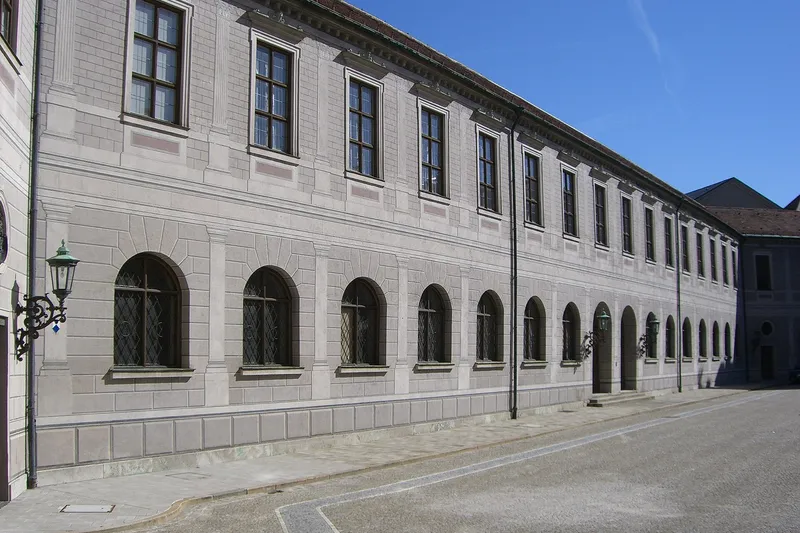
Munich Residenz
A room-by-room planning guide to the Residence Museum, the Treasury, the Cuvilliés Theatre and the Hofgarten — what to see, what to skip, and how to keep museum fatigue at bay.
Read guide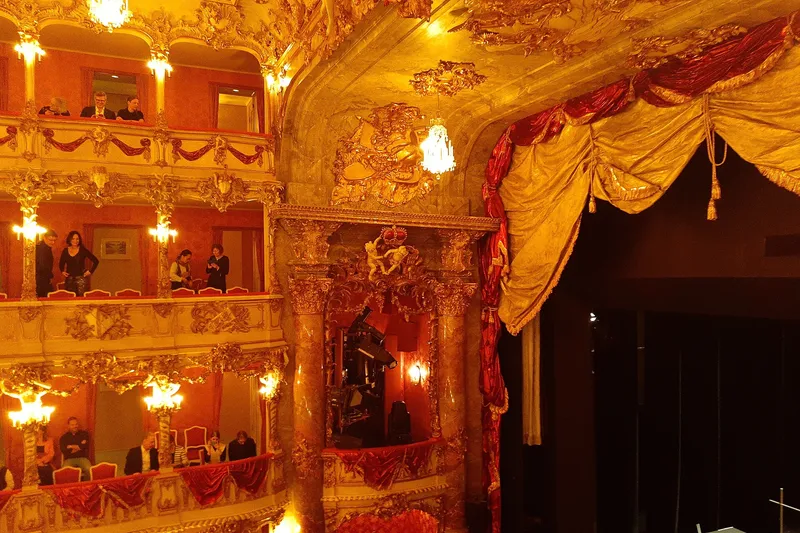
Cuvilliés Theatre
Visit the most beautiful rococo theatre in Germany — tucked inside the Residenz complex, where Mozart premiered Idomeneo in 1781. What to know about tickets, timing and the surprising survival story.
Read guide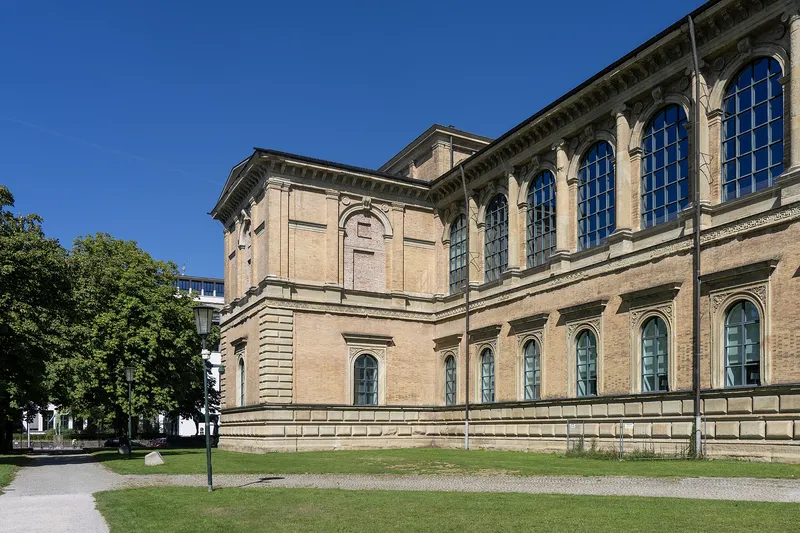
Alte Pinakothek, Munich
How to visit Munich's Old Masters gallery in the Kunstareal — the Dürers and Rubenses worth crossing town for, the Sunday-ticket angle, and how to build a wider museum-quarter day around it.
Read guide