
Alte Pinakothek, Munich
How to visit Munich's Old Masters gallery in the Kunstareal — the Dürers and Rubenses worth crossing town for, the Sunday-ticket angle, and how to build a wider museum-quarter day around it.
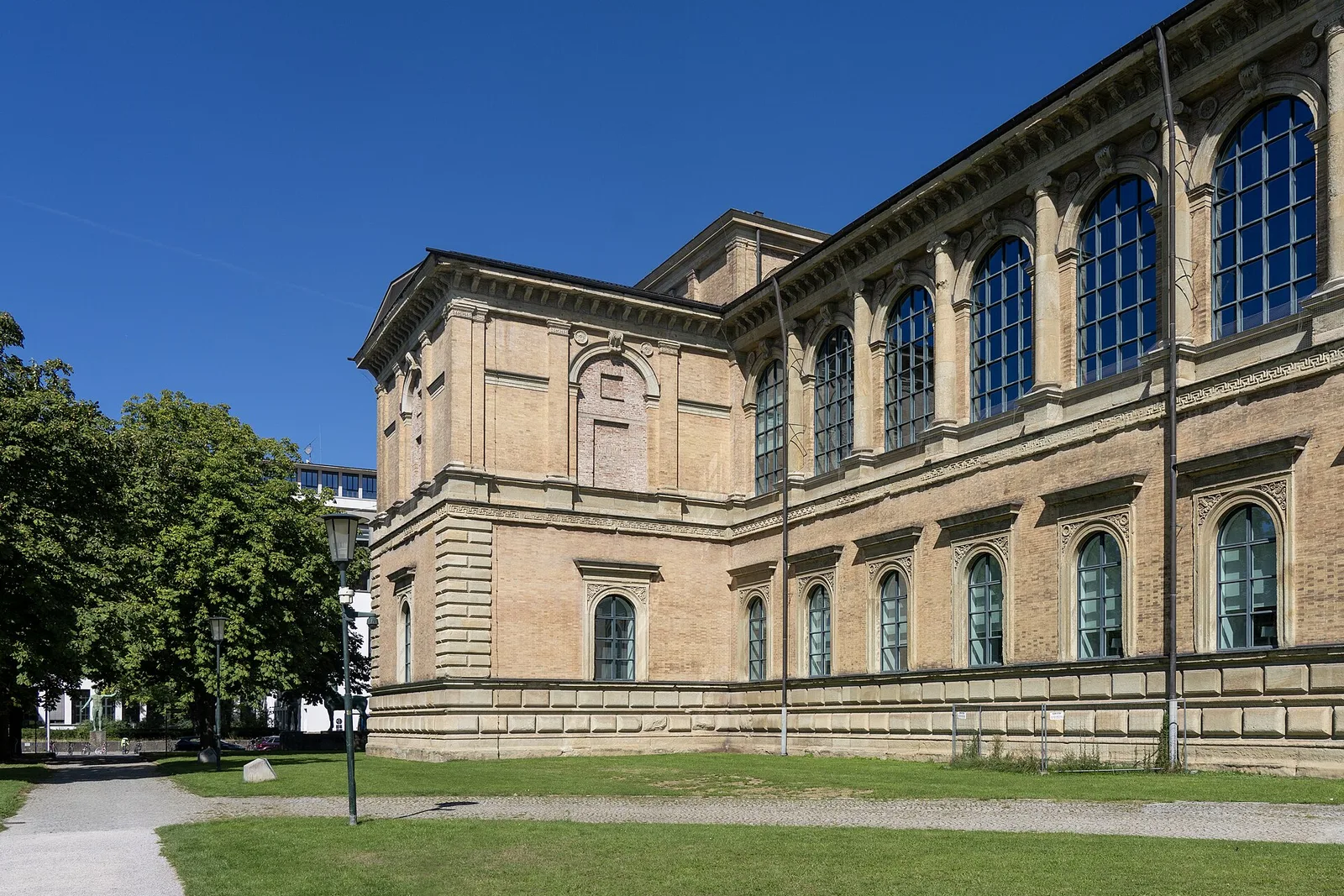
Photo: AuHaidhausen / Wikimedia Commons · CC BY 4.0

- ✓One of the world's great Old Masters collections, built from the Wittelsbach royal holdings — Dürer, Rubens, Rembrandt, Raphael, Titian, Leonardo and more.
- ✓Opened in 1836 to designs by Leo von Klenze, it was among the largest galleries in the world; the patchwork brick across its facade is a deliberate scar from its post-war restoration.
- ✓The Bavarian state museums traditionally offer a reduced Sunday admission — a long-standing perk worth verifying, as the day and price are subject to change.
- ✓It anchors Maxvorstadt's Kunstareal, so it pairs naturally with the Pinakothek der Moderne, the Brandhorst and the Lenbachhaus a few minutes' walk away.
The royal collection, in a palace built for paintings
The Alte Pinakothek — the "old picture gallery" — holds one of the finest collections of European Old Masters anywhere, and it comes by it honestly: the core was assembled over centuries by the Wittelsbachs, Bavaria's ruling house, who bought on a princely scale. When Ludwig I needed somewhere worthy to show it, he commissioned Leo von Klenze, and the building that opened in 1836 was, in its day, one of the largest museum structures in the world — a long, calm Renaissance-revival hall whose upper galleries were designed around the daylight that falls on the pictures.
Look at the facade before you go in. A broad band of plain, mismatched brick runs across the stonework — not neglect but memory. The Alte Pinakothek was badly damaged in the Second World War, and the post-war restoration by Hans Döllgast chose to patch the wound visibly rather than hide it, leaving the building honest about its history. It's a quietly moving detail, and a good frame of mind to carry inside.
What waits within is a roll-call: Albrecht Dürer's monumental self-portrait and his Four Apostles, the largest collection of Peter Paul Rubens in the world, Rembrandt, Raphael, Leonardo, Titian, Botticelli, Brueghel, Murillo and the German, Dutch, Flemish, Italian, Spanish and French schools laid out room after room. It is not a museum to rush.
A building designed around daylight
It's easy to walk through the Alte Pinakothek without registering how carefully the building was made for the act of looking at paintings — but it's part of why the visit feels so unforced. Klenze gave the principal collection a long enfilade of grand upper galleries lit from above through skylights, with smaller cabinet rooms strung alongside for the intimate works. North light, even and shadowless, was understood as the kindest light for oil paint, and the whole plan was bent toward delivering it. The result is a gallery that never feels like a tunnel: you move from a vast, softly lit hall to a small jewel-box room and back, the rhythm doing half the work of holding your attention.
That design was so admired that it became a template — galleries across nineteenth-century Europe borrowed the top-lit-hall-and-cabinet model. Knowing this is a small unlock: on a bright day, time your visit for when the skylights are working hardest, and notice how different the same Rubens looks under real daylight versus the flat wash of artificial light. The building is, in its quiet way, part of the collection.
The war and its aftermath are written into the place too. Bombing gutted much of the structure, and for a time its survival was in doubt. Hans Döllgast's restoration, completed in the 1950s, rebuilt the gallery on a tight post-war budget and made a virtue of honesty: rather than perfectly matching the lost stonework, he filled the gaps with plain salvaged brick, leaving the repair frankly visible. Stand back from the facade and you read the building's whole twentieth century in that band of mismatched brick — a small masterpiece of restraint, and one of the more moving things in the Kunstareal.

What to seek out
The collection is large enough that a focused hour beats an exhausted three. A few works and rooms are worth steering straight to — though paintings move for conservation and loans, so confirm anything specific is on display if you're crossing town for it.
- Dürer's Self-Portrait (1500) — the famous, almost Christ-like front-facing portrait, and one of the most reproduced images in German art; nearby, his Four Apostles.
- The Rubens galleries — the world's greatest concentration of his work, from the vast, swirling Great Last Judgement to intimate portraits of his family.
- Rembrandt and the Dutch Golden Age — a strong run of Rembrandt alongside the genre and still-life painters of the Low Countries.
- The Italian rooms — Raphael, Titian, Botticelli and a small Leonardo (the Madonna of the Carnation), the gallery's quietest crowd-pullers.
- Altdorfer's Battle of Alexander at Issus — a teeming, panoramic Renaissance battle scene that rewards close looking.
- The early German and Flemish masters — Brueghel, Memling and the Cologne school, easy to skip and worth not skipping.
The Sunday-ticket angle and practical visiting
Here's the money-saving local knowledge: the Bavarian State Painting Collections have long offered a reduced Sunday admission across their houses, the Alte Pinakothek included — historically a token sum for general admission. It's a wonderful way to see a world-class gallery for the price of a coffee, but the arrangement, the day and the amount are all subject to change, so verify on the official site before you build a plan around it. (Special exhibitions are usually charged separately and may not be covered by the reduced rate.)
Closing days are the other thing to check. Like most Munich museums the Alte Pinakothek typically closes one day a week, and the modern Pinakothek and the Brandhorst nearby may close on a different day — so the museum quarter's rhythm rewards a quick look at hours before you set out, lest you arrive on the one day your chosen gallery is dark. A combined ticket (the Kunstareal or day-pass options) can make sense if you intend to visit several houses; check what's currently on offer.
Inside, the gallery is calm and walkable — daylit upper rooms, benches to sit and look, an audio guide and a café. Allow ninety minutes for the highlights, half a day to do it justice. Photography rules and bag policies change, so travel light and check signage on entry.
A note on combined tickets and passes: at various times the Bavarian state museums and the city have offered day-passes or Kunstareal tickets that bundle several houses, and the Munich CityPass / Card products sometimes include or discount the state galleries. These can be good value if you're museum-hopping, but the terms shift, so price your specific plan against single tickets before buying rather than assuming a pass always wins. If you're visiting only the Alte Pinakothek and you can come on the reduced-admission Sunday, that is almost always the cheapest route of all — at the cost of slightly larger crowds.
Make a Kunstareal day of it
The Alte Pinakothek's great advantage is its address. It stands in the heart of Maxvorstadt's Kunstareal, the densest cluster of museums in the city, so you needn't treat it as a standalone outing. Across the lawn is the Neue Pinakothek's building (its 19th-century collection has been showing in part elsewhere during the building's long renovation), and a few minutes away are the Pinakothek der Moderne and the boldly striped Museum Brandhorst, with the Lenbachhaus and Königsplatz a little further on.
The trick is not to attempt everything — museum fatigue is real, and two galleries done well beat four endured. A good half-day: the Alte Pinakothek for the Old Masters in the morning, a coffee and lunch in one of Maxvorstadt's student cafés, then a single modern house in the afternoon for contrast. Walk between them; the whole quarter is a few leafy blocks, and the U-Bahn (Universität, Theresienstraße, Königsplatz) edges it on every side.
Round it off with a walk down to the Englischer Garten, whose southern tip is within easy reach — high European art in the morning, a beer garden under the chestnuts by late afternoon, which is a very Munich way to spend a day.
For a slower, more romantic version of the same day, take the gallery at half pace. The Alte Pinakothek is generously supplied with benches, and there's a particular pleasure in choosing a single painting — a Rembrandt face, a Rubens sky — and simply sitting with it for ten minutes rather than ticking off the room. The upper galleries are quiet enough in the mornings to make that possible. Afterwards, the Alter Botanischer Garten and the cafés of Türkenstraße and Amalienstraße are a few minutes off, ideal for a long lunch or a coffee spent comparing notes on what you saw. Great galleries reward unhurried attention more than completeness, and few make slowing down as easy as this one.
If you have only a single museum slot on a short trip, the Alte Pinakothek is the safest choice in the Kunstareal: it is open (unlike the Neue Pinakothek's building), broad enough to please most tastes, and home to genuinely world-famous works you'll recognise on sight. Pair it with whichever neighbour matches your mood — the Brandhorst or the Pinakothek der Moderne for a jolt of the contemporary — and you have a museum day that balances the canonical and the current without leaving the neighbourhood.
At a glance
Location — Barer Straße 27, in Maxvorstadt's Kunstareal (nearest U-Bahn Theresienstraße, Königsplatz or Universität; trams and buses close by).
Type — Old Masters painting gallery, 14th–18th century, from the Bavarian state collections.
Time needed — around 90 minutes for the highlights; half a day to do it justice.
Don't miss — Dürer's Self-Portrait, the Rubens galleries, the Italian rooms and Altdorfer's Battle of Alexander.
Good to know — a reduced Sunday admission has long applied (verify the day and price); special shows cost extra; check the weekly closing day, which differs from neighbouring museums.
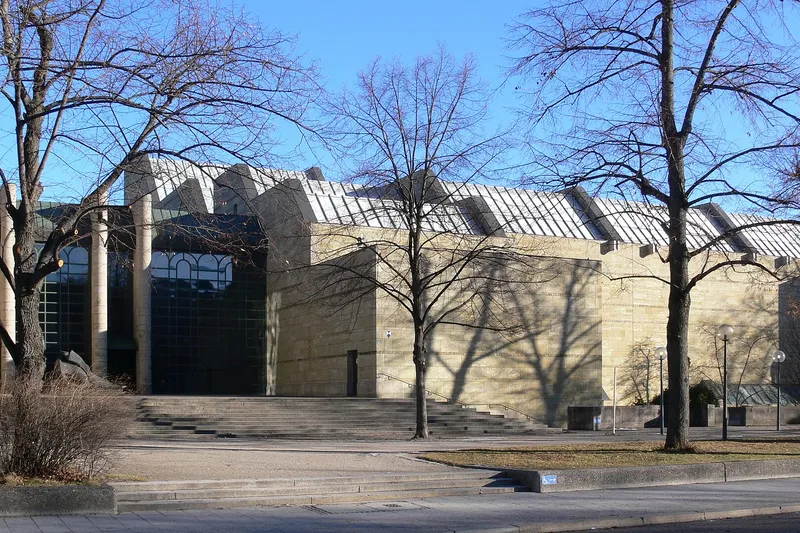
Neue Pinakothek, Munich
The Neue Pinakothek's building is closed for a long renovation — here's what that means for a visit, and exactly where to see its van Goghs, Monets and Klimts in the meantime.
Read guide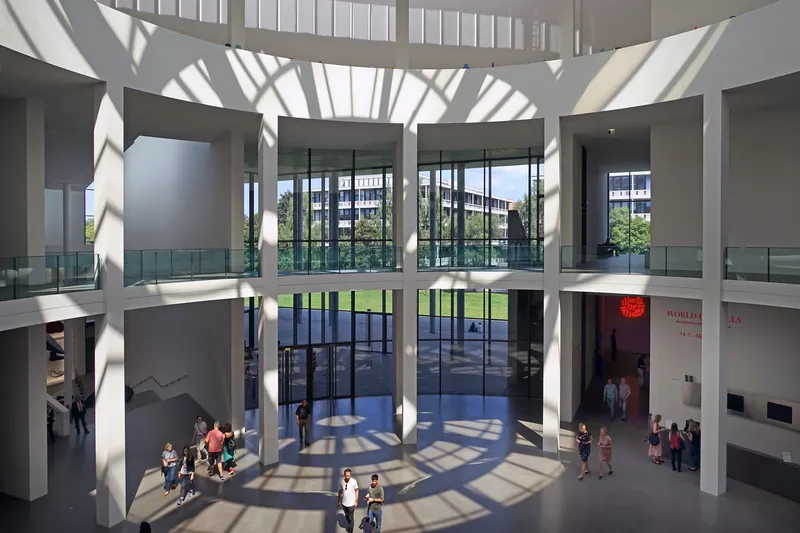
Pinakothek der Moderne, Munich
Four museums under one roof — modern art, design, architecture and works on paper — gathered around a soaring white rotunda in Munich's Kunstareal. How to see the best of it without overload.
Read guide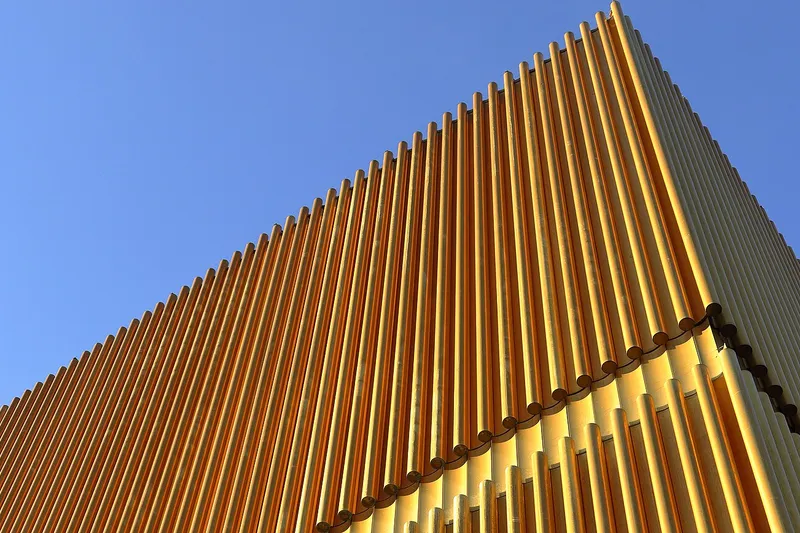
Kunstareal, Munich's Museum Quarter
How to plan a day in the Kunstareal — Munich's museum quarter in Maxvorstadt, from the three Pinakotheken and Brandhorst to the Lenbachhaus, Königsplatz and the cafés in between.
Read guideMore in Things to Do
6
Allianz Arena, Munich
How to visit Munich's glowing football stadium — the self-guided Erlebnistour, the FC Bayern Museum, match-day logistics, and the easy U6 ride out to Fröttmaning.
Read guide
Asamkirche, Munich
How to visit Munich's astonishing late-Baroque Asamkirche on Sendlinger Straße — the church two brothers built next to their own house — without overplanning it.
Read guide
Best Munich Tours
When a guided tour earns its place in a Munich trip — and which kind to pick. Old Town walks, food and beer crawls, football and BMW, the Third Reich history walk, and the big castle and Dachau day trips, weighed by time, cost and effort.
Read guide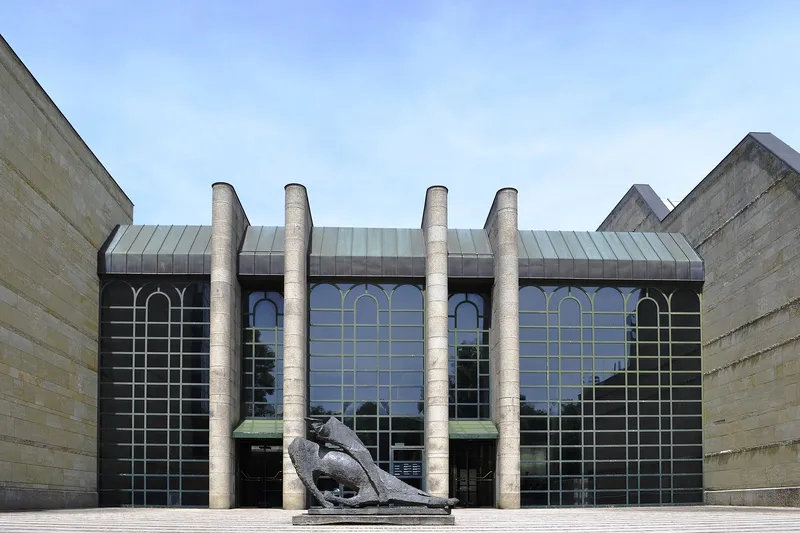
Best Museums in Munich
Choose the right Munich museum for you — by interest, by how much time you have, by which day of the week, and by how useful it is on a rainy day.
Read guide
Best Photography Spots in Munich
Rooftops, squares, churches, parks and palaces — the most photogenic places in Munich, with the light and timing notes to shoot each one well.
Read guide
Best Things to Do in Munich
A ranked first-trip shortlist — from Marienplatz and the Residenz to the beer gardens, the great museums and the English Garden.
Read guide