
Fine Dining in Munich
Munich's splurge and tasting-menu scene — from starred kitchens and modern Bavarian dining rooms to how far ahead to book, what to wear, and where to stay nearby for a special night.

Photo: Louis Hansel / Unsplash

- ✓Munich is one of Germany's strongest fine-dining cities, with a cluster of Michelin-starred kitchens and a deep tier of ambitious modern restaurants just below them — but chefs, names and even addresses change, so verify what's current before you book.
- ✓The two booking rules that matter: reserve weeks ahead for anything starred, and choose between lunch and dinner deliberately — a midday menu is often a gentler way into a celebrated kitchen.
- ✓The cooking divides roughly into modern Bavarian and produce-led tasting menus, classic French-leaning rooms, and a serious top-end Italian and international scene — Munich's affluence supports all three.
- ✓Dress a notch up, expect a quiet and unhurried evening, and stay central: the Altstadt, Lehel and the luxury streets around Maximilianstraße keep you a short walk or taxi from the best tables.
How fine dining works in Munich
Munich punches above its size at the top of the table. It is an affluent, design-conscious city with a long tradition of serious eating, and that shows in the spread of high-end restaurants — a handful of Michelin-starred kitchens, a wider band of ambitious modern dining rooms, and several grand hotel restaurants that have quietly cooked at a high level for decades. If your image of Munich stops at pork knuckle and beer halls, the fine-dining scene is the happy correction.
The single most important thing to understand is that this tier moves. Stars are won and lost each year, chefs change kitchens, restaurants close for renovation or reinvention, and a room that was the talk of the city two years ago may have a new name over the door. For that reason this guide deliberately talks in categories, brackets and strategy rather than handing you a fixed top-ten that will date — and where we mention anything specific we'd ask you to verify it's still current before you build an evening around it.
That said, a few fixtures are as nameable as the beer halls and make safe anchors. Tantris, in Schwabing, is one of Germany's most storied fine-dining rooms — a Munich institution since the early 1970s that carried three Michelin stars through the 1980s and holds two again today — and its dramatic 1970s interior is as memorable as the cooking. The Atelier, inside the Hotel Bayerischer Hof, is a long-standing two-star destination for cosmopolitan, produce-led tasting menus; and Restaurant Alois, above the centuries-old Dallmayr delicatessen a step from Marienplatz, is another enduring star table in the heart of the Old Town. Below that very top rung, names, chefs and stars genuinely do change, so confirm a restaurant's current status before you plan around it.
Practically, fine dining in Munich rewards planning. The best tables book out from Thursday to Saturday and weeks ahead for starred kitchens; many close one or two days a week (the Ruhetag) and take a summer or winter break; and almost all run a set tasting menu rather than à la carte at the very top. Decide early whether you want the full evening or a shorter lunch, reserve as far ahead as you can, and treat the meal as the event of the day rather than a stop between sights.


The styles of high-end cooking, and how to choose
Munich's top kitchens fall into a few broad families, and picking the style you want is the quickest way to a good decision. Knowing the category also helps you read a menu and a price before you commit — the experience, length and formality differ as much as the food.
Modern Bavarian and produce-led tasting menus are where the city is most distinctive: chefs cooking with Alpine and regional ingredients — lake fish, game, herbs, dairy from the foothills — in a contemporary, often lighter register than the tradition suggests. Classic and French-leaning fine dining still holds the grandest rooms, several of them inside the luxury hotels, where service is formal and the wine list is the size of a book. And the international top end is real: some of Germany's best Italian cooking is in Munich, alongside ambitious Japanese, fusion and tasting-menu rooms that don't lean Bavarian at all.
- Modern Bavarian / regional tasting menus — the city's signature: Alpine and Bavarian produce cooked lightly and creatively. Choose this for a sense of place on the plate.
- Classic and French-leaning fine dining — formal rooms, often in the grand hotels, with traditional service and deep wine lists. Choose this for occasion and ceremony.
- Top-end Italian — Munich's quiet strength; some of the best Italian food in Germany, from elegant rooms to serious trattorias. Choose this for a less stiff special night.
- Modern international and tasting-menu rooms — Japanese, fusion and chef-led concepts that don't lean regional. Choose this for the most contemporary, design-forward evening.
Tasting-menu strategy: lunch vs dinner, wine and length
At the very top, most kitchens serve a fixed multi-course tasting menu rather than letting you order à la carte, and the experience can run to three or four hours. That is part of the pleasure, but it pays to go in knowing the shape of the evening. A full dinner tasting is the grand version — more courses, more ceremony, and the highest price. A lunch menu, where a kitchen offers one, is often a shorter and noticeably gentler way to experience the same cooking, and a smart move if it's your first starred meal or your budget has a ceiling.
Wine is the other big variable. Most fine-dining rooms offer a wine pairing (the Weinbegleitung) matched course by course, which is the easiest and usually most rewarding option but adds substantially to the bill; a non-alcoholic juice pairing is increasingly common too, and good ones are genuinely interesting. If you'd rather not commit, ask the sommelier for two or three glasses across the meal instead. Tell the restaurant about allergies and strong dislikes when you book, not on arrival — at this level the menu is built around the table.
On the practicalities: confirm the menu length, the price per person and whether wine is extra when you reserve, so there are no surprises. Some kitchens take a deposit or card guarantee and charge for no-shows, which is fair given how few covers they serve. And plan nothing demanding afterwards — a long tasting menu is an evening, not a course before the next thing.
Booking, dress code and timing
Reserve as far ahead as you can. For a starred kitchen on a Friday or Saturday, weeks is normal and sometimes the only way in; for the tier below, a week is usually enough outside peak periods. Anything during Oktoberfest, the Christmas-market season or a big trade-fair week will be tighter across the whole city, so book earlier still if your dates overlap. Most high-end restaurants take bookings online or by phone, and a fair number now use a reservation platform — keep the confirmation, as some hold a card against no-shows.
Dress is smart but rarely stuffy: Munich leans elegant-casual at the top, so a jacket or a good dress is right and a strict black-tie code is unusual — if in doubt, ask when you book. Arrive on time, because a tasting menu starts when the kitchen says, and turn up hungry: these are not meals to precede with a beer-garden Brotzeit. Tipping at this level follows the usual German custom — round up or add roughly five to ten per cent, told to the server as you pay — though check whether a service charge is already noted on grand-hotel bills.

Where to stay near the best tables
If a fine-dining night is the centrepiece of your trip, stay where you can walk or take a short taxi home afterwards rather than navigate the U-Bahn at midnight. The Altstadt keeps you inside the ring and minutes from the central restaurants and the grand hotels; Lehel, just east, is quieter and refined, close to the museums and the English Garden; and the streets around Maximilianstraße and the opera are the city's luxury heart, with several of the dressed-up rooms within a few blocks.
Many of Munich's best high-end restaurants sit inside its luxury hotels, which makes the simplest plan also the most indulgent: book a room where you're also dining, and the journey home is a lift. Our luxury-hotel guide breaks the grand stays down by style — palace classic, design boutique, spa retreat — so you can match the bed to the table.

At a glance
The scene — a cluster of Michelin-starred kitchens plus a deep tier of ambitious modern restaurants; strongest in modern-Bavarian tasting menus, classic French-leaning rooms and top-end Italian. Specifics change — verify before booking.
Booking — reserve weeks ahead for starred kitchens, about a week for the tier below; tighter during Oktoberfest, Christmas markets and trade fairs. Keep your confirmation; some hold a card against no-shows.
Menus — the top end runs fixed tasting menus (often 3–4 hours); a lunch menu, where offered, is a shorter, gentler and cheaper way in. Confirm length, price and whether wine is extra.
Wine — a course-by-course pairing (Weinbegleitung) is easiest and adds notably to the bill; non-alcoholic pairings and a few glasses are good alternatives.
Dress & tip — smart but elegant-casual, rarely black-tie; tip about 5–10% told to the server, but check for a service charge on grand-hotel bills.
Stay near — the Altstadt, Lehel or the Maximilianstraße/opera streets keep you a walk or short taxi from the best tables; some luxury hotels house destination restaurants.

Luxury Munich
How to spend a high-end weekend in Munich — the grand-dame hotels and design boutiques, the Michelin tables and beer-hall counterpoint, the opera and Maximilianstraße shopping, and the private touring that turns money into time.
Read guide
Romantic Restaurants in Munich
How to choose the right romantic table in Munich — the candlelit small room, the grand white-tablecloth occasion, the polished Bavarian evening and the warm-weather beer garden — with the neighbourhoods to look in and the booking habits that make a night for two work.
Read guide
Luxury Hotels in Munich
How to choose a high-end Munich stay by style and street — the grand-dame palace hotels of the Altstadt and Maximilianstraße, design-led boutiques, spa retreats and the quiet luxury of Lehel — with the practical detail that makes a splurge worth it.
Read guideMore in Food & Drink
6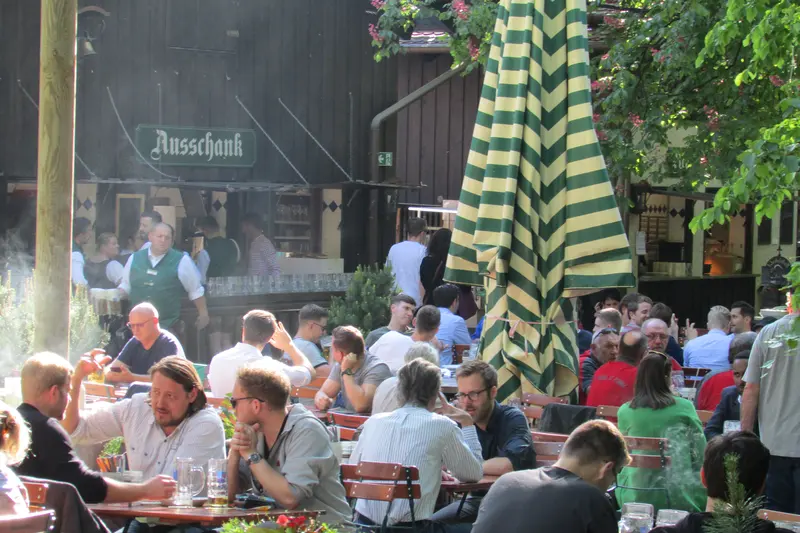
Augustiner-Keller, Munich
The beer garden, the cellar restaurant, reservations and what to order at the Augustiner-Keller near the Hauptbahnhof — the locals' choice for the city's most-loved beer.
Read guide
Bavarian Food to Try in Munich
What to order in Munich — Weißwurst, roast pork and pork knuckle, pretzels and dumplings, Obatzda and radi, the cakes and the beers — and the little rules that make each one make sense.
Read guide
Best Beer Gardens in Munich
A seasonal guide to Munich's classic beer gardens — the chestnut-shaded benches, the bring-your-own rule, what to order, and which gardens suit families, dates or a quiet pint.
Read guide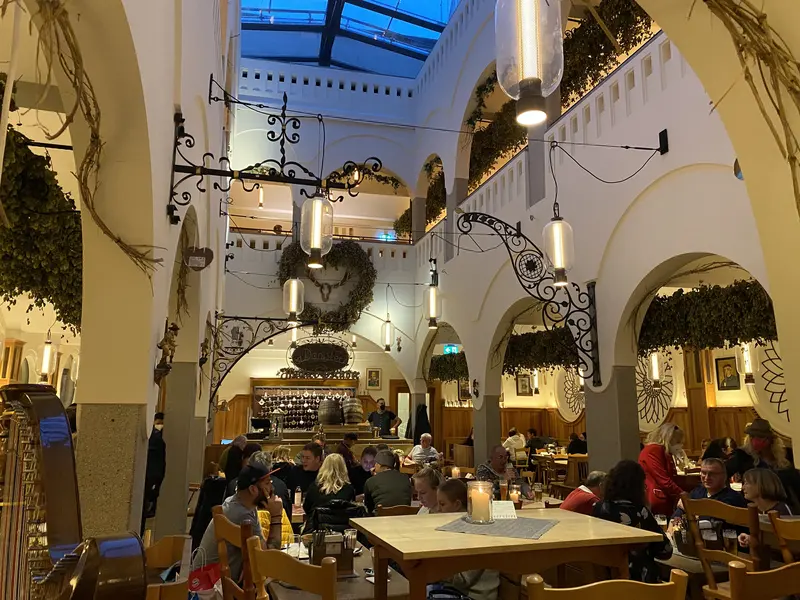
Best Beer Halls in Munich
How to choose among Munich's great beer halls — the Hofbräuhaus, the Augustiner and Löwenbräu houses, Paulaner and more — compared by atmosphere, food, noise and first-time ease.
Read guide
Best Cocktail Bars in Munich
Where to drink well in a beer city — Munich's craft cocktail bars, hotel bars and late-night spots, picked by neighbourhood and vibe for date nights, a refined nightcap or somewhere open into the small hours.
Read guide
Best Coffee and Cafés in Munich
Where to find good coffee in Munich — specialty third-wave roasters, classic Kaffeehaus institutions and konditoreien — sorted by neighbourhood and by whether you want to work, linger romantically or grab a quick cup.
Read guide