
Best Coffee and Cafés in Munich
Where to find good coffee in Munich — specialty third-wave roasters, classic Kaffeehaus institutions and konditoreien — sorted by neighbourhood and by whether you want to work, linger romantically or grab a quick cup.

Photo: Toa Heftiba / Unsplash

- ✓Munich has two café cultures running side by side: a strong specialty (third-wave) scene of small-batch roasters and espresso bars, and grand old Kaffeehaus institutions with cake, newspapers and marble.
- ✓Maxvorstadt and Schwabing — leafy, student-and-creative, near the museums and the English Garden — are the heartland for café-hopping.
- ✓For coffee-and-cake the German way, look for a 'Café' or 'Konditorei' and order a slice (Kuchen or Torte) with your coffee in the afternoon.
- ✓Most specialty cafés take cards and have good Wi-Fi; many traditional Kaffeehäuser still prefer cash and a slower pace — match the place to your mood.
Two coffee cultures, one city
Munich is a genuinely good coffee city, and the quickest way to drink well is to understand that two traditions coexist here. The first is the specialty, or 'third-wave', scene: small independent cafés and micro-roasters serving carefully sourced, lighter-roast beans as filter, pour-over, espresso and flat whites, often roasting on site or sourcing from local roasters. The baristas care about extraction, the menus name origins, and the rooms tend toward pale wood, plants and good Wi-Fi. This is where you go for a serious cup.
The second is the classic Kaffeehaus and Konditorei: grand or cosy traditional cafés where coffee comes with cake, a rack of newspapers and a sense of unhurried ceremony. Here the ritual is afternoon 'Kaffee und Kuchen' — a coffee and a generous slice of Torte — taken slowly, sometimes in rooms that have looked much the same for a century. Both are worth your time; the trick is to choose by what you want from the hour, not by reputation alone.
A few words help when you order. A 'Milchkaffee' is a large milky coffee (closer to a French café au lait than a latte); an 'Espresso' is an espresso; a flat white or 'Cappuccino' will be understood in any specialty bar. 'Kaffee' on a traditional menu usually means filter coffee, often refillable. And almost everywhere, asking for your coffee 'zum Mitnehmen' gets it to go.

Specialty coffee: the third-wave scene
Munich's specialty scene has grown steadily and is now genuinely strong, with a cluster of respected independent roasters and espresso bars across the central neighbourhoods. The hallmarks are familiar to anyone who chases good coffee elsewhere: single-origin beans roasted lighter than the Italian norm, the option of a hand-brewed filter alongside espresso drinks, oat and other plant milks as standard, and baristas happy to talk you through what's on. Many of these cafés also serve excellent breakfast and brunch, so they double as a slow morning stop.
You'll find the densest concentration in Maxvorstadt and Schwabing, near the universities and the Kunstareal museums, and more across the Glockenbachviertel, Isarvorstadt and Haidhausen. Rather than chase one famous address, treat the neighbourhood as the destination: pick a quarter, walk in, and follow the smell of roasting beans and the look of the room. The scene moves quickly — new openings and closings are constant — so verify a specific café is still trading before making a special trip.
That said, a handful of roasters have anchored the scene for years and are the natural first stops. Man Versus Machine, an independent roaster with a pared-back café off Müllerstraße in the Isarvorstadt, is the name most locals cite for a precise espresso or filter. Vits der Kaffee, near the Viktualienmarkt, is among the city's longest-running specialty houses, roasting single origins from around the world. And in the Glockenbachviertel, THE BARN — the Berlin roastery's well-established Munich café on Müllerstraße — pairs precise, freshly roasted coffee with a busy, sociable room. New places come and go, so still check a specific café is trading before a dedicated trip — but these have staying power.
- Man Versus Machine (off Müllerstraße, Isarvorstadt) — an independent roaster and minimalist café; a reliable pick for a serious espresso or filter.
- Vits der Kaffee (near the Viktualienmarkt) — one of Munich's longest-running specialty roasters, with single origins from around the world.
- THE BARN (Glockenbachviertel) — the Berlin roastery's well-established Munich café for precise, freshly roasted coffee and lingering.
- What to look for — a short, origin-led bean list, pour-over or filter alongside espresso, plant milks as standard, and on-site or local roasting.
- The scene changes fast — verify a specific café is still open before a dedicated visit.
Classic Kaffeehäuser and Kaffee und Kuchen
For the other Munich coffee experience, seek out a traditional Café or Konditorei and lean into the afternoon ritual of Kaffee und Kuchen. These are the places with cake counters glittering with Torten, marble tables, and an atmosphere of genteel calm — perfect for a rainy afternoon, a rest between museums, or a quietly grand coffee. You order at the table, take your time, and eat a proper slice of cake with your coffee; refills of filter coffee are common, and so is the unspoken licence to sit for an hour.
Munich's grandest historic cafés sit in and around the Old Town and the elegant streets near the opera and Maximilianstraße, where a few institutions have been serving coffee and pastry for generations. They're not cheap, but the room and the cake are the point. For a gentler, more local version, the neighbourhood Konditoreien in Schwabing, Haidhausen and the Old Town backstreets do the same ritual without the grandeur. Either way, the afternoon — roughly 3 to 5pm — is the time the tradition comes alive.
Two institutions make ideal anchors. Café Luitpold, a grand coffeehouse on Brienner Straße serving since 1888, is the city's most storied Kaffeehaus — marble, chandeliers, a glittering cake counter and the full Kaffee-und-Kuchen ceremony. And near the Viktualienmarkt, the Café Frischhut — known to everyone as the Schmalznudel for the fried pastry it has served for decades — is the humble, beloved counterpart: a plain, always-busy room for a coffee and a fresh Schmalznudel. Hours can change, so check before a special visit.
- Café Luitpold (Brienner Straße, since 1888) — the grand historic Kaffeehaus for coffee, cake and marble-room ceremony.
- Café Frischhut / 'Schmalznudel' (near the Viktualienmarkt) — the humble Viktualienmarkt classic for a coffee and its famous fried Schmalznudel.
- Order Kaffee und Kuchen — a coffee with a slice of Torte or Kuchen — in the afternoon, the traditional time.
- Many traditional cafés prefer cash and a slower pace — settle in rather than rush.

Cafés to work in
If you need a laptop-friendly base — for a couple of hours of work or simply a long, comfortable sit — Munich's specialty cafés are your best bet. Look for the bigger third-wave rooms in Maxvorstadt, Schwabing and the Glockenbachviertel: ample tables, reliable Wi-Fi, plug sockets, good coffee on tap and a brunch menu for when you get hungry. These cafés are used to people lingering, and a steady stream of orders keeps your seat. As a courtesy, buy something every so often and avoid hogging a four-top at peak brunch hours on a weekend.
Traditional Kaffeehäuser, by contrast, are for resting rather than working — laptops feel out of place among the marble and cake forks. And on busy weekend mornings even the work-friendly cafés fill up, so for a guaranteed table go early or pick a weekday. Note that not every small café has Wi-Fi or sockets; if you depend on them, choose a larger specialty room rather than a tiny espresso bar.
- Best bets — larger specialty cafés in Maxvorstadt, Schwabing and the Glockenbachviertel, with Wi-Fi, sockets and space.
- Etiquette — keep ordering, don't camp on big tables at weekend peak, and read the room.
- Avoid — traditional Kaffeehäuser for laptop work; they're built for slow conversation, not screens.
- Timing — weekday or early-morning visits guarantee a seat; weekend brunch crowds fill the best rooms.
Romantic and quick-stop cafés
For a romantic coffee, the move is atmosphere over efficiency: a small candlelit room in the Glockenbachviertel, a courtyard table on a leafy Schwabing street, or a quiet historic café where you can talk over cake and a pot of coffee without a queue at your shoulder. Late afternoon, as the light softens and the work crowd thins, is the loveliest time — pair it with a slow walk along the Isar or through the English Garden afterwards. Munich's café tradition is, at its heart, built for exactly this kind of unhurried hour.
When you just want a quick cup between sights, you're never far from one. Specialty bars and bakery-cafés around Marienplatz, the Viktualienmarkt and the U- and S-Bahn stations will pour you a flat white or a filter to go in minutes. Bakeries, covered earlier under breakfast, are the fastest and cheapest stand-up option. The point is to know which you want — a moment to savour or a cup to carry — and Munich has both within a block of almost anywhere.

At a glance
Two scenes — specialty/third-wave espresso bars for a serious cup; classic Kaffeehäuser and Konditoreien for coffee, cake and ceremony.
Best café neighbourhoods — Maxvorstadt and Schwabing first; then Glockenbachviertel, Isarvorstadt and Haidhausen.
To work — larger specialty cafés with Wi-Fi and sockets; keep ordering and avoid weekend brunch peak.
Romantic — small Glockenbach rooms, leafy Schwabing courtyards and quiet historic cafés in the late afternoon.
Quick stop — bakery-cafés and espresso bars near Marienplatz, the Viktualienmarkt and the transit stations.
Good to know — Kaffee und Kuchen is the afternoon ritual; specialty cafés take cards, many traditional ones prefer cash; the scene changes fast, so verify a specific spot.

Maxvorstadt, Munich
Munich's museum quarter and university heart — the Kunstareal's Pinakotheken, leafy student streets, third-wave coffee and boutique hotels, and why it's one of the best-value central bases in the city.
Read guide
Schwabing, Munich
Munich's old bohemian quarter against the English Garden — Jugendstil façades, café and café-bar culture, leafy streets, and an easy, green base a short ride north of the centre.
Read guide
Breakfast and Brunch in Munich
Where to start the day in Munich — bakeries and quick café breakfasts for early sightseeing, leisurely weekend brunch, hotel spreads, market mornings and the Bavarian Weißwurst tradition.
Read guideMore in Food & Drink
6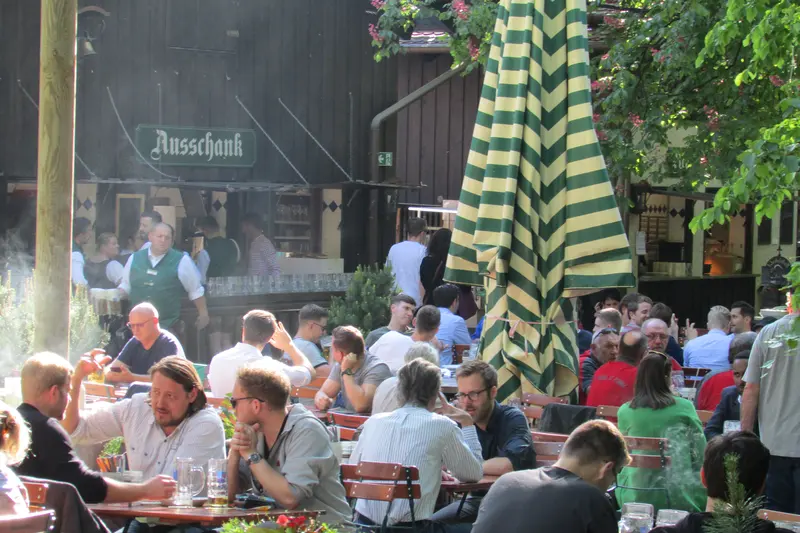
Augustiner-Keller, Munich
The beer garden, the cellar restaurant, reservations and what to order at the Augustiner-Keller near the Hauptbahnhof — the locals' choice for the city's most-loved beer.
Read guide
Bavarian Food to Try in Munich
What to order in Munich — Weißwurst, roast pork and pork knuckle, pretzels and dumplings, Obatzda and radi, the cakes and the beers — and the little rules that make each one make sense.
Read guide
Best Beer Gardens in Munich
A seasonal guide to Munich's classic beer gardens — the chestnut-shaded benches, the bring-your-own rule, what to order, and which gardens suit families, dates or a quiet pint.
Read guide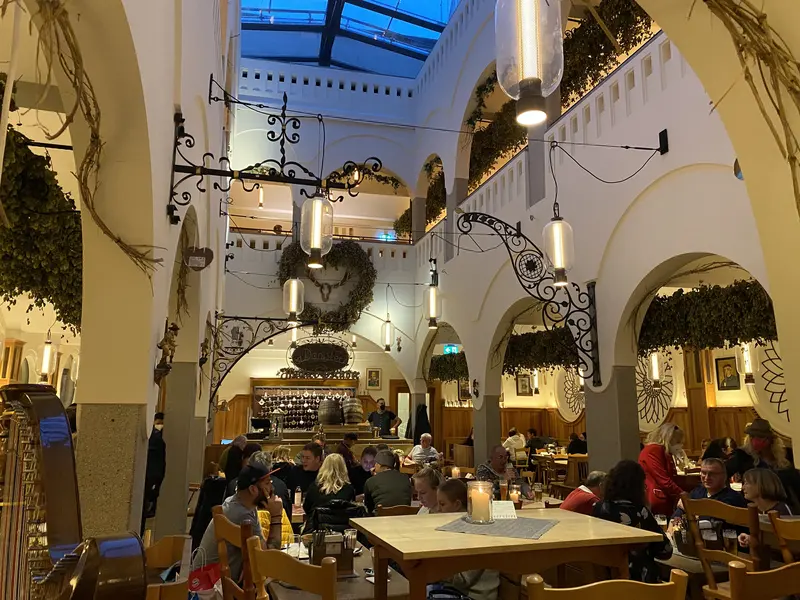
Best Beer Halls in Munich
How to choose among Munich's great beer halls — the Hofbräuhaus, the Augustiner and Löwenbräu houses, Paulaner and more — compared by atmosphere, food, noise and first-time ease.
Read guide
Best Cocktail Bars in Munich
Where to drink well in a beer city — Munich's craft cocktail bars, hotel bars and late-night spots, picked by neighbourhood and vibe for date nights, a refined nightcap or somewhere open into the small hours.
Read guide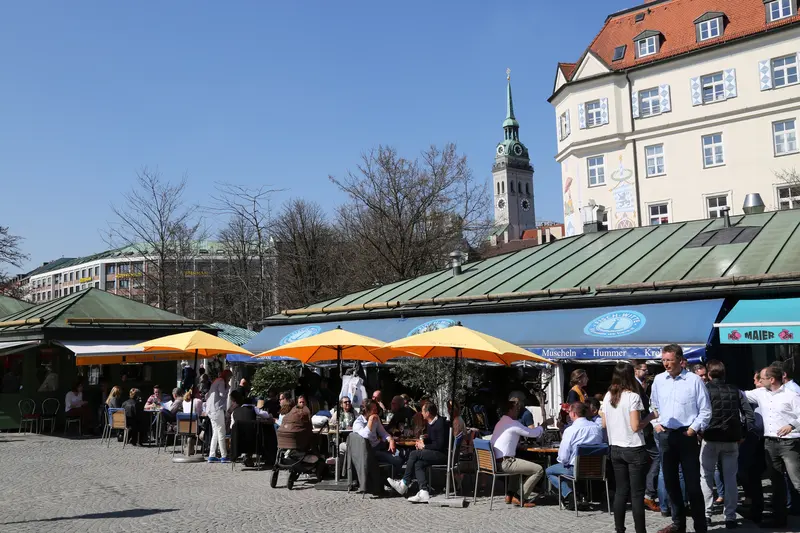
Best Food Markets in Munich
Beyond the famous Viktualienmarkt — the neighbourhood and seasonal markets where Munich actually shops, for snacks, gifts, picnic supplies and a feel for the city's daily rhythm.
Read guide