
Getting Around Munich
The full picture of moving around Munich — why you'll walk more than you expect, when to take the U-Bahn or a tram, how the city's flat streets reward a bike, when a taxi or rideshare earns its keep, and the firm case for leaving the car at home.

Photo: Ahmed Slimene / Unsplash

- ✓Munich's centre is small and flat — you'll walk between most old-town sights faster than you could ride to them.
- ✓The MVV's U-Bahn, S-Bahn, trams and buses cover everything else on one ticket, fast and famously punctual.
- ✓The city is gloriously bike-friendly: flat terrain, a dense network of cycle paths and easy rental and bike-share schemes.
- ✓Taxis and rideshare are clean and reliable but rarely necessary for a central trip — transit is usually faster than a car.
- ✓Don't rent a car for a city stay: parking is scarce and costly, an environmental zone (Umweltzone) limits entry, and you simply won't need one.
Walk first — Munich is smaller than it looks
Before you study a single transit map, absorb the most useful fact about getting around Munich: you can walk most of it. The historic core inside the old ring is compact and flat, and the headline sights are stitched together closely — Marienplatz to the Viktualienmarkt is a couple of minutes, on to the Residenz and the Hofgarten a few more, the English Garden's southern edge just beyond. Time and again you'll pull up a route, see it's a nine-minute stroll, and realise the walk is both quicker and lovelier than descending for the U-Bahn. Munich is a city to be crossed on foot, and the wandering is half the pleasure.
Build your days around that. Cluster sights by neighbourhood — the old town one day, Maxvorstadt's museum quarter the next — and you'll use transit mainly to jump between districts rather than within them. Pavements are wide and well-kept, drivers respect crossings, and the city is safe and easy to read on foot day or night. Wear shoes you can cover a few kilometres in, and let walking be your default; reach for transit when the distance or the weather genuinely warrants it.


The MVV for everything else
When a distance is too far to walk, Munich's public transport takes over with almost suspicious efficiency. The MVV network ties the U-Bahn (underground), S-Bahn (suburban rail), trams and buses into one fare system, so a single ticket carries you across all of them. The U-Bahn is fastest for crossing the city; the S-Bahn's central trunk line shuttles you between the major old-town stops and out to the suburbs and airport; trams are the scenic surface option; buses fill the gaps. It's clean, quiet and runs to the minute — using it well is most of what 'getting around Munich' means.
For visitors, the recipe is simple. Stay central and you'll live in the inner Zone M, where a day ticket covers a full day of hopping about and a group day ticket covers a couple or family for not much more. Let the MVGO or MVV app plan your routes, sell you the mobile ticket and show live departures. And remember the one rule that keeps the system sweet: there are no barriers, so always carry a valid, validated ticket — random inspections carry a fixed fine. Beyond that, transit here is genuinely a pleasure to use.
By bike: the city's secret weapon
Munich is one of Germany's most cycling-friendly big cities, and for an active visitor a bike can be the best way of all to get around. The terrain is flat, the climate is kind for much of the year, and the city is laced with a dense network of dedicated cycle paths that let you glide along the Isar, through the English Garden and across the centre with real momentum. On a clear spring or summer day, swapping the U-Bahn for two wheels turns transport into sightseeing — you cover ground at the pace of the city, not under it.
Getting a bike is easy. There are bike-rental shops and station-based and dockless bike-share schemes around the city, so you can grab one for an hour, a day or a whole stay. Ride on the marked cycle paths where they exist (Munich's are well used and clearly laid out), follow the traffic signals, and use lights after dark — locals take cycling seriously and so do the rules. If the weather turns or your legs tire, you're never far from a U-Bahn or tram to carry you home. For confidence on the specifics — where to rent, the share apps, the routes worth riding — see the dedicated bike guide.

Taxis, rideshare and the late-night options
Munich has clean, metered, well-regulated taxis (the cream-coloured ones at ranks and by phone or app) and ride-hailing operates in the city too. Both are reliable and there's nothing to avoid about them — but a candid word: for a central trip you'll rarely need either, because transit is usually as fast and far cheaper, especially across a congested centre where a car can crawl while the U-Bahn flies. The honest sweet spots for a taxi or rideshare are heavy luggage, a group splitting one fare late at night, a destination that's awkward by transit, or the hours after the last train when night services don't suit.
Speaking of late: the U-Bahn winds down in the small hours, but night trams and buses (Nachtlinien) cover the busy corridors, so a late night out doesn't strand you — check the app for the night routes near your hotel. Between the night network and an easy taxi when you want the door-to-door simplicity, you're well covered around the clock. Just don't default to cars for ordinary daytime hops; in central Munich, the train almost always wins.

Driving and parking: why to skip the car
Let's be direct, because this is the question that saves visitors the most grief: do not rent a car for a Munich city break. Three reasons make the case airtight. First, you don't need one — the centre is walkable and the transit is superb, so a car is pure overhead. Second, parking is scarce and expensive: street parking in the centre is largely metered and resident-restricted, and the convenient garages charge accordingly, so a car becomes a costly thing you spend the trip trying to stash. Third, central Munich is a low-emission environmental zone (Umweltzone) that requires a valid emissions sticker (Umweltplakette) to enter — a hurdle that catches out the unprepared.
The exception is the day trip. A car genuinely shines for reaching Alpine villages, lakes and castles that are fiddly by train, or for an itinerary that strings several rural stops together — and Munich makes a fine base to pick one up for a day or two before returning it. But for the city itself, walk, ride the MVV, hop on a bike and take the occasional taxi. You'll move faster, spend less, and skip the one piece of Munich logistics that reliably sours a trip. If you do drive a day trip, read up on the environmental-zone sticker and parking rules first — and verify the current requirements, as they're updated periodically.
- Walkable centre + excellent transit = a city car is overhead you don't need.
- Parking is scarce, metered and pricey; convenient garages cost real money.
- The Umweltzone requires an emissions sticker (Umweltplakette) to enter — verify current rules.
- A rental earns its keep only for rural day trips that are awkward by train — rent for those days alone.

At a glance: how to get around Munich
Within the old town: walk — it's small, flat and faster than the U-Bahn for most hops.
Across the city: the MVV (U-Bahn, S-Bahn, trams, buses) on one ticket — fast, punctual, easy.
Active and the weather's good: rent or share a bike; the cycle network is excellent.
Heavy bags, late nights, awkward routes: a taxi or rideshare, sparingly.
After the last train: night trams and buses (Nachtlinien) on the main corridors.
A car: only for rural day trips — never for the city itself.
- Default to walking; reach for transit when distance or weather warrants.
- Use the MVGO/MVV app for routes, live times and mobile tickets.
- Carry a valid, validated ticket — there are no barriers but real inspections.
- Verify current fares, parking rules and the environmental-zone requirements before you rely on them.

Munich Public Transport Guide
How Munich's MVV network actually works for visitors — the U-Bahn, S-Bahn, trams and buses on one ticket, the zone system, validation, the apps that make it painless, and the small habits that mark you out as someone who knows the city.
Read guide
MVV Tickets and Passes in Munich
A clear, visitor-first guide to choosing the right Munich transport ticket — singles, strip tickets, day passes, group day tickets, the airport fare and weekly passes — with the zones to watch, how validation works, and the small mistakes that earn a fine.
Read guide
Bike Rental in Munich
How to rent a bike in Munich — rental shops versus the city's public bike-share — where to ride along the Isar and through the English Garden, the lane and traffic rules that keep you safe, and the loveliest easy routes.
Read guideMore in Travel Tips
6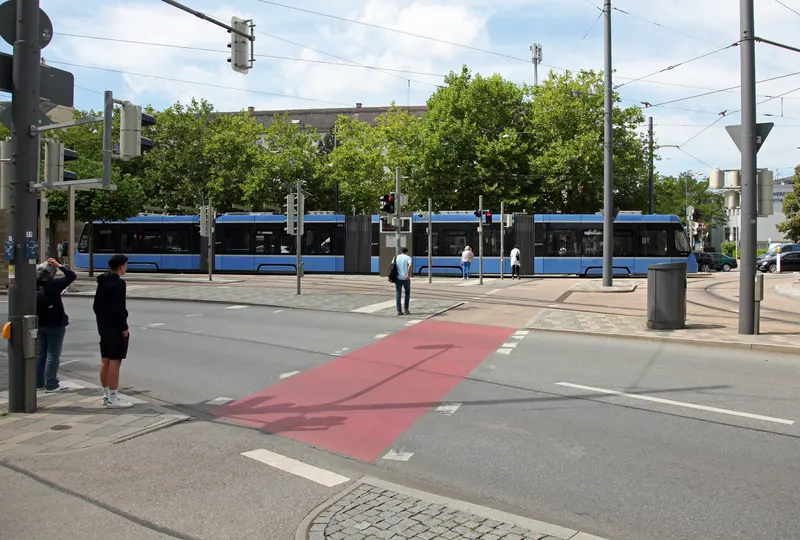
Accessible Munich: A Step-Free Travel Guide
A realistic, planning-led guide to accessible Munich — step-free transport on the U-/S-Bahn and trams, museums and palaces with lift access, the cobbles and surfaces of the Old Town to plan around, and how to reach the city from the airport without stairs.
Read guide
Best Time to Visit Munich
When to come to Munich, season by season and month by month — the tradeoffs of weather, crowds, prices and what's on, from beer-garden summers to the snow-lit Christmas markets.
Read guide
Driving & Parking in Munich
Whether you need a car in Munich at all, the low-emission Umweltzone rule, parking zones, garages and Park & Ride, and the smarter strategy: ditch the car in the city and rent only for the day trip.
Read guide
Is Munich Safe? A Visitor's Safety Guide
An honest, common-sense read on safety in Munich — how safe the city really is, the few situations to keep your wits about (the station area, festival crowds, pickpockets, cycling), the scams to ignore and the emergency numbers worth memorising.
Read guide
Money & Tipping in Munich
How money works in Munich — cards versus cash, ATMs and fees, how much to tip and the correct way to do it, receipts, and the small habits that keep paying friction-free.
Read guide
Munich Airport to the City Centre
How to get from Munich Airport to the city centre — the S-Bahn lines and tickets, the express bus, taxis and private transfers, and a simple decision guide for which to take.
Read guide