
Is Munich Safe? A Visitor's Safety Guide
An honest, common-sense read on safety in Munich — how safe the city really is, the few situations to keep your wits about (the station area, festival crowds, pickpockets, cycling), the scams to ignore and the emergency numbers worth memorising.

Photo: Jahanzeb Ahsan / Unsplash

- ✓Munich consistently ranks among the safest large cities in Germany and in Europe; for most visitors the trip passes without a single worrying moment.
- ✓The everyday risks are ordinary big-city ones — pickpocketing in dense crowds, the odd rough corner near the Hauptbahnhof late at night — not violent crime against tourists.
- ✓Festival crowds (Oktoberfest above all) are where most trouble happens, and almost all of it is drink-related: lost phones, lost friends and lost tempers, not danger.
- ✓Cycling is the one genuinely underestimated hazard — Munich's bike lanes are fast and locals expect you to respect them on foot.
- ✓Memorise three numbers: 112 for any emergency (ambulance/fire), 110 for police, and keep your accommodation's address saved offline.
The short answer: yes, Munich is very safe
Munich is one of the safest big cities you can visit in Europe, and it feels that way from the moment you arrive. The Bavarian capital regularly posts low crime figures for a city of its size, the streets are well-lit and busy into the evening, public transport runs clean and orderly, and women travelling alone, families and older visitors all tend to move through it with an ease that surprises people used to edgier capitals. The overwhelming majority of trips here involve no incident more dramatic than a missed tram.
That doesn't mean you switch your common sense off — no city earns that — but it does mean you can lead with curiosity rather than caution. Walk the Altstadt after dark, take the U-Bahn home from dinner, sit out late under the chestnut trees of a beer garden: these are normal, low-risk things to do in Munich. The rest of this guide simply flags the handful of situations where ordinary big-city awareness pays off, so you can relax about everything else.

Areas to read the room: the station district
If there's one part of central Munich where the atmosphere shifts, it's the immediate surroundings of the Hauptbahnhof, the main railway station. As in almost every European city, the streets right around the station — and a few blocks west and south of it, through parts of Ludwigsvorstadt — are busier, scruffier and more transient than the polished old town a few minutes away. You may notice some street drinking, the occasional argument, and a more visible police presence late at night.
None of this makes the area dangerous for the ordinary visitor, and plenty of perfectly good budget hotels sit right here precisely because it's so well-connected. Just apply standard station-district sense: keep your bag in front of you in the underpasses, don't flash valuables, and if you're walking back to a hotel here after midnight, stick to the lit main streets rather than cutting through quiet side alleys. Book a street or two back from the forecourt for a calmer night.
Pickpockets and petty theft
The single most common crime against tourists in Munich is pickpocketing, and it follows the usual pattern: it happens where crowds are dense and distracted. That means the Marienplatz crush at Glockenspiel time, packed U-Bahn and S-Bahn carriages at rush hour, the Hauptbahnhof concourse, the Christmas markets, and — above all — the heaving beer tents of Oktoberfest. Thieves work the press of bodies, not dark corners.
The defences are dull and effective. Carry your phone and wallet in a front pocket or a zipped inside pocket rather than a back pocket or an open tote; keep a daypack on your front in a crowd; never drape a bag over the back of a beer-tent bench or leave a phone face-up on the table; and split your cash and cards so a single loss isn't a disaster. Photograph your passport and store copies in your email. Do these few things and the odds of trouble fall close to zero.
Festival crowds and nightlife
Oktoberfest is where Munich's safety story gets its asterisk — though even here the danger is wildly overstated. The Theresienwiese is heavily policed and patrolled by medics, and there's a well-run lost-and-found and a dedicated 'security point' (the Sicherheitswiesn, a service point for women and girls who feel harassed or unwell). What actually goes wrong is almost always alcohol's doing: people drink Maß after strong Wiesn beer on an empty stomach, lose their phones, lose their friends and occasionally lose their footing. Pace yourself, eat as you drink, agree a meeting point with your group in case phones die, and you've handled the real risk.
Munich's ordinary nightlife — the bars of the Glockenbachviertel and Isarvorstadt, the clubs along the river — is relaxed and friendly by big-city standards. The usual sensible habits apply: keep an eye on your drink, trust your instincts about a situation, and use a licensed taxi or a ride app rather than an unmarked car if you're heading home late and alone. The night U-Bahn and night buses run on weekends and are a safe, normal way to get back.

Cycling and crossing the road
Here's the hazard visitors genuinely underestimate: bikes. Munich is a serious cycling city with fast, well-used bike lanes that are often paved into the pavement, set slightly apart from where pedestrians walk and frequently coloured red. Step into one without looking and you'll get a bell, a shout, or worse — cyclists move at speed and have right of way in their lane. Before you cross any path, glance for the bike strip as well as the road, and don't stand in it to take a photo.
Munich also takes its pedestrian signals seriously. Locals wait for the green man even on an empty street, and crossing on red — especially in front of children — draws genuine disapproval and, in theory, a fine. It's a small cultural quirk that's also a safety habit worth adopting.
Scams and other things not to worry about
Munich is mercifully light on the aggressive tourist scams that plague some European cities. You won't be swarmed by friendship-bracelet hustlers or fake-petition signers on every corner. The few things to brush off: occasional charity clipboard-holders who keep you talking while a partner works the crowd (politely decline and move on), the very rare overpriced 'tourist' taxi from a station rank (use the meter or a ride app), and ticket touts around big events (buy from official channels). Beggars exist, as in any city; a firm, polite 'no' is all that's needed.
Counterfeit risks are low and tap-to-pay is widespread, but Munich remains a surprisingly cash-friendly city — many beer gardens, market stalls and small cafés still prefer or only take cash, so carry some. That's a budgeting note more than a safety one, but it spares you the only mildly stressful moment most visitors hit: a market stall that won't take your card.
Emergencies and the numbers to know
If something does go wrong, help is excellent and the system is easy. The Europe-wide emergency number 112 reaches ambulance and fire and works from any phone, even without a SIM or credit; operators very commonly speak English. For police specifically, dial 110. Pharmacies (Apotheke, marked with a red 'A') handle minor ailments and there's always an emergency pharmacy on rota; hospitals have walk-in emergency departments (Notaufnahme).
A little preparation makes any incident trivial. Save your accommodation's address and a screenshot of the route offline; keep a card and some cash separate from your phone; note your country's Munich consulate details if you have one; and if you're travelling from outside the EU, sort travel insurance before you come (EU/EHIC visitors are covered for state healthcare). With those basics in place, you've covered the realistic worst case — which, in Munich, you're very unlikely to ever need.
Munich safety FAQ
Is Munich safe at night? Yes — the Altstadt, the main neighbourhoods and the U-/S-Bahn are safe to use after dark; just apply standard care around the Hauptbahnhof late at night and on lonely side streets.
Is Munich safe for solo female travellers? It's one of Europe's easier cities for it — well-lit, busy and orderly — and Oktoberfest even runs a dedicated service point for women who feel unsafe. The usual precautions apply, nothing more.
Is Oktoberfest dangerous? No, but it's the likeliest place for drink-related trouble — pace yourself, eat, mind your belongings and agree a meeting point.
What's the emergency number in Munich? 112 for ambulance and fire (works without a SIM), 110 for police.
Do I need to worry about scams? Very little. Decline clipboard charity collectors, use metered or app-based taxis, and buy event tickets officially.
- Keep valuables zipped and in front of you in crowds — Marienplatz, packed trains, beer tents, Christmas markets.
- Treat red-paved bike lanes as live traffic; look before you step off the pavement.
- Carry some cash — Munich is card-friendly but many gardens, stalls and small cafés are cash-first.
- Save 112 and 110, your hotel address and an offline map before you head out.
- Crime figures and event-specific rules change — verify current local advice for the dates of your trip.

Solo Travel in Munich: A Complete Guide
Munich is one of Europe's gentlest cities to explore on your own — safe, compact, sociable and superbly connected. Where to stay, how to eat alone happily, the tours and beer gardens that hand you instant company, and how to fill a solo day or three.
Read guide
Ludwigsvorstadt, Munich
The district wrapped around Munich's Hauptbahnhof and the Theresienwiese — the city's most connected, best-value base, the heart of Oktoberfest logistics, and what to know before you book.
Read guide
Munich Public Transport Guide
How Munich's MVV network actually works for visitors — the U-Bahn, S-Bahn, trams and buses on one ticket, the zone system, validation, the apps that make it painless, and the small habits that mark you out as someone who knows the city.
Read guideMore in Travel Tips
6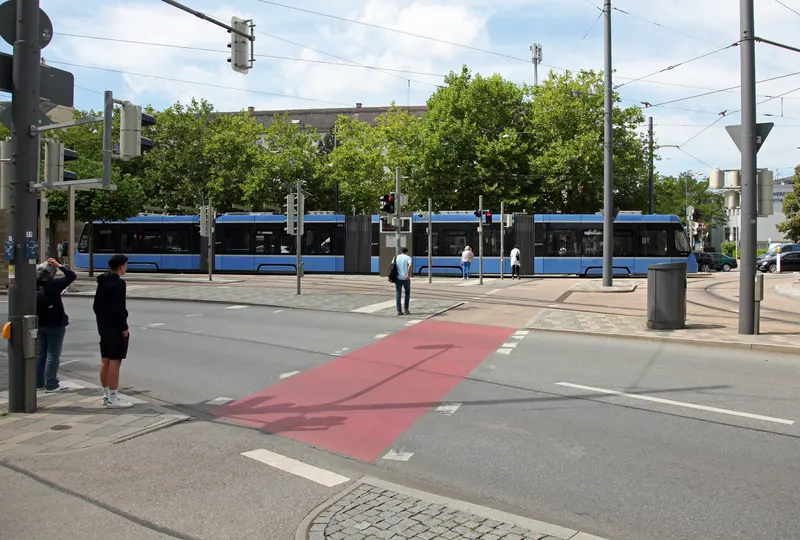
Accessible Munich: A Step-Free Travel Guide
A realistic, planning-led guide to accessible Munich — step-free transport on the U-/S-Bahn and trams, museums and palaces with lift access, the cobbles and surfaces of the Old Town to plan around, and how to reach the city from the airport without stairs.
Read guide
Best Time to Visit Munich
When to come to Munich, season by season and month by month — the tradeoffs of weather, crowds, prices and what's on, from beer-garden summers to the snow-lit Christmas markets.
Read guide
Bike Rental in Munich
How to rent a bike in Munich — rental shops versus the city's public bike-share — where to ride along the Isar and through the English Garden, the lane and traffic rules that keep you safe, and the loveliest easy routes.
Read guide
Driving & Parking in Munich
Whether you need a car in Munich at all, the low-emission Umweltzone rule, parking zones, garages and Park & Ride, and the smarter strategy: ditch the car in the city and rent only for the day trip.
Read guide
Getting Around Munich
The full picture of moving around Munich — why you'll walk more than you expect, when to take the U-Bahn or a tram, how the city's flat streets reward a bike, when a taxi or rideshare earns its keep, and the firm case for leaving the car at home.
Read guide
Money & Tipping in Munich
How money works in Munich — cards versus cash, ATMs and fees, how much to tip and the correct way to do it, receipts, and the small habits that keep paying friction-free.
Read guide