
NS-Dokumentationszentrum, Munich
A respectful guide to Munich's NS-Dokumentationszentrum — the Documentation Centre for the History of National Socialism — on the site of the former Nazi party headquarters: what it covers, how to visit, and the nearby sites.
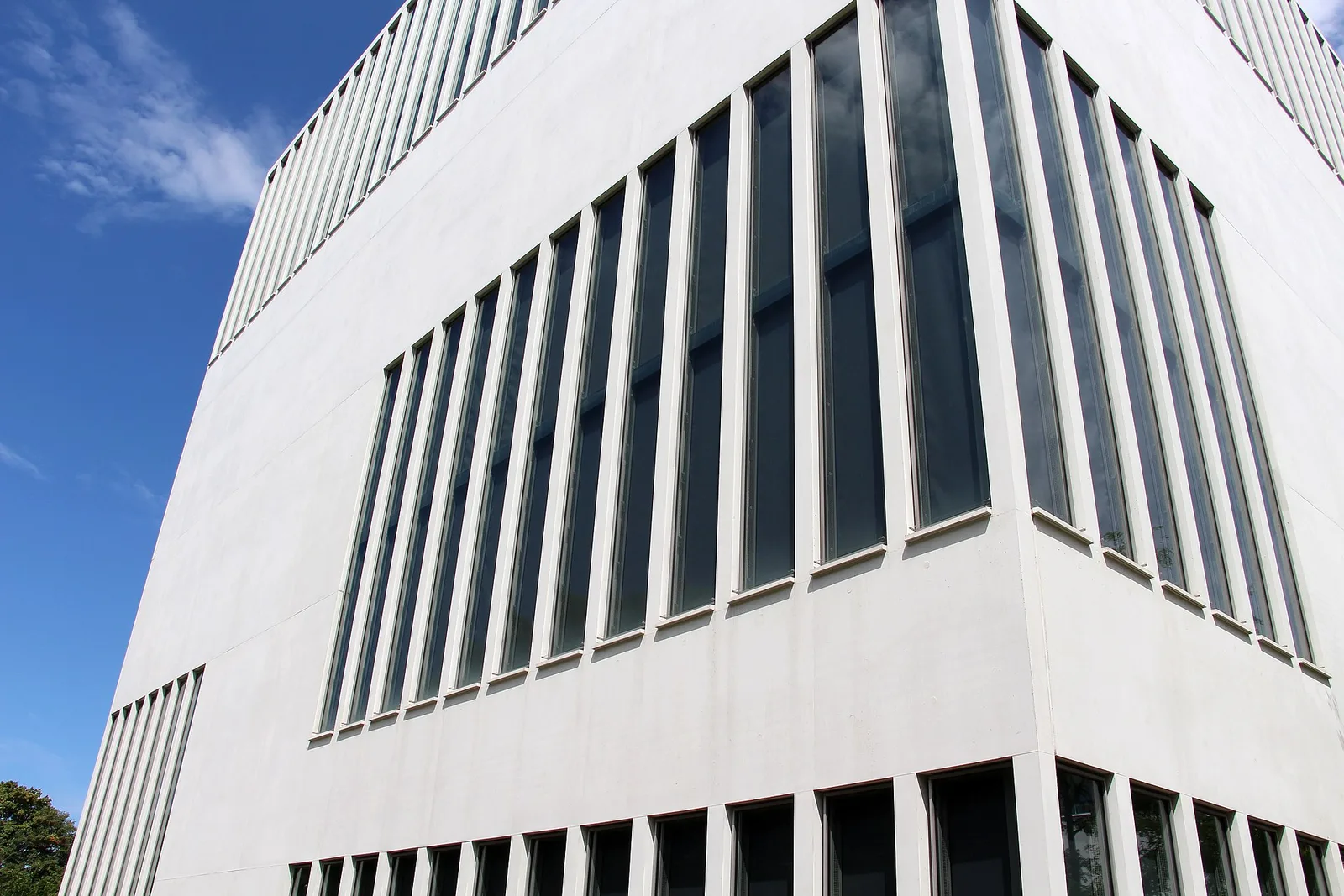
Photo: Fred Romero / Wikimedia Commons · CC BY 2.0

- ✓The NS-Dokumentationszentrum is a learning and remembrance centre, not a sight to tick off — it tells the history of National Socialism and Munich's central role in its rise, persecution and aftermath.
- ✓It stands on the exact site of the former 'Brown House', the Nazi party's national headquarters, near Königsplatz in Maxvorstadt — a deliberate choice to confront the history where it happened.
- ✓The permanent exhibition is document-led and largely text and photograph based, climbing the building floor by floor through the years before, during and after the Third Reich.
- ✓Admission to the permanent exhibition has been free in the past; verify the current arrangement, as well as opening hours, before you go.
What this place is — and how to approach it
The NS-Dokumentationszentrum — in full, the Munich Documentation Centre for the History of National Socialism — opened in 2015 as a place of learning and remembrance. It is not a conventional museum of objects and certainly not an attraction in the leisure sense; it is a sober, rigorous account of how National Socialism took hold, the crimes it committed, and why Munich in particular was so central to that story. Munich was where the Nazi party was founded and built its power base, the city the regime called the 'Capital of the Movement', and this centre exists to examine that history honestly on the very ground where much of it unfolded.
Approach a visit accordingly. Give it real time and attention, go when you have the emotional space for it rather than squeezing it between lighter sights, and treat it with the seriousness the subject demands. It is one of the most worthwhile things you can do in Munich, but it asks something of you in return.
The building and the site
The centre is a plain white cube on Brienner Straße, on the edge of Königsplatz, and its blunt, unadorned form is intentional — a deliberate contrast to the monumental architecture the Nazis favoured. The location is the heart of the matter: the building stands where the 'Braunes Haus', the Nazi party's national headquarters, once stood. The square around it was used for the regime's rallies and parades, and several Nazi-era buildings still survive nearby in reused form. Placing a centre of critical reflection on this precise spot is itself a statement.
Inside, the permanent exhibition is document-driven rather than object-driven: photographs, reproductions, texts and media that you read and absorb your way through, ascending the building floor by floor through the chronology — the years that gave rise to the movement, the regime in power and its persecution and crimes, and the long, difficult reckoning afterwards. Audio guides and accessible routes are provided; the building is step-free.
What you'll learn
The exhibition's strength is that it keeps the focus local and specific while connecting to the wider catastrophe. It traces why Munich, of all German cities, became the cradle of the Nazi movement; how ordinary institutions and citizens were drawn in or pushed out; the persecution of Jewish Munichers and other targeted groups; and the way the city dealt — and sometimes failed to deal — with this history in the decades after 1945. Temporary exhibitions and an active education and events programme extend the permanent displays.
It is a place to read and think rather than to be entertained, and that is the point. Many visitors find it the most important few hours of their Munich trip. Children and teenagers can take a great deal from it, but the material is heavy and some of it is distressing, so consider their age and prepare them; the centre offers guidance and formats aimed at different audiences.
- Munich's role as the birthplace and power base of the Nazi movement.
- The persecution of Jewish residents and other targeted groups.
- Resistance, complicity and everyday life under the regime.
- The post-war reckoning — and the silences — in how Munich remembered.
Visiting: hours, admission and practicalities
Admission to the permanent exhibition has in the past been free of charge, which reflects the centre's mission as a place of public education rather than a paid attraction; charges may apply to some special exhibitions or guided programmes. Because arrangements like this can change, confirm the current admission and any ticketing on the official site before you go — please verify. The same goes for opening hours, which follow a museum-standard pattern with a weekly closing day; check them for your date rather than relying on an older figure.
Allow at least ninety minutes to two hours to do the exhibition justice, and longer if you read thoroughly or join a guided tour. Audio guides help structure a visit, and pre-booking is worth checking in busy periods or for tours. The centre is fully accessible. There is no need to rush — this is a place that rewards a slow, attentive pace.
At a glance
A short planning reference, offered plainly. Confirm the volatile details — opening hours, admission, guided tours — on the official site before you go, as these can change.
- Where: Max-Mannheimer-Platz 1, Brienner Straße, beside Königsplatz in Maxvorstadt.
- Nearest transit: U2 Königsplatz, a moment away; trams and buses nearby; ~15 min walk from the Altstadt.
- Time needed: at least 1.5–2 hours; longer if you read closely or take a guided tour.
- Admission: the permanent exhibition has been free in the past — verify the current arrangement.
- Approach: a place of learning and remembrance, not a leisure stop; give it your full attention.
- Accessibility: fully step-free, with audio guides and accessible routes.
Tours, the wider history, and choosing a guide
Some visitors take more from the centre with a guide than alone, and the centre's own programme of tours and educational formats is the safest starting point — these are run by people with the training and care the material demands. Beyond the building, several Munich walking tours trace the 'Third Reich in Munich' through the squares and streets where the movement rose, often ending at or near Königsplatz. These can be excellent, but the quality and tone of history tours vary widely, so choose an operator with genuine historical credentials rather than the cheapest option, and avoid anything that treats this past as spectacle.
The documentation centre works best as one part of a considered engagement with the city's twentieth-century history rather than a standalone box ticked. Munich's role in these events is not confined to one building, and the centre is at its most powerful when you let it connect outward — to the square outside, to the surviving buildings nearby, and, for those who can give it a full and separate day, to the Dachau memorial. Approach the whole subject with patience and humility and it will reward you.

Common questions, answered plainly
Is the NS-Dokumentationszentrum suitable for children? The centre is a serious place of learning, and the material — persecution, violence, the machinery of a dictatorship — is heavy and at times distressing. Older children and teenagers can take a great deal from it, and the centre offers guidance and formats aimed at different audiences, but younger children are unlikely to engage with the document-led displays and may find parts upsetting. Read the centre's own age guidance and prepare younger visitors before you go.
How much time does it need? Allow at least ninety minutes to two hours to do the permanent exhibition justice, and longer if you read closely or join a guided tour. It climbs the building floor by floor through the chronology, so it rewards an unhurried, attentive pace rather than a quick lap. Go when you have the emotional space for it, not as a filler between lighter sights.
Is it the same as visiting Dachau? No — they are distinct and complementary. The documentation centre, in the city, explains how National Socialism arose and why Munich was central to it; the Dachau Concentration Camp Memorial Site, about twenty minutes out by S-Bahn and bus, is the preserved site of a concentration camp and a place of mourning. Each deserves its own unhurried visit; many people do the centre in the city and give Dachau a separate, full day.
Do I need to book, and is it accessible? The permanent exhibition has generally not required advance booking, though tours and busy periods are worth checking ahead; the building is fully step-free with audio guides and accessible routes. Admission to the permanent exhibition has been free in the past, but confirm the current arrangement, opening hours and any tour bookings on the official site, as these can change.
Getting there and what's nearby
The centre is at Max-Mannheimer-Platz 1 on Brienner Straße, beside Königsplatz in Maxvorstadt. The U2 stops at Königsplatz a moment away, and trams and buses pass nearby; from the Altstadt it's a walk of about fifteen minutes. The surrounding square and its antiquities museums are part of the same historical landscape, so a visit naturally connects to Königsplatz itself — the parade ground the regime exploited — which adds context to what you've seen inside.
For a fuller, more guided engagement with this history, many visitors continue to the Dachau Concentration Camp Memorial Site, around twenty minutes from the centre by S-Bahn and bus. It is a place of profound importance and deserves a separate, unhurried day rather than being tacked on; treat it with the same care and seriousness as the documentation centre.
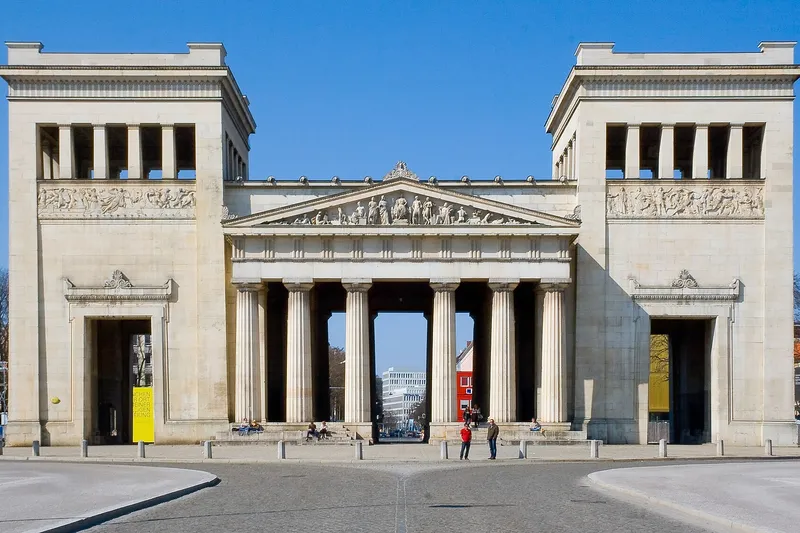 Königsplatz guideThe square the centre stands beside, with its neoclassical museums and contested history.
 Dachau Memorial from MunichHow to visit the concentration-camp memorial site respectfully, as a separate day.
Map pins
Map data © OpenStreetMap contributors · Tiles © OpenFreeMap
Dachau Memorial from Munich: A Respectful Guide
The Dachau Concentration Camp Memorial Site is about twenty minutes from central Munich and among the most important things you can do in Bavaria. This is a guide to reaching and approaching it respectfully — as a day of remembrance, not a sightseeing stop.
Read guide
Munich's Third Reich History Sites
A careful, source-led guide to Munich's Nazi-era history — why the city was so central to it, the surviving sites and what they mean now, and how to engage with this history responsibly.
Read guideKönigsplatz, Munich
A guide to Königsplatz — Munich's grand neoclassical square, its three temple-like museum buildings, the difficult Nazi-era history written into its stones, and how it anchors the Kunstareal.
Read guide