
Best Walking Tours in Munich
Munich is made for walking — small, flat and dense with stories. Here's how to choose between a free tip-based walk, a paid small-group Old Town tour, a focused Third Reich history walk, a beer-and-food crawl on foot, and simply doing it yourself.

Photo: Jan Antonin Kolar / Unsplash

- ✓Munich's Altstadt is roughly a kilometre across and entirely flat, so almost every walking tour covers the same compact ground — what differs is the storytelling and the focus.
- ✓Free, tip-based walks are the budget standard and genuinely good; bring cash and treat a fair gratuity (commonly €10–15 per person) as the real fare.
- ✓For Third Reich history, pay for a small, historian-led group — this is the one walk where the guide's expertise is the entire reason to book.
- ✓Times, meeting points, durations and prices shift by season and operator; the tour types here are evergreen, so verify the specifics on the operator's current page.
Why walking is the right way to see Munich
Munich rewards feet over wheels. The historic core sits inside the line of the old city wall, barely a kilometre across, and it's flat, pedestrianised in its centre and threaded with squares, churches and markets that reveal themselves only when you slow down. The headline sights — Marienplatz, the Frauenkirche, the Viktualienmarkt, the Residenz, the Hofbräuhaus, the surviving gates — are all within an easy stroll of one another. There is genuinely no faster or more pleasant way to grasp the Old Town than on foot.
That's also why a walking tour is the most popular guided format in the city, and why it's worth being a little choosy. Because the ground is so compact, almost every general tour visits the same handful of landmarks; the difference between a forgettable two hours and a great one comes down to the guide, the group size and the angle — orientation, history, food, or a single dark chapter told properly. Below, we sort the options so you can match a walk to what you actually want from it.
- The Altstadt is ~1 km across, flat and largely car-free — ideal walking terrain.
- Most general walks cover the same core sights; the guide and focus are the differentiator.
- Wear comfortable shoes: it's all cobbles and stone, and two hours add up.
- You can replicate any general route for free with a self-guided walk and a little reading.
Free (tip-based) walking tours
Several operators run 'free' walking tours that gather near Marienplatz daily and last roughly two to two-and-a-half hours. They're free to join and paid by tip at the end — which works out as an excellent-value orientation if your guide is good, and they usually are, because their income depends on it. Expect a brisk, anecdote-rich loop of the Old Town essentials: the New Town Hall and Glockenspiel, the Frauenkirche, the royal streets, the Hofbräuhaus and a city gate or two.
Two practical notes. First, 'free' means you should still budget for it — bring cash and tip fairly (commonly €10–15 per person is the going expectation); it's the right thing and it keeps good guides working. Second, these walks can be large in peak season, so if a personal pace matters to you, a paid small-group tour may suit better. Booking is usually free and just reserves your spot, but confirm the meeting point, as it's typically a specific corner of Marienplatz rather than 'the square'.
- Duration: ~2–2.5 hrs; meet near Marienplatz; daily departures in season.
- Pay by tip — bring cash and budget roughly €10–15 per person.
- Great value and orientation; groups can be large at peak times.
- Reserve a spot if booking is offered, and confirm the exact meeting corner.

Paid small-group and private tours
If you'd rather a calmer, more tailored experience, a paid small-group tour caps the numbers — often around eight to fifteen — so you can hear the guide, ask questions and move at a gentler pace. These cover much the same Old Town ground as the free walks but with more room to dig into the bits that interest you, and they're an easy upgrade if you're travelling as a couple or with family.
A private tour goes further: a guide for your group alone, a route shaped to your interests and your schedule, and the flexibility to slow down at the Residenz or skip ahead to the markets. It's the priciest format and overkill for a casual first look, but it's the right call for special occasions, accessibility needs, or visitors who want depth on a specific theme. Whatever you book, read the group cap rather than trusting the word 'small', and check exactly what's included — church or tower entries are sometimes extra.
- Small-group: capped numbers, gentler pace, easy to ask questions — a solid middle option.
- Private: fully customisable route and timing; best for occasions, depth or accessibility.
- Always check the group cap and what the price includes before booking.
Themed walks: history, food and beer
The themed walks are where a tour stops being optional and starts being genuinely additive. The most important is the Third Reich history walk. Munich was where the Nazi movement took root, and a two-to-three-hour walk traces the 1923 putsch route, Königsplatz, the Feldherrnhalle and the surrounding sites with the seriousness the subject requires. This is the one walking tour where you should pay for a small, historian-led group rather than join a large free one — the quality of the guide is the entire value. Pair it with the NS Documentation Centre for the museum side of the story.
On the lighter side, food and beer walks turn an afternoon into an education: a guide leads you between the Viktualienmarkt stalls and a couple of taverns, ordering the Weißwurst, Obatzda, Leberkäs and Brezn you might otherwise miss, and explaining how a Maß, a Helles and a beer garden actually work. They run roughly three to four hours and are best taken hungry. If you'd rather walk and taste on your own, our food hub covers the etiquette and the where-to-go.
- Third Reich walk: ~2.5 hrs, book a historian-led small group — the guide is the point.
- Food walk: ~3–4 hrs, Viktualienmarkt plus taverns; arrive hungry, flag dietary needs ahead.
- Beer walk: learn the styles and beer-garden etiquette before striking out solo.

Specialist and seasonal walks worth knowing
Beyond the staples, Munich's walking-tour scene has a long tail worth a glance. Architecture and design walks dig into the city's layers — medieval core, royal 19th-century boulevards, the careful post-war reconstruction of an Old Town that was heavily bombed, and the bold modernism of the 1972 Olympic Park. Photography walks chase the best light and angles at Marienplatz, the rooftops and the river. And literary or 'bohemian Schwabing' walks trace the artists and writers who made that quarter famous a century ago — a gentler, more atmospheric counterpart to the big-sight loops.
Season changes the calendar, too. In the run-up to Christmas, themed walks fold in the markets, the Glühwein and the lit-up Old Town; around Oktoberfest, some operators add Wiesn-focused or beer-history walks. These come and go year to year, so they're best found on operators' current listings rather than planned far ahead. Whatever the theme, the core advice holds: in a city this walkable, the value of any tour is the guide and the angle, not the distance covered.
- Architecture and design walks trace the medieval core, royal boulevards, post-war rebuild and Olympic modernism.
- Photography and 'bohemian Schwabing' walks suit visitors after light, angles or atmosphere over checklists.
- Seasonal walks (Christmas markets, Oktoberfest beer history) appear and vanish — check current listings.

Booking checklist and at-a-glance facts
Before you commit to any Munich walking tour, run through a short checklist so the experience matches what you actually want. The city's walkability means the downside of a poor choice is small, but a couple of minutes of due diligence turns a fine walk into a great one — and stops you paying for an orientation you didn't need.
- Focus: orientation, history, food, beer or architecture — match it to your gap.
- Group size: read the cap, not the word 'small'; private tours remove the question.
- Duration: most walks run 2–3 hours; food walks 3–4 hours.
- Cost model: tip-based (free) vs fixed-price; bring cash either way for tips and extras.
- Meeting point: usually a named corner on or near Marienplatz — confirm the exact spot.
- Language and inclusions: check the delivery language and whether entries are extra.
- Verify the volatile bits — times, prices and departure points — on the operator's page.
Or do it yourself: the self-guided alternative
Because the Old Town is so small and legible, you can walk it perfectly well without a guide. Our self-guided Old Town loop strings the essential sights into a single three-kilometre circuit that starts and ends on Marienplatz — Glockenspiel, Alter Peter for the rooftops, the Viktualienmarkt for lunch, the Asamkirche, the Sendlinger Tor, the Frauenkirche, the Residenz and the Hofgarten — for the cost of nothing but your time and a tower fee. It's the right choice if you like reading ahead, setting your own pace and pausing where you please.
The trade-off is the storytelling: a self-guided walk gives you the route and the facts, but not the off-script anecdotes and the live answers a good guide brings. A nice hybrid is to take a free orientation walk on day one to get the lie of the land and the stories, then return to your favourite stretches alone, unhurried, on day two. However you do it, keep timing flexible around the 11:00 Glockenspiel and confirm any tower or museum hours on the day, since those shift.
- Self-guided pros: free, fully flexible, no group, pause and detour at will.
- Self-guided cons: no live anecdotes or Q&A — you bring the context yourself.
- Hybrid plan: a guided orientation first, then revisit favourites solo.


Munich Old Town Walk
A self-guided walking route through Munich's Altstadt — linking Marienplatz, the great churches, the Viktualienmarkt, the royal streets, the city gates and the beer halls in one easy loop.
Read guide
Munich's Third Reich History Sites
A careful, source-led guide to Munich's Nazi-era history — why the city was so central to it, the surviving sites and what they mean now, and how to engage with this history responsibly.
Read guide
Best Munich Tours
When a guided tour earns its place in a Munich trip — and which kind to pick. Old Town walks, food and beer crawls, football and BMW, the Third Reich history walk, and the big castle and Dachau day trips, weighed by time, cost and effort.
Read guideMore in Things to Do
6
Allianz Arena, Munich
How to visit Munich's glowing football stadium — the self-guided Erlebnistour, the FC Bayern Museum, match-day logistics, and the easy U6 ride out to Fröttmaning.
Read guide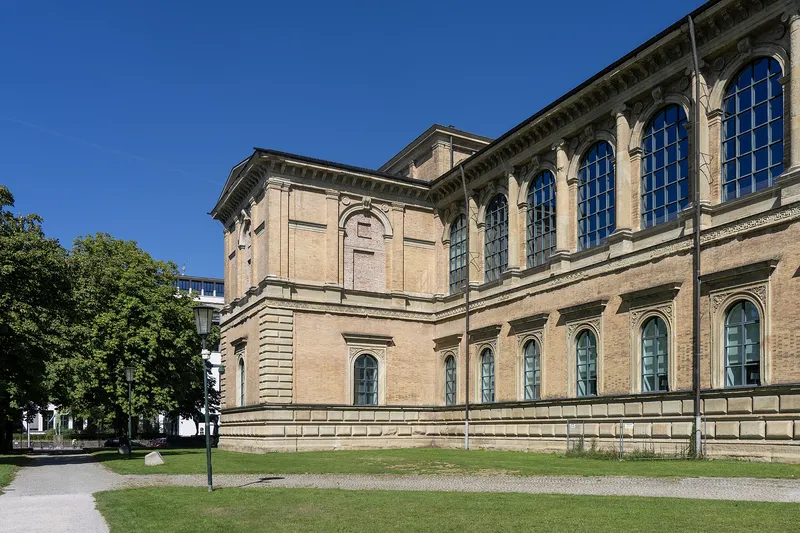
Alte Pinakothek, Munich
How to visit Munich's Old Masters gallery in the Kunstareal — the Dürers and Rubenses worth crossing town for, the Sunday-ticket angle, and how to build a wider museum-quarter day around it.
Read guide
Asamkirche, Munich
How to visit Munich's astonishing late-Baroque Asamkirche on Sendlinger Straße — the church two brothers built next to their own house — without overplanning it.
Read guide
Best Museums in Munich
Choose the right Munich museum for you — by interest, by how much time you have, by which day of the week, and by how useful it is on a rainy day.
Read guide
Best Photography Spots in Munich
Rooftops, squares, churches, parks and palaces — the most photogenic places in Munich, with the light and timing notes to shoot each one well.
Read guide
Best Things to Do in Munich
A ranked first-trip shortlist — from Marienplatz and the Residenz to the beer gardens, the great museums and the English Garden.
Read guide