
Best Food Markets in Munich
Beyond the famous Viktualienmarkt — the neighbourhood and seasonal markets where Munich actually shops, for snacks, gifts, picnic supplies and a feel for the city's daily rhythm.
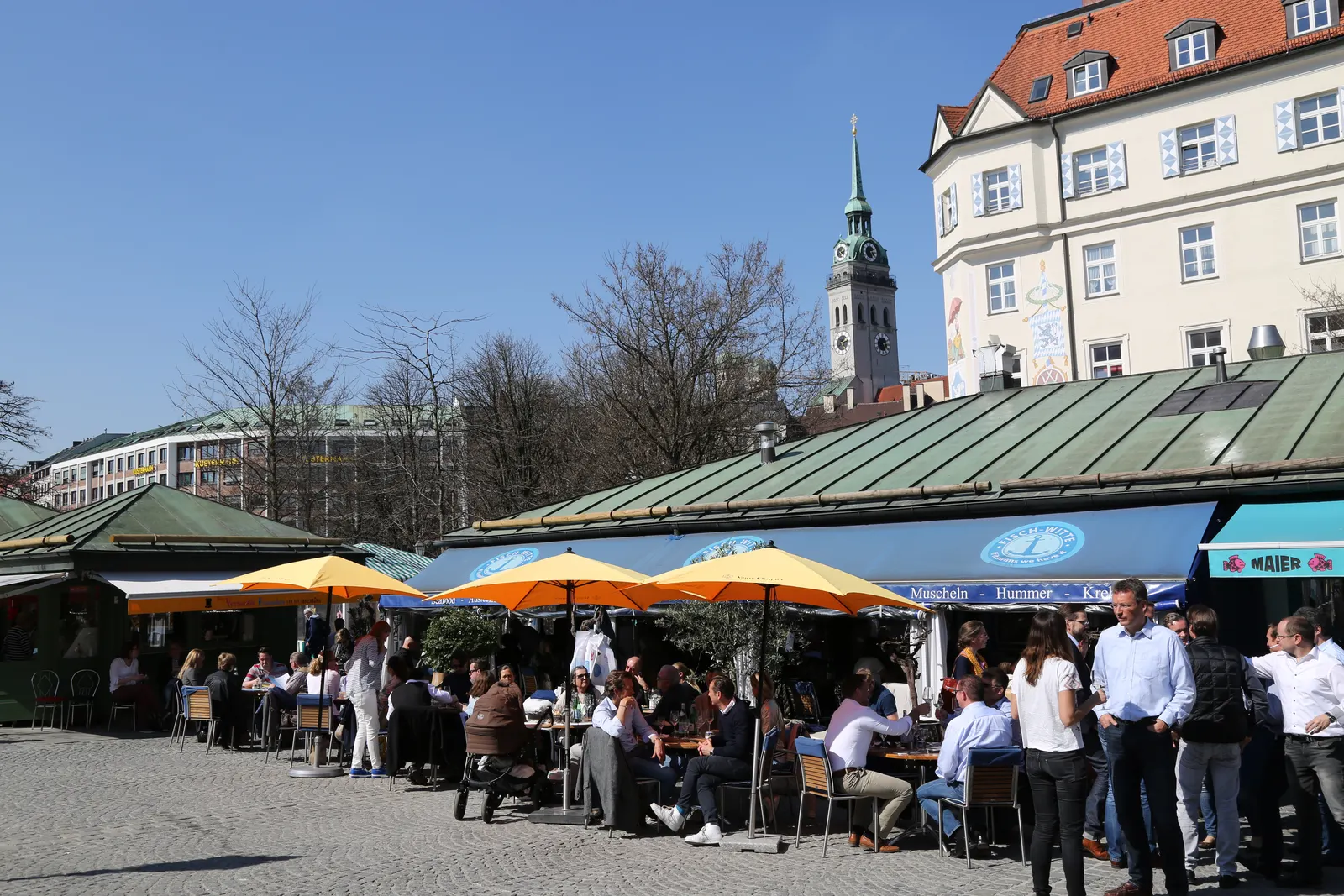
Photo: H-stt / Wikimedia Commons · CC BY-SA 4.0

- ✓The Viktualienmarkt is the famous daily market off Marienplatz, but Munich's other markets — neighbourhood squares and seasonal fairs — are where the city's everyday food life happens.
- ✓Most regular markets run daytime Monday to Saturday and close on Sundays; weekly and seasonal markets keep their own days, so check before you go.
- ✓Markets are the best, cheapest source of a picnic — cheese, Obatzda, cold cuts, bread, radishes and fruit to carry to a beer garden, the English Garden or the Isar.
- ✓They double as gift hunting grounds: honey, mustard, spices, jams and Bavarian specialities make better, tastier souvenirs than the trinket shops.
Why markets are the best way to eat in Munich
Munich's markets are not a side attraction; they're a window into how the city actually eats. Where restaurants near the sights can be touristy and pricey, the markets are where Münchners shop, snack and gather, and where a few euros buys a genuinely good lunch or the makings of a memorable picnic. Grazing a market — a sausage here, a wedge of cheese there, a warm pretzel and a piece of fruit — is one of the most enjoyable and least expensive things you can do in the city.
There's a rhythm to learn. Almost everything in Munich, markets included, closes on Sundays under Germany's shop-closing rules, so markets are a Monday-to-Saturday, daytime pleasure, busiest and freshest in the morning. Stalls keep their own hours and many wind down by mid-afternoon, so go earlier rather than later. And because markets are about provisions, they pair perfectly with the city's other great open-air institution: buy your spread at a market, carry it to a beer garden's self-service benches, and buy only the beer there.
Markets also reward a little seasonal awareness. Munich's produce shifts through the year, and the stalls show it: white asparagus (Spargel) is a genuine event in late spring, when whole stalls turn over to it; summer brings berries, stone fruit and chanterelles; autumn means squash, game, plums and the first pressings of apple juice; and winter narrows the fresh produce but fills the squares with the Christmas markets. Eating what the market is heaped with that week is both cheaper and far more interesting than ordering the same thing year-round in a restaurant.
This guide starts with the famous one and then sends you to the markets locals use — the everyday neighbourhood squares and the seasonal fairs that most visitors never find.

Viktualienmarkt — the famous one
Start with the Viktualienmarkt, the daily open-air market just south of Marienplatz that has fed Munich since the early 19th century. Its roughly 140 permanent stalls sell produce, cheese, fish, meat, honey, spices and flowers, and a clutch of standing counters serve quick lunches — sausages, fish rolls, soup, pretzels — that beat the tourist restaurants on the square. At its centre, under the blue-and-white maypole, is a small self-service beer garden where the tap rotates among the six Munich breweries and you may bring your own food from the stalls.
It is, fairly, the most touristed of Munich's markets, but it's still a working one and the obvious lunch-and-picnic answer in the Old Town. Prices here run a little higher than at the neighbourhood markets — you're paying for the address, a minute from Marienplatz — but it remains far better value and far better company than the restaurants ringing the square. Use our dedicated food guide for exactly what to order, the stalls to look for and the timing, then read on for the markets where you'll hear more German than English.
The neighbourhood and weekly markets locals use
Munich keeps a network of smaller permanent and weekly markets, run in the same tradition as the Viktualienmarkt but on a neighbourhood scale and with barely a tourist in sight. They're worth seeking out if you're staying nearby or simply want the everyday version of the experience — the same good cheese, sausage and produce, fewer cameras, and the calm of a place where the vendors know the regulars by name. Hours and days vary by market and season, so treat the notes below as a starting point and verify locally before a special trip.
The trick is to match the market to where you already are. If you're spending an afternoon in Schwabing or walking the English Garden's western edge, the Elisabethmarkt is a natural lunch stop; if you're exploring Haidhausen's village-like squares, the Markt am Wiener Platz is built into the route; and if you're heading out west toward Nymphenburg, the Pasing market saves a detour back into the centre. None of them needs to be a destination in its own right — they're best folded into a neighbourhood you were going to see anyway.
- Elisabethmarkt (Schwabing) — the city's second permanent daily market, a leafy neighbourhood institution of produce, cheese and snack stalls; far quieter than the Viktualienmarkt.
- Markt am Wiener Platz (Haidhausen) — a small, pretty permanent market on a village-like square, with a maypole and a couple of standing bites; a lovely pairing with a Haidhausen wander.
- Pasinger Viktualienmarkt (Pasing) — a permanent market out west, useful if you're staying that way or coming back from Nymphenburg.
- Weekly Wochenmärkte — many districts hold a weekly outdoor market on set days; ask locally or at your hotel for the nearest, and go in the morning.
- Supermarket-and-bakery picnic — when markets are shut (Sundays, late afternoons), a good bakery plus a supermarket still assembles a fine Brotzeit board.


Seasonal markets — fairs, festivals and Christmas
Beyond the everyday markets, Munich's calendar throws up seasonal ones that are events in their own right. The most famous food-and-flea hybrid is the Auer Dult, a traditional fair held three times a year on the Mariahilfplatz in the Au — part market of crockery, household goods and antiques, part funfair, and entirely Münchner. It's a fine afternoon's browsing with snacks between the stalls.
In winter, the Christmas markets take over the city's squares from late November to Christmas, led by the big Christkindlmarkt on Marienplatz: less about groceries than about Glühwein, roasted chestnuts, gingerbread, sausages and handmade gifts under the lights. And through the year, the city's beer festivals — Frühlingsfest in spring, Oktoberfest in autumn — bring their own vast food markets in tent form. None of these replace the daily markets for a picnic, but each is a seasonal food experience worth timing a visit around.
- Auer Dult (Au) — a traditional fair on Mariahilfplatz three times a year; crockery, antiques, a funfair and plenty to snack on. Verify the current dates.
- Christkindlmarkt and the Christmas markets — late November to Christmas, led by Marienplatz; Glühwein, chestnuts, gingerbread, sausages and gifts.
- Frühlingsfest & Oktoberfest — the spring and autumn beer festivals on the Theresienwiese, with their own food halls — seasonal and date-dependent.
How to shop a Munich market — the practical notes
A few habits make any Munich market easier and more enjoyable. Go in the morning, when the produce is freshest, the queues are short and the full range of stalls is open; by late afternoon the choice thins and shutters start coming down. Bring cash — many stalls take cards now, but not all, and small coins smooth the quick counter buys. And if you're building a picnic to carry off, buy the perishables last and ask for cheese and meat to be cut and wrapped to order, so your spread reaches the bench in good shape.
Learn a couple of words and the exchange flows. 'Eine Brezn, bitte' gets you a pretzel; 'ein Stück' is a piece, and you can ask for cheese 'zum Mitnehmen' (to take away) or to eat now. Vendors will happily offer a taste, and a friendly question about what's good or in season is the surest route to the best thing on the stall. Tipping isn't expected at a market counter the way it is at a restaurant table, though rounding up is always welcome.
Finally, think of the market as part of a plan rather than a standalone errand. The classic move is to shop in the morning and eat in the afternoon: gather a Brotzeit board, carry it to a beer garden's self-service benches — where you may bring your own food and buy only the beer — or out to the English Garden or the banks of the Isar for a picnic. It's the cheapest, most local and most genuinely lovely way to put together a meal in Munich.
At a glance
The famous one — the Viktualienmarkt off Marienplatz, daily Monday to Saturday; the best central lunch-and-picnic stop, with a maypole beer garden.
The local ones — the Elisabethmarkt in Schwabing, the Markt am Wiener Platz in Haidhausen and other neighbourhood and weekly markets where Munich actually shops.
The seasonal ones — the Auer Dult fair three times a year, the Christmas markets in winter, and the spring and autumn beer festivals.
How to use them — graze for a cheap, good lunch and buy a Brotzeit to carry to a beer garden, the English Garden or the Isar.
When to go — Monday to Saturday, mornings best; closed Sundays; stall hours vary by market and season — verify before a special trip.
Good to know — bring cash, buy perishables last, and treat honey, mustard and spices as the tastiest, most local souvenirs.
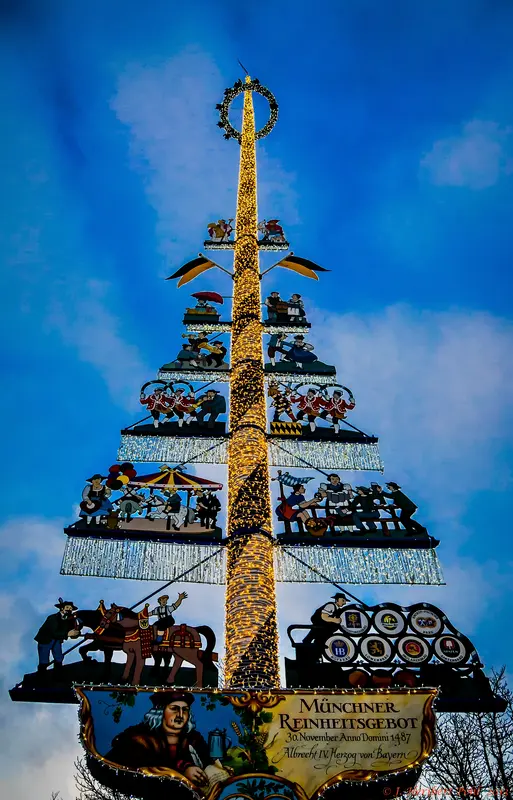
Viktualienmarkt Food Guide
What to eat at Munich's famous Viktualienmarkt, when to go, and how to use it for a fast, characterful lunch a minute from Marienplatz — stalls, snacks and a picnic to carry out.
Read guide
What to Buy in Munich: Souvenirs Worth Bringing Home
Tasteful Munich souvenirs that aren't tourist tat — Bavarian food gifts, beer-hall classics, traditional dress, design objects and Christmas-market finds, with where to buy each.
Read guide
Auer Dult, Munich
The Auer Dult is Munich's beloved traditional market fair — part flea market, part household-goods bazaar, part old-fashioned funfair — held three times a year on the Mariahilfplatz in the Au, beneath the spires of the Mariahilfkirche.
Read guideMore in Food & Drink
6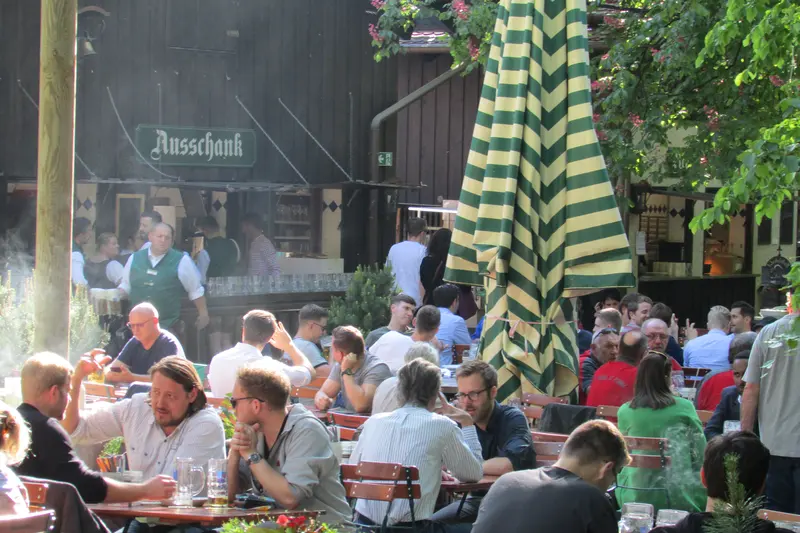
Augustiner-Keller, Munich
The beer garden, the cellar restaurant, reservations and what to order at the Augustiner-Keller near the Hauptbahnhof — the locals' choice for the city's most-loved beer.
Read guide
Bavarian Food to Try in Munich
What to order in Munich — Weißwurst, roast pork and pork knuckle, pretzels and dumplings, Obatzda and radi, the cakes and the beers — and the little rules that make each one make sense.
Read guide
Best Beer Gardens in Munich
A seasonal guide to Munich's classic beer gardens — the chestnut-shaded benches, the bring-your-own rule, what to order, and which gardens suit families, dates or a quiet pint.
Read guide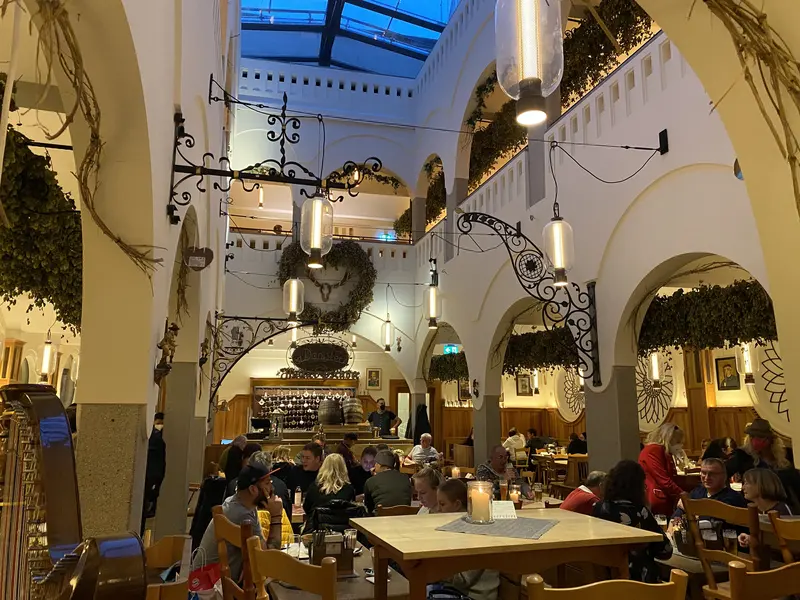
Best Beer Halls in Munich
How to choose among Munich's great beer halls — the Hofbräuhaus, the Augustiner and Löwenbräu houses, Paulaner and more — compared by atmosphere, food, noise and first-time ease.
Read guide
Best Cocktail Bars in Munich
Where to drink well in a beer city — Munich's craft cocktail bars, hotel bars and late-night spots, picked by neighbourhood and vibe for date nights, a refined nightcap or somewhere open into the small hours.
Read guide
Best Coffee and Cafés in Munich
Where to find good coffee in Munich — specialty third-wave roasters, classic Kaffeehaus institutions and konditoreien — sorted by neighbourhood and by whether you want to work, linger romantically or grab a quick cup.
Read guide