
Lenbachhaus, Munich
A guide to the Lenbachhaus — home of the world's greatest Blue Rider collection — its sunflower-yellow villa, the Kandinsky and Münter rooms, tickets and an easy Kunstareal pairing.
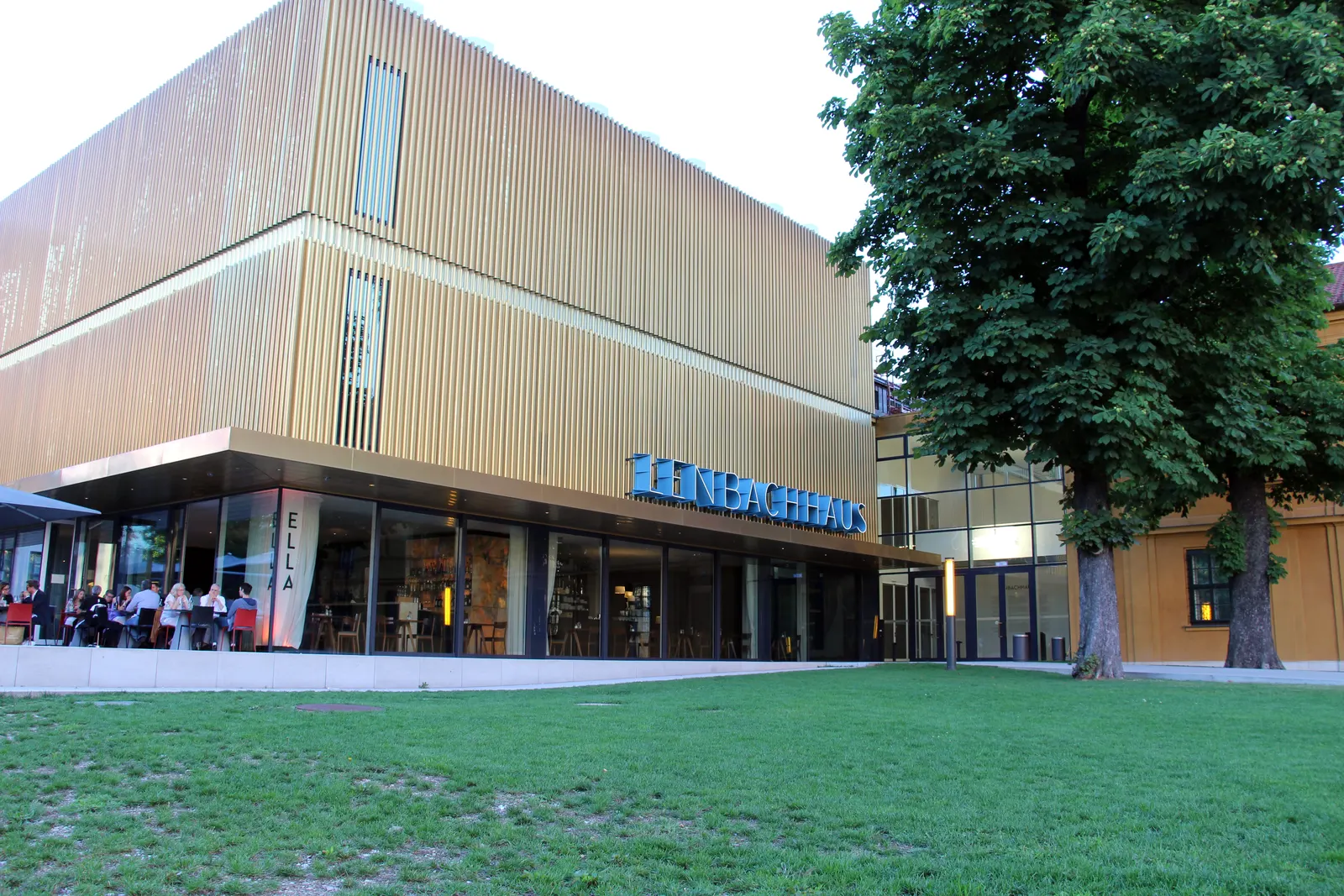
Photo: Fred Romero / Wikimedia Commons · CC BY 2.0

- ✓The Lenbachhaus holds the largest collection of Blue Rider (Der Blaue Reiter) art in the world — Kandinsky, Münter, Marc, Macke, Jawlensky — the colour-soaked Munich avant-garde that helped invent abstraction.
- ✓The building itself is a treat: a Florentine-style villa once owned by the 'painter-prince' Franz von Lenbach, painted a warm ochre-yellow, wrapped around a fountain garden, with a luminous modern wing added in 2013.
- ✓It stands right on Königsplatz, in the Kunstareal, so it pairs naturally with the square's antiquities museums and the Pinakotheken a few minutes north.
- ✓It's a mid-sized, manageable museum — give it ninety minutes to two hours — and the gift of Gabriele Münter's own collection is the reason so many Kandinskys live here at all.
The villa, the painter-prince and the gift that made it
The Lenbachhaus began as a private dream of grandeur. Franz von Lenbach, the most fashionable society portraitist of late-nineteenth-century Munich, built himself a Tuscan-style villa just off Königsplatz, all warm yellow render, loggias and a formal garden with a fountain. The city later acquired it and turned it into a municipal gallery — and it remains one of the loveliest art settings in Munich, the kind of place where the architecture and the garden are half the pleasure. In 2013 a glowing, brass-toned extension by Foster + Partners was added, doubling the space and giving the old villa a confident modern counterweight.
What turned a charming city gallery into a world destination was a single act of generosity. In 1957, on her eightieth birthday, the painter Gabriele Münter gave the Lenbachhaus a vast trove of works she had kept for decades — paintings by Wassily Kandinsky (her former partner), her own canvases, and pieces by their circle. Much of it had been hidden through the Nazi years, when this art was condemned as 'degenerate'. That gift is why the world's richest Blue Rider collection sits not in Berlin or Paris but in this yellow Munich villa.
The Blue Rider rooms — what you've come to see
Der Blaue Reiter — the Blue Rider — was a loose circle of artists who gathered around Munich and the nearby village of Murnau in the years just before the First World War. They chased pure, emotional colour and pushed painting toward abstraction, and the Lenbachhaus tells their whole story across a sequence of glowing rooms: Kandinsky's path from Murnau landscapes to early abstraction, Münter's bold flat colour, Franz Marc's blue horses and yellow cows, August Macke's sunlit scenes, and Alexej von Jawlensky's mask-like portraits.
Stand in front of the Murnau pictures and you can feel the moment painting tipped over: the hills are real, then suddenly they're chords of orange and violet that no longer need to be hills at all. It is one of the great pivots in modern art, and almost uniquely you can watch it happen in a single building. Beyond the Blue Rider, the museum carries strong holdings of nineteenth-century Munich painting and a serious contemporary programme — Joseph Beuys has a dedicated presence, and there's a rotating run of installation and new-media work.
- Wassily Kandinsky — from the Murnau landscapes to the brink of abstraction.
- Gabriele Münter — the artist whose 1957 gift built the collection.
- Franz Marc and August Macke — the colour-charged heart of the Blue Rider.
- Alexej von Jawlensky and the wider Munich avant-garde, plus a Beuys focus and changing contemporary art.
How long to give it, and how it feels
The Lenbachhaus is comfortably done in ninety minutes to two hours, which makes it a relaxed centrepiece rather than an endurance test. The Blue Rider rooms reward slow looking — the whole point of this art is the way the colour works on you — so don't rush them to reach the contemporary wing. If your energy is limited, give the Blaue Reiter floors your full attention and treat the rest as a bonus.
Atmospherically it's among the most charming museums in the city. The yellow villa, the garden fountain, the warm light through the new wing and the gentle pace make it a favourite for couples and for anyone who finds the bigger galleries overwhelming. It pairs beautifully with a slow coffee afterwards, sitting in the garden or stepping out onto Königsplatz.
Murnau, and why this story matters
If one place explains the Lenbachhaus's collection, it's the little market town of Murnau in the Alpine foothills south of Munich. From 1909 Gabriele Münter owned a house there, and Kandinsky, Marc, Jawlensky and Marianne von Werefkin gathered around it to paint the same hills, churches and gardens again and again. You can watch their styles loosen picture by picture in the Lenbachhaus's rooms — the Murnau landscapes are where realism gives way to colour, where a hillside becomes a feeling. Knowing that these were painted by friends working side by side in one small town gives the rooms a warmth that a movement's name alone can't.
The collection also carries a quiet weight of survival. Much of the Blue Rider art the Nazis branded 'degenerate' was destroyed, sold off or scattered; that so much of this circle's work came through intact is largely thanks to Münter, who hid a trove of it in her Murnau cellar through the war years and then gave it to Munich in 1957. When you stand in front of an early Kandinsky here, you're often looking at a painting that only exists because one woman chose to protect it.

At a glance
A quick planning reference — confirm the volatile details (hours, prices, current exhibitions) on the official site before you travel, as these change.
- Where: Luisenstraße 33, on the western corner of Königsplatz, Maxvorstadt.
- Nearest transit: U2 Königsplatz, on the doorstep; local trams and buses nearby; ~15 min walk from the Altstadt.
- Time needed: about 1.5–2 hours; the Blaue Reiter rooms deserve the bulk of it.
- Don't miss: the Kandinsky and Münter rooms, Franz Marc's animals, the garden and the Foster + Partners wing.
- Good to know: run by the city, not the state — so the state museums' reduced-Sunday rate does not apply here.
- Accessibility: step-free, with lifts; a recently extended, modern-standard building.
Tickets, hours and the practical detail
The Lenbachhaus is run by the city of Munich rather than the state, so its ticketing is its own — note that the state museums' reduced-Sunday tradition does not automatically apply here, which sometimes surprises visitors planning a budget Sunday museum-hop. Standard and reduced rates apply, with concessions and free or reduced entry for the young; exact prices change, so check the current figures on the official site before you go — please verify.
Opening hours follow a museum-standard rhythm with a weekly closing day and at least one late evening, but the precise days and times are exactly the sort of detail that shifts — confirm them for your date rather than trusting an older number. The building is accessible, with the lift and step-free routes you'd expect of a recently extended museum. If a major temporary exhibition is on, a separate or combined ticket may apply — verify at the desk.
Beyond the Blue Rider — Lenbach, Beuys and the contemporary wing
It would be a pity to leave thinking the Lenbachhaus is only the Blaue Reiter. The villa keeps a suite of rooms devoted to Franz von Lenbach himself and to nineteenth-century Munich painting — society portraits, genre scenes and the gilded world the painter-prince moved in — which set the avant-garde's break with tradition in sharp relief. Walk from a glossy Lenbach portrait into a Kandinsky and you feel the floor shift beneath the whole nineteenth century.
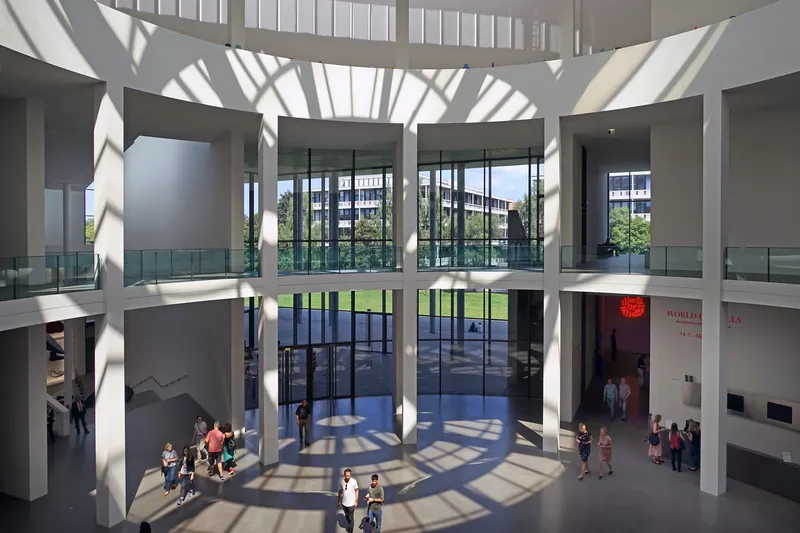
The new wing turns toward the present. Joseph Beuys has a strong, almost reverent presence here, and the museum runs an ambitious programme of contemporary art, light and installation — Olafur Eliasson's glowing work is among the pieces associated with the building's modern spaces. Temporary exhibitions are a serious part of the offer rather than an afterthought, so it's always worth a glance at what's on before you go; a major show can be the reason to choose the Lenbachhaus over another museum on a given day.
Getting there and pairing it with the day
The Lenbachhaus sits at the western edge of Königsplatz, on Luisenstraße in Maxvorstadt. The U2 stops directly at Königsplatz a moment from the door, and several tram and bus lines pass nearby; from the Altstadt it's a pleasant walk of fifteen minutes or so. Because it shares the square with the Glyptothek and the Staatliche Antikensammlungen, and sits just south of the Pinakotheken and Brandhorst, it slots into almost any Kunstareal route.
A satisfying half-day: see the Blue Rider at the Lenbachhaus, cross Königsplatz to the ancient-sculpture museums, then walk north to whichever Pinakothek interests you most. Keep it to two or three indoor stops with a coffee or a garden bench in between — the quarter is best enjoyed at a stroll, not a sprint.
Map pins
Map data © OpenStreetMap contributors · Tiles © OpenFreeMap
Kunstareal, Munich's Museum Quarter
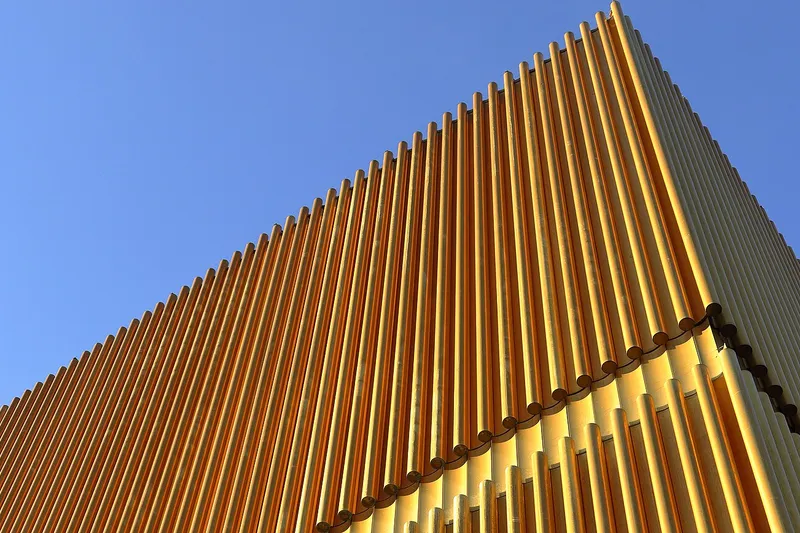
How to plan a day in the Kunstareal — Munich's museum quarter in Maxvorstadt, from the three Pinakotheken and Brandhorst to the Lenbachhaus, Königsplatz and the cafés in between.
Read guide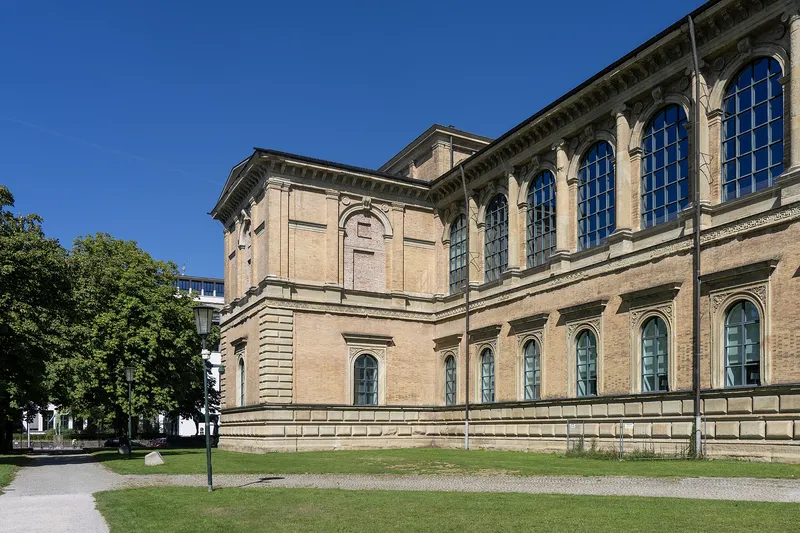
Alte Pinakothek, Munich
How to visit Munich's Old Masters gallery in the Kunstareal — the Dürers and Rubenses worth crossing town for, the Sunday-ticket angle, and how to build a wider museum-quarter day around it.
Read guide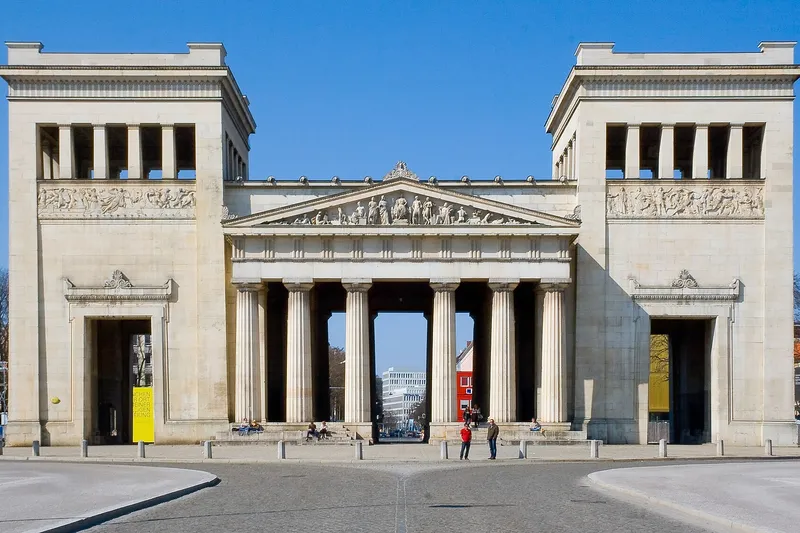
Königsplatz, Munich
A guide to Königsplatz — Munich's grand neoclassical square, its three temple-like museum buildings, the difficult Nazi-era history written into its stones, and how it anchors the Kunstareal.
Read guide