
Museum Brandhorst, Munich
A guide to Munich's contemporary-art museum — its colour-streaked facade, the Cy Twombly rooms, Andy Warhol, and how to pair Brandhorst with the Pinakotheken next door.

Photo: Timo C. Dinger / Unsplash

- ✓The facade is the first artwork: roughly 36,000 vertical ceramic rods in 23 glazed colours that read as a flat block from across the street and dissolve into shimmer as you walk past.
- ✓Brandhorst holds one of Europe's most important Cy Twombly collections — including the twelve-canvas 'Lepanto' cycle in a room built for it — alongside a deep run of Andy Warhol.
- ✓It sits inside the Kunstareal in Maxvorstadt, a two-minute walk from the Pinakothek der Moderne and barely five from the Alte Pinakothek, so it slots into a bigger museum day.
- ✓It's a calm, mid-sized museum — an hour or two does it justice without the fatigue of the big galleries — and Sunday's reduced-admission tradition at the state museums is worth checking.
Begin with the building
Most visitors photograph the Museum Brandhorst before they've stepped inside, and the architects intended exactly that. The Berlin practice Sauerbruch Hutton clad the building in tens of thousands of slim, vertically hung ceramic rods, glazed in two dozen colours and layered over a folded sheet-metal skin. From straight on, across Theresienstraße, the wall settles into broad bands of colour. Start walking, and the rods slide out of register: the surface flickers, the hues recombine, and a quiet building suddenly behaves like an Impressionist canvas you can pace alongside. Give it that thirty-second walk-past before you go in — it sets the register for everything inside.
The museum opened in 2009 to house the collection assembled by Udo and Anette Brandhorst, and it filled the last major gap in Maxvorstadt's Kunstareal: the others cover Old Masters, nineteenth-century painting and classic modernism, while Brandhorst carries the story forward into the art of the last sixty years. It is part of the Bayerische Staatsgemäldesammlungen — the same state collection behind the Pinakotheken — which is why a museum day here can feel like one long, coherent walk through the history of looking.
What's inside: Twombly, Warhol and the contemporary rooms
The heart of the collection is Cy Twombly. Brandhorst owns one of the most significant bodies of his work anywhere, and the building was designed around it — most famously the top-lit room holding the twelve-part 'Lepanto' cycle, a sweep of bruised reds and golds that re-imagines a sixteenth-century sea battle as smears of weather and motion. Sit with it; the room is built for stillness, and the daylight that the upper galleries pull in changes the paintings hour to hour.
Alongside Twombly runs a deep Andy Warhol holding, and from there the displays open out across painting, sculpture, film and installation by figures such as Sigmar Polke, Bruce Nauman, Alex Katz, Damien Hirst and Mike Kelley, with rotating presentations drawing on the wider collection and loans. Because the hang changes, treat any single artwork as 'usually here' rather than guaranteed — if you're travelling for one specific piece, it's worth checking the current displays on the museum's site before you go.
- Cy Twombly — the signature holding, including the purpose-built 'Lepanto' room.
- Andy Warhol — a substantial, era-spanning group of works.
- Postwar and contemporary names — Polke, Nauman, Katz, Hirst, Kelley and more, in a rotating hang.
- Works on paper, photography, film and installation that shift with temporary exhibitions.
How long to give it, and how it feels
Brandhorst is the right size for a single, unhurried visit. The collection is concentrated rather than sprawling, the galleries are generous and quiet, and most people find an hour to two hours covers it comfortably — enough to linger in the Twombly rooms without the museum-leg exhaustion that the bigger Pinakotheken can bring on. That makes it an ideal second stop: do a heavier museum first, then end on Brandhorst's lighter, more contemplative note.
It's also one of the calmer art experiences in the city. Where Marienplatz roars, this corner of Maxvorstadt is all leafy side streets, students with coffees and the low hum of a working university quarter. Couples often find it the most romantic of the art museums precisely because it's unhurried — two people, a bench, a wall of Twombly's weathered colour, and time.
The architecture, read a little closer
It's worth understanding why the facade does what it does, because the trick is genuinely clever. Behind the ceramic rods is a folded, multi-coloured metal skin, and the rods themselves are glazed in families of related tones. When you look straight on, your eye blends the rods and the skin into broad colour fields; when you move, the parallax between the two layers shifts, the fields slide and recombine, and the wall appears to breathe. It's the same optical principle the Pointillists used with dots of paint, scaled up to the size of a building and set in motion by your own footsteps. Architects and design students make pilgrimages here just to study it.
Inside, the logic is quieter but just as considered. The galleries are arranged to give the major works the daylight and breathing room they need — the upper floor in particular pulls in soft, even northern light that suits painting beautifully, which is why the Twombly rooms feel so calm. Sauerbruch Hutton designed the museum so that the experience builds rather than overwhelms: you move from intimate, lower-key spaces up toward the luminous top-floor rooms, ending on a high. It's a building that has clearly thought about how a body and an eye move through it over an hour.
At a glance
A quick reference for planning — but treat every figure as a starting point and confirm the volatile details (hours, prices, the Sunday rate, the current hang) on the official site before you travel.
- Where: Theresienstraße 35a, corner of Türkenstraße, Maxvorstadt — inside the Kunstareal.
- Nearest transit: U2 Königsplatz or U3/U6 Universität, plus local trams and buses; ~15–20 min walk from Marienplatz.
- Time needed: about 1–2 hours; an ideal lighter second stop after a bigger museum.
- Don't miss: the colour-rod facade (walk past it), the Twombly rooms and the 'Lepanto' cycle, the Warhol holding.
- Good to know: part of the Bavarian state painting collections; reduced Sunday admission has been a long tradition — verify.
- Accessibility: fully step-free; lifts to all gallery floors.
Tickets, hours and the Sunday angle
As a state museum, Brandhorst sets standard and reduced admission rates, with free or reduced entry for under-18s and various concessions; like the other Bayerische Staatsgemäldesammlungen houses, it has long offered a reduced Sunday admission, which makes a weekend museum-hop notably cheaper. Prices and that Sunday arrangement do change, so check the current figures on the official site before you build a budget around them — please verify.
Opening hours run on a museum-standard pattern (closed one day a week, with at least one late evening), but the exact days and times are the kind of detail that shifts, so confirm them on the day you plan to visit rather than trusting a number you read months earlier. The museum is fully step-free and accessible. If you're doing several Kunstareal museums, ask at the desk about any combined or quarter-wide ticket then in force — verify availability, as these come and go.
Photography rules vary by gallery and exhibition, and flash and tripods are generally not allowed; if a particular Twombly or Warhol is the reason you're coming, the safest move is to enjoy it in person rather than counting on a photo. There's a small museum shop strong on art books, and a café for the pause that any serious museum day needs.
When to go, and who it suits
Brandhorst is quietest on a weekday morning, when you may have the Twombly rooms almost to yourself; weekend afternoons and any reduced-price day draw more visitors, though it rarely feels crowded by big-museum standards. As an indoor museum it's also a natural rainy-day move — and because Maxvorstadt's streets are short on shelter, it pairs well with a dash to the café next door if the weather turns.
It suits a particular kind of visitor especially well: anyone who finds the encyclopaedic Pinakotheken exhausting, couples after a calm and slightly romantic hour, and the contemporary-art curious who want one focused, high-quality dose rather than acres of galleries. Families with younger children may find the abstraction harder going than the science-and-machines appeal of the Deutsches Museum, though older teens with an eye for design often respond to the building itself. If in doubt, come for the facade and the Twombly room — those two alone justify the stop.

Getting there and pairing it with the day
Brandhorst stands on the corner of Theresienstraße and Türkenstraße in Maxvorstadt, in the thick of the Kunstareal. The nearest U-Bahn stops are Königsplatz (U2) and Universität (U3/U6), each a short walk away, and several tram and bus lines thread the quarter; it's also an easy, pleasant fifteen-to-twenty-minute stroll up from the Altstadt. Because everything is so close, plan the cluster, not just the museum.
A natural route: open with the Alte Pinakothek's Old Masters when you're freshest, cross to the Pinakothek der Moderne, then finish on Brandhorst's quieter contemporary rooms before a coffee in one of Maxvorstadt's student cafés. Add the Lenbachhaus and Königsplatz if you have a full day. Pick one or two as your anchors rather than forcing all five — Kunstareal rewards depth over a checklist.
Map pins
Map data © OpenStreetMap contributors · Tiles © OpenFreeMap
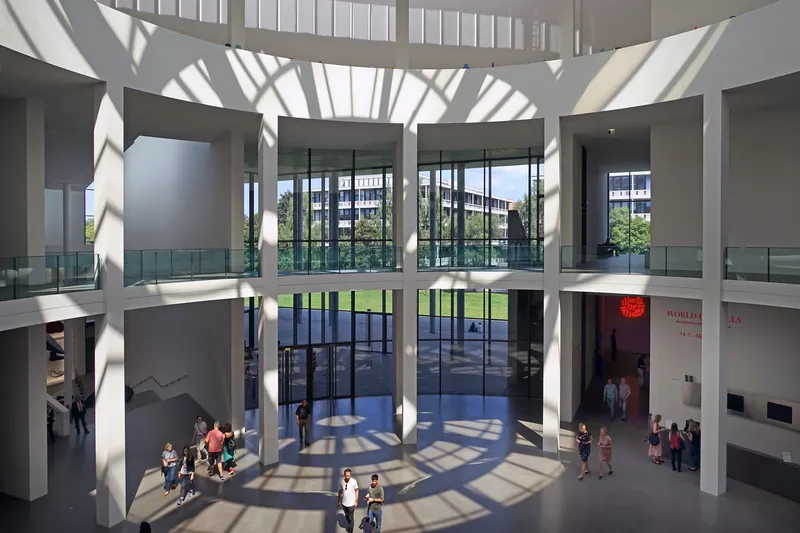
Pinakothek der Moderne, Munich
Four museums under one roof — modern art, design, architecture and works on paper — gathered around a soaring white rotunda in Munich's Kunstareal. How to see the best of it without overload.
Read guide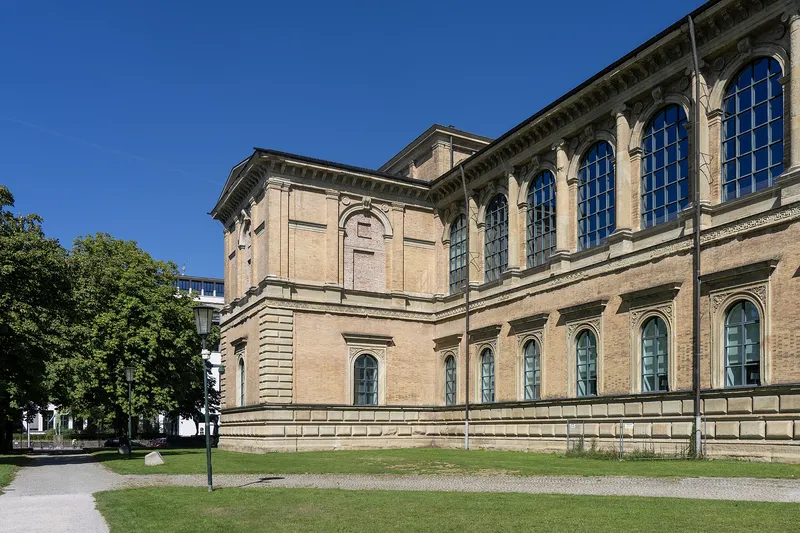
Alte Pinakothek, Munich
How to visit Munich's Old Masters gallery in the Kunstareal — the Dürers and Rubenses worth crossing town for, the Sunday-ticket angle, and how to build a wider museum-quarter day around it.
Read guide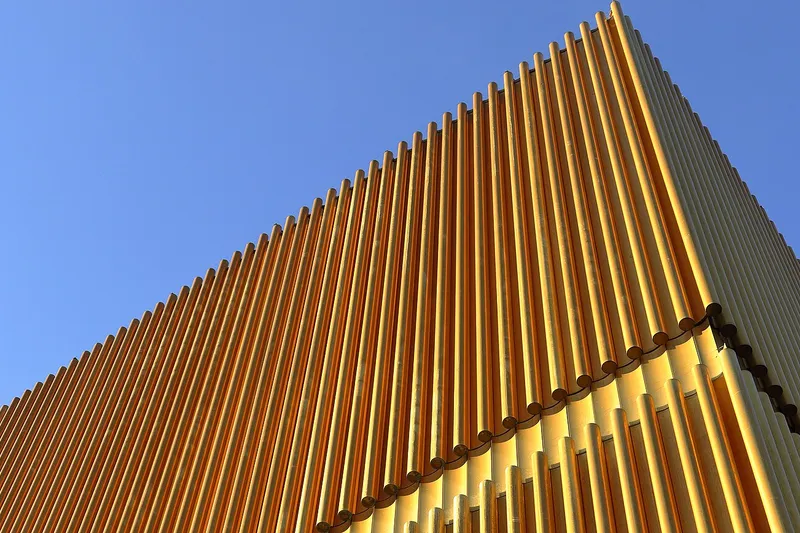
Kunstareal, Munich's Museum Quarter
How to plan a day in the Kunstareal — Munich's museum quarter in Maxvorstadt, from the three Pinakotheken and Brandhorst to the Lenbachhaus, Königsplatz and the cafés in between.
Read guideMore in Kunstareal
2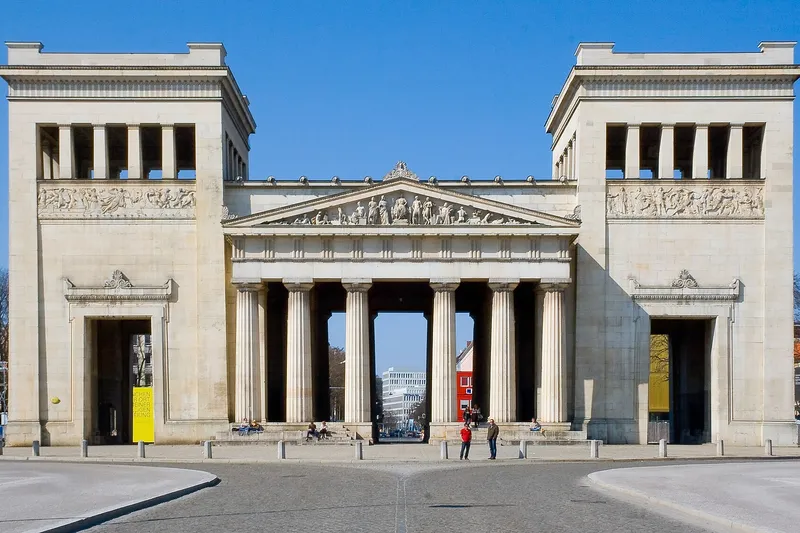
Königsplatz, Munich
A guide to Königsplatz — Munich's grand neoclassical square, its three temple-like museum buildings, the difficult Nazi-era history written into its stones, and how it anchors the Kunstareal.
Read guide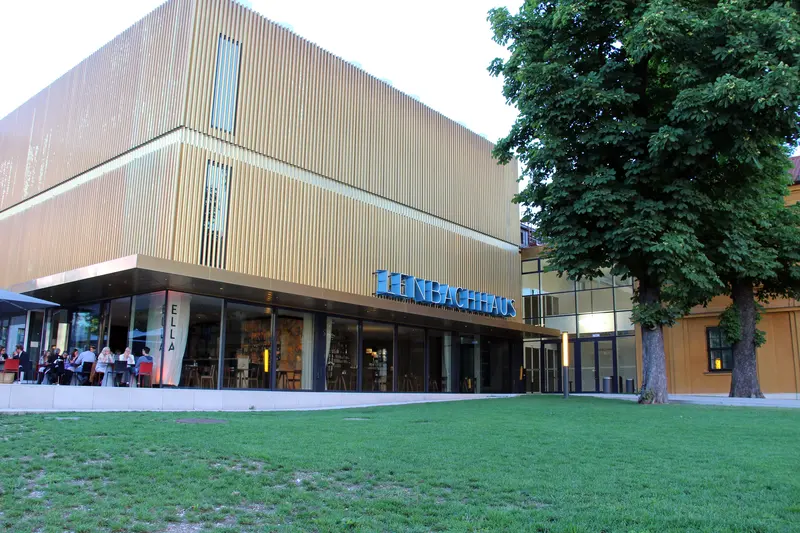
Lenbachhaus, Munich
A guide to the Lenbachhaus — home of the world's greatest Blue Rider collection — its sunflower-yellow villa, the Kandinsky and Münter rooms, tickets and an easy Kunstareal pairing.
Read guide