
Asamkirche, Munich
How to visit Munich's astonishing late-Baroque Asamkirche on Sendlinger Straße — the church two brothers built next to their own house — without overplanning it.

Photo: Wedding Dreamz / Unsplash

- ✓The Asamkirche is tiny — barely 8 metres wide — and packs more Baroque drama into that slot than churches ten times its size.
- ✓It was built in the 1730s by the Asam brothers, Cosmas Damian (painter) and Egid Quirin (sculptor), beside their own home, as a private church they paid for themselves.
- ✓Because it began as their personal project, they answered to no patron — so they let the late-Baroque imagination run completely loose.
- ✓Its formal name is St Johann Nepomuk; everyone calls it the Asamkirche, after the brothers who made it.
The church two brothers built for themselves
Most great churches were commissioned by bishops or princes who set the rules. The Asamkirche had no such master. In the 1730s the Asam brothers — Cosmas Damian Asam, a fresco painter, and Egid Quirin Asam, a sculptor and stuccoist — bought a row of houses on Sendlinger Straße and built a church squeezed into the plot right beside their own front door. They financed it themselves, and so they designed it for themselves, with no patron to tell them when enough was enough.
The result, consecrated in 1746 and formally dedicated to St John Nepomuk, is one of the most concentrated pieces of late-Baroque architecture anywhere in Europe. It is also one of the smallest — a single narrow space, only about eight metres wide, into which the brothers poured every trick of light, gilt, marble and trompe-l'œil they knew. Munich has grander churches; it has nothing else this intense.
There's a romance to the backstory that the building lives up to. This wasn't a monument to power. It was a labour of devotion and ego in equal measure, the masterwork two craftsmen made when freed from anyone's taste but their own — and they lived next door to it for the rest of their lives.
Why two craftsmen could build like this
The Asam brothers were not amateurs indulging a hobby. They were among the most sought-after church decorators in southern Germany, a partnership that worked across Bavaria and beyond — Cosmas Damian frescoing ceilings, Egid Quirin modelling the stucco and sculpture, the two trades dovetailing so closely that it can be hard to see where one brother's work ends and the other's begins. Their hands are on churches and abbeys across the region, but those were commissions, shaped by abbots and budgets.
On Sendlinger Straße, for once, the clients were the craftsmen themselves. That freedom is the reason the church feels so unlike a commission: there was no committee to please, no patron to flatter, only two brothers at the height of their powers building the thing they most wanted to build, on their own ground, with their own money. It was a bold move for private men, and the city authorities at first objected to a church being raised so close to private houses — the brothers had to make concessions to win permission, and ultimately opened it to the public rather than keeping it as a true private chapel.
Knowing that turns the visit from sightseeing into something closer to portraiture. You are not just looking at late-Baroque decoration; you are looking at what two specific people chose to do with total creative freedom, side by side, in the prime of a shared career. Few buildings let you stand that close to their makers.

What to look for inside
Step in from the bright street and let your eyes adjust — the dimness is deliberate. The Asam brothers controlled the light like stage designers, hiding windows and channelling daylight so that the gilded high altar seems to glow from within while the lower space stays in shadow. The whole interior rises in tiers of gold, pink-and-grey marble, swirling stucco and ceiling fresco, drawing the eye relentlessly upward toward a painted heaven.
Above the entrance, on the inner wall, look back for the figure of Death cutting the thread of life — a Baroque memento mori placed where you'll see it on the way out. The high altar stages the saint amid a burst of gilded rays; the columns twist; the cherubs tumble. There is almost no flat, plain surface anywhere. It is theatre rendered in plaster and gold.
Because the space is so small and so dark, it rewards patience more than time. Five minutes of really looking — letting the layers separate, finding the hidden windows, following the fresco — gives you more than a quick walk-through ever could. This is a church to stand still in, not stride past.
It is also, for all its drama, an intimate place, and that intimacy is its quiet romance. Where the Frauenkirche overwhelms with scale, the Asamkirche draws you close: the narrowness, the low light, the gold pressing in on every side. Couples and solo wanderers alike tend to fall silent here in a way the bigger churches don't quite manage. If you visit one small thing in Munich and want it to stay with you, make it this.
The contrast that makes it land
The Asamkirche works best as a counterpoint, and Munich obligingly provides one a few minutes north: the Frauenkirche, the city's cathedral. Where the cathedral is vast, plain and pale — a great brick hall that overwhelms by scale and restraint — the Asamkirche is tiny, dark and saturated, overwhelming by density instead. Visit the two in the same hour and you get the full range of what a church can do to a person, from the cool hush of the immense to the hot glitter of the intimate.
It's a useful way to plan the southern Old Town generally. The Frauenkirche teaches you Munich's restraint; the Asamkirche shows you its appetite for drama; the Sendlinger Tor at the foot of the street reminds you the whole quarter was once a walled town. Walk all three in sequence and the Altstadt stops being a checklist and starts telling a story about a city that could build both the most austere and the most extravagant rooms within a few hundred metres of each other.
Late-Baroque interiors like this one also reward a return visit at a different time of day, because the brothers' hidden-window trickery means the light genuinely changes the room. If your trip allows it, glance in once on the way out toward the gate and again on the way back — the altar that glowed at midday can look like a different altar by late afternoon.
Seeing the brothers' wider hand in Bavaria
The Asamkirche is the place to meet the brothers at their most unrestrained, but it is far from their only mark on the region, and knowing that deepens the visit. Cosmas Damian and Egid Quirin Asam worked across southern Germany and Bavaria for decades, and their fingerprints are on a string of churches and abbeys where one frescoed the ceilings and the other modelled the stucco and sculpture. Their collaboration was so close that, standing in any of these interiors, it can be genuinely hard to say where the painter's illusion ends and the sculptor's plaster begins — which is exactly the seamless, theatrical effect they were after.
On Sendlinger Straße you are looking at that partnership with the brakes off, because for once they answered to no abbot or budget. Elsewhere the same hands worked within a commission's limits; here they worked only to please themselves. That contrast is the quiet point of the place: it is less a church to tick off than a chance to stand inside the private taste of two specific craftsmen at the height of a shared career. Even if you see nothing else of their work, the Asamkirche tells you most of what you need to know about how they thought.
How to visit without overplanning
The single best thing about the Asamkirche, after the interior itself, is how little planning it needs. It is free to enter, it sits right on Sendlinger Straße between Marienplatz and the Sendlinger Tor gate, and it takes only a few minutes to see. You do not build a day around it; you fold it into one.
The trick is simply not to walk past it — the modest façade blends into the row of buildings, and plenty of people miss it entirely. Keep an eye on the street numbers as you head toward the gate, or just watch for the cluster of sculpture over a doorway that's far too ornate for its neighbours.
Because it is an active church, opening hours follow services and the times can change; midday on a weekday is usually a safe bet, but a precise window isn't worth relying on. Go when you happen to be passing rather than making a special trip, and treat it as the small, quiet, astonishing surprise it was built to be.
- Getting there: on Sendlinger Straße, a short walk from Marienplatz toward the Sendlinger Tor; U-Bahn to Sendlinger Tor is closest.
- Cost: free entry.
- Time needed: 5–15 minutes — small but worth standing still in.
- Hours: follow an active church's schedule and can change; midday on a weekday is usually safe, but verify if your visit is tight.
- Don't miss: the hidden light on the altar, and the figure of Death over the entrance, seen as you leave.
- Etiquette: a working church — keep quiet, dress respectfully, and avoid visiting during a service.

Frauenkirche, Munich
A visitor's guide to Munich's twin-domed Cathedral of Our Lady — the Devil's Footstep story, the height rule that keeps the skyline low, and how to fit it into an Old Town walk.
Read guide
Sendlinger Tor and Sendlinger Straße, Munich
How to fold Munich's old city gate, the Sendlinger Straße shopping street and the hidden Asamkirche into one easy Old Town route.
Read guide
Munich Old Town Walk
A self-guided walking route through Munich's Altstadt — linking Marienplatz, the great churches, the Viktualienmarkt, the royal streets, the city gates and the beer halls in one easy loop.
Read guideMore in Things to Do
6
Allianz Arena, Munich
How to visit Munich's glowing football stadium — the self-guided Erlebnistour, the FC Bayern Museum, match-day logistics, and the easy U6 ride out to Fröttmaning.
Read guide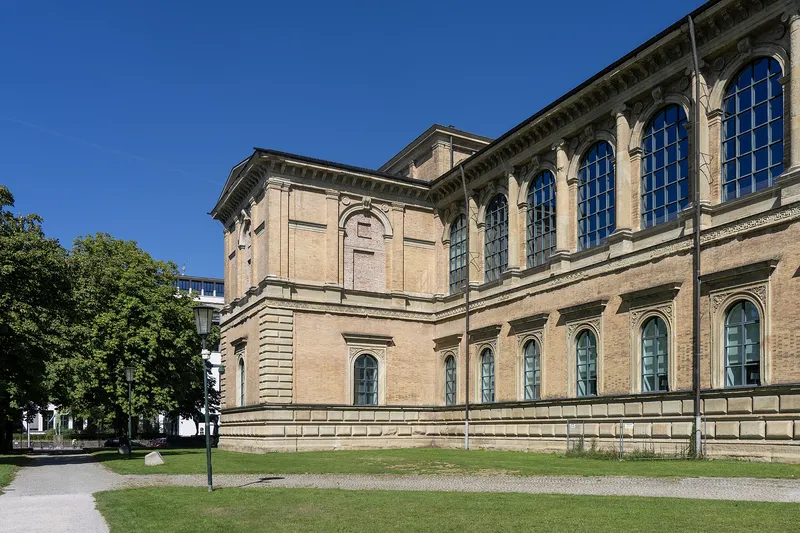
Alte Pinakothek, Munich
How to visit Munich's Old Masters gallery in the Kunstareal — the Dürers and Rubenses worth crossing town for, the Sunday-ticket angle, and how to build a wider museum-quarter day around it.
Read guide
Best Munich Tours
When a guided tour earns its place in a Munich trip — and which kind to pick. Old Town walks, food and beer crawls, football and BMW, the Third Reich history walk, and the big castle and Dachau day trips, weighed by time, cost and effort.
Read guide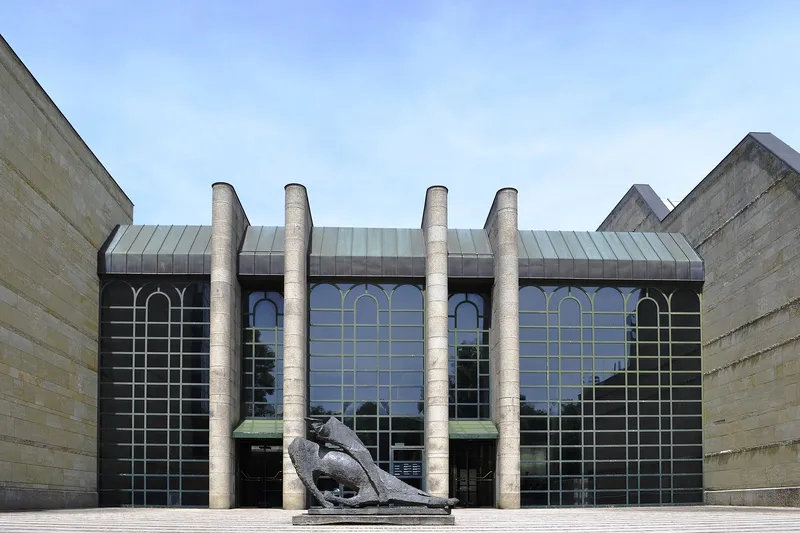
Best Museums in Munich
Choose the right Munich museum for you — by interest, by how much time you have, by which day of the week, and by how useful it is on a rainy day.
Read guide
Best Photography Spots in Munich
Rooftops, squares, churches, parks and palaces — the most photogenic places in Munich, with the light and timing notes to shoot each one well.
Read guide
Best Things to Do in Munich
A ranked first-trip shortlist — from Marienplatz and the Residenz to the beer gardens, the great museums and the English Garden.
Read guide