
Allianz Arena, Munich
How to visit Munich's glowing football stadium — the self-guided Erlebnistour, the FC Bayern Museum, match-day logistics, and the easy U6 ride out to Fröttmaning.


- ✓The Allianz Arena's facade is clad in around 2,760 inflated ETFE-foil cushions that light up in red, white or blue — the only stadium in the world able to change colour across its whole exterior.
- ✓It opened in 2005 and is the home ground of FC Bayern Munich, with a capacity of around 75,000 for league matches (lower for European fixtures).
- ✓On non-match days you can walk the stadium on a self-guided Erlebnistour and combine it with the FC Bayern Museum in one ticket.
- ✓Getting there is simple: the U6 underground runs straight to Fröttmaning, then it's a signposted walk across the apron to the arena.
- ✓The lights usually glow red for FC Bayern home games — one of Munich's most photographed night-time sights, visible from the autobahn for miles.
A glowing shell on the edge of the city
Drive north out of Munich on the A9 after dark and you cannot miss it: a vast rounded shell on the horizon, lit a deep, even red, sitting alone in the open country beyond Fröttmaning like a spacecraft that has just touched down. This is the Allianz Arena, home of FC Bayern Munich and one of the most distinctive sports buildings in the world — and whether or not you care a jot about football, the architecture alone earns it a place on a Munich itinerary.
The arena opened in 2005, designed by the Swiss practice Herzog & de Meuron — the same studio behind London's Tate Modern and Beijing's 'Bird's Nest' Olympic stadium. Its skin is its trick: around 2,760 air-filled cushions of ETFE foil, a tough translucent plastic, each one separately lit from within. The facade can glow FC Bayern red, white for the national team and certain events, or — in the early years when the stadium was shared — blue for the city's second club. No other stadium on earth can recolour its entire exterior, and at night the effect is genuinely beautiful: a soft paper-lantern light that turns a 75,000-seat machine into something almost gentle.
By day the shell reads white and quietly futuristic; by night it becomes the set-piece. If you only photograph it once, do it after dark on a home-match day, when the whole bowl burns red and the streams of supporters cross the floodlit apron beneath it.
Visiting on a non-match day: the Erlebnistour
On days without a fixture, the way to see inside is the self-guided Erlebnistour ('experience tour'). With a single ticket you follow a marked route through the public-facing parts of the stadium — out into the stands to take in the sheer scale of the bowl, and around the concourses — at your own pace. It pairs naturally with the FC Bayern Museum, which sits within the arena complex, and most visitors do the two together in a couple of hours.
For the full backstage experience — the players' tunnel, the dressing rooms, the press areas and the pitch-side benches — FC Bayern also runs guided arena tours led by a stadium guide. These run to a fixed timetable, are popular, and naturally cannot operate when the stadium is being prepared for a match or hosting an event. Because the schedule shifts around the fixture list, it is worth booking your slot online in advance and verifying the day's availability before you travel out — a wasted trip to Fröttmaning is an avoidable disappointment.
A practical note on the romance of the place: the arena is genuinely vast and largely uncovered in its public approaches, so dress for Munich's weather. On a bright day the white facade is dazzling; on a grey one a guided look behind the scenes is the better-value choice.
Match day: seeing FC Bayern play
If you can time your trip to a home game, do. The atmosphere inside is huge and surprisingly disciplined — the Südkurve, the great standing terrace behind the south goal, is the beating heart of the support, a wall of red flags and choreographed singing that gives the modern bowl an old-school intensity. FC Bayern are German football's dominant club, perennial Bundesliga champions and regular Champions League contenders, so the standard of football on show is among the best you will see anywhere.
Tickets are the catch. League and European fixtures regularly sell out, and the club distributes most seats to members and season-ticket holders; the official club resale platform is the only safe place to look for spares, and you should treat unofficial touts and dubious third-party sites with real caution. As a rough rule, the toughest tickets to land are the marquee Bundesliga clashes and Champions League nights; a midweek cup tie or an early-season league game is an easier prospect. Always buy through official channels, and verify exact dates, kick-off times and prices on the club's own site before you commit — fixtures move for television.
Inside, note the local quirk: many German grounds, this one included, run cashless payment for food and drink on stadium cards, and the famous standing terraces convert to seated for European matches under UEFA rules. Arrive early, soak up the build-up, and let the place fill around you.
Getting there and back
The arena sits well north of the centre, but the journey is one of the easiest big-stadium trips in Europe. Take the U6 underground line — the direction of Garching-Forschungszentrum — to the Fröttmaning station, and from there a wide, signposted pedestrian esplanade leads across the open ground straight to the stadium. The walk takes roughly ten to fifteen minutes and, on match days, becomes a slow river of red-and-white scarves; just follow the crowd.
The U6 is part of the city's integrated MVV transit network, so the same ticketing covers the whole trip from the Altstadt. Buy the appropriate zone ticket or a day pass and validate where required. On match days the trains run heavily reinforced before kick-off and after the final whistle, but they are also rammed — leave extra time and be patient on the way out, when tens of thousands funnel back to one station at once. Driving is possible (there is a large multi-storey car park beneath the apron) but rarely worth the congestion; the underground is faster and far less stressful.
Always confirm current opening hours, tour times, museum admission and match-day transport on the official sources before you set out, as these change with the season and the fixture list.
Architecture and the wider Sportpark
It is worth lingering on the building itself. The cushioned facade is not just a light show: the ETFE foil is light, self-cleaning and far cheaper to span than glass, and inflating the cushions with low-pressure air gives the whole skin its taut, pillowy look. The stadium was conceived from the outset as a single-purpose football arena — no running track, stands pulled close to the pitch — which is exactly why the atmosphere feels so concentrated compared with the multi-use bowls of an earlier generation.
The arena also marked a turning point for the city. For decades Munich's football was played at the Olympiastadion, Frey Otto's beautiful tented stadium built for the 1972 Games; the move to Fröttmaning in 2005 gave both clubs a modern home and freed the Olympic Park to become the leisure-and-events green space it is today. The hill the arena stands beside, incidentally, is an old landfill capped and landscaped — the Fröttmaning Heath around it is now a protected area, so the building sits in open country rather than dense suburb, which is part of why it reads so cleanly on the skyline.
Bring a camera regardless of your feelings about football. The exterior, the approach esplanade and the night-time glow are the real draw for the casual visitor — a piece of contemporary architecture you can reach on a single underground ride from Marienplatz.
At a glance
What it is: FC Bayern Munich's home stadium and one of the world's most striking sports buildings.
Opened: 2005, by architects Herzog & de Meuron.
Capacity: around 75,000 for Bundesliga matches.
Don't miss: the colour-changing ETFE facade lit at night; the self-guided Erlebnistour and FC Bayern Museum.
Getting there: U6 to Fröttmaning, then a 10–15 minute signposted walk.
Tickets: buy match tickets and book tours only through official FC Bayern / Allianz Arena channels.
- 2,760 illuminated ETFE-foil cushions — red for Bayern, white for events.
- Verify tour times, opening hours and admission on the official site before travelling.
- Match days: trains are reinforced but packed — allow extra time both ways.

FC Bayern Museum, Munich
How to visit Germany's biggest club museum inside the Allianz Arena — the trophies, the interactive exhibits, the kids' appeal, and how to combine it with a stadium tour.
Read guide
Best Munich Tours
When a guided tour earns its place in a Munich trip — and which kind to pick. Old Town walks, food and beer crawls, football and BMW, the Third Reich history walk, and the big castle and Dachau day trips, weighed by time, cost and effort.
Read guide
Munich Public Transport Guide
How Munich's MVV network actually works for visitors — the U-Bahn, S-Bahn, trams and buses on one ticket, the zone system, validation, the apps that make it painless, and the small habits that mark you out as someone who knows the city.
Read guideMore in Things to Do
6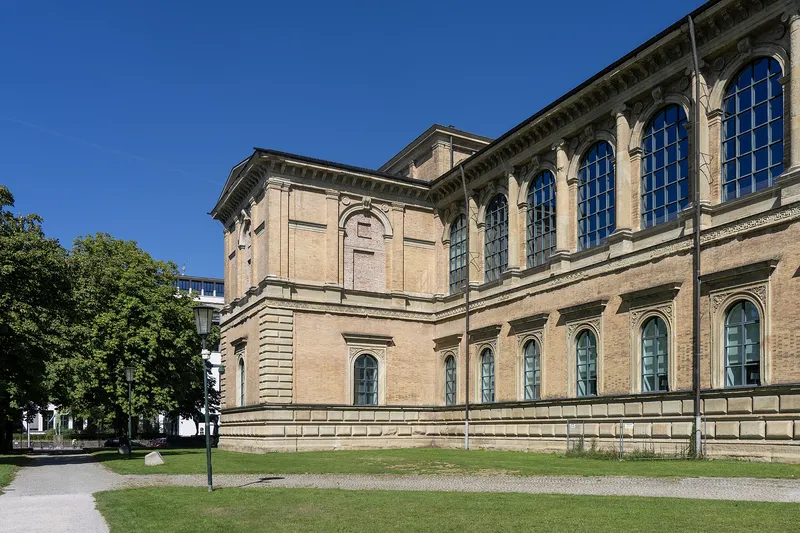
Alte Pinakothek, Munich
How to visit Munich's Old Masters gallery in the Kunstareal — the Dürers and Rubenses worth crossing town for, the Sunday-ticket angle, and how to build a wider museum-quarter day around it.
Read guide
Asamkirche, Munich
How to visit Munich's astonishing late-Baroque Asamkirche on Sendlinger Straße — the church two brothers built next to their own house — without overplanning it.
Read guide
Best Museums in Munich
Choose the right Munich museum for you — by interest, by how much time you have, by which day of the week, and by how useful it is on a rainy day.
Read guide
Best Photography Spots in Munich
Rooftops, squares, churches, parks and palaces — the most photogenic places in Munich, with the light and timing notes to shoot each one well.
Read guide
Best Things to Do in Munich
A ranked first-trip shortlist — from Marienplatz and the Residenz to the beer gardens, the great museums and the English Garden.
Read guide
Best Viewpoints in Munich
Where to see Munich from above — church towers over the Old Town, the Monopteros hill, the Olympic heights and the Alps on a clear day.
Read guide