
Best Museums in Munich
Choose the right Munich museum for you — by interest, by how much time you have, by which day of the week, and by how useful it is on a rainy day.
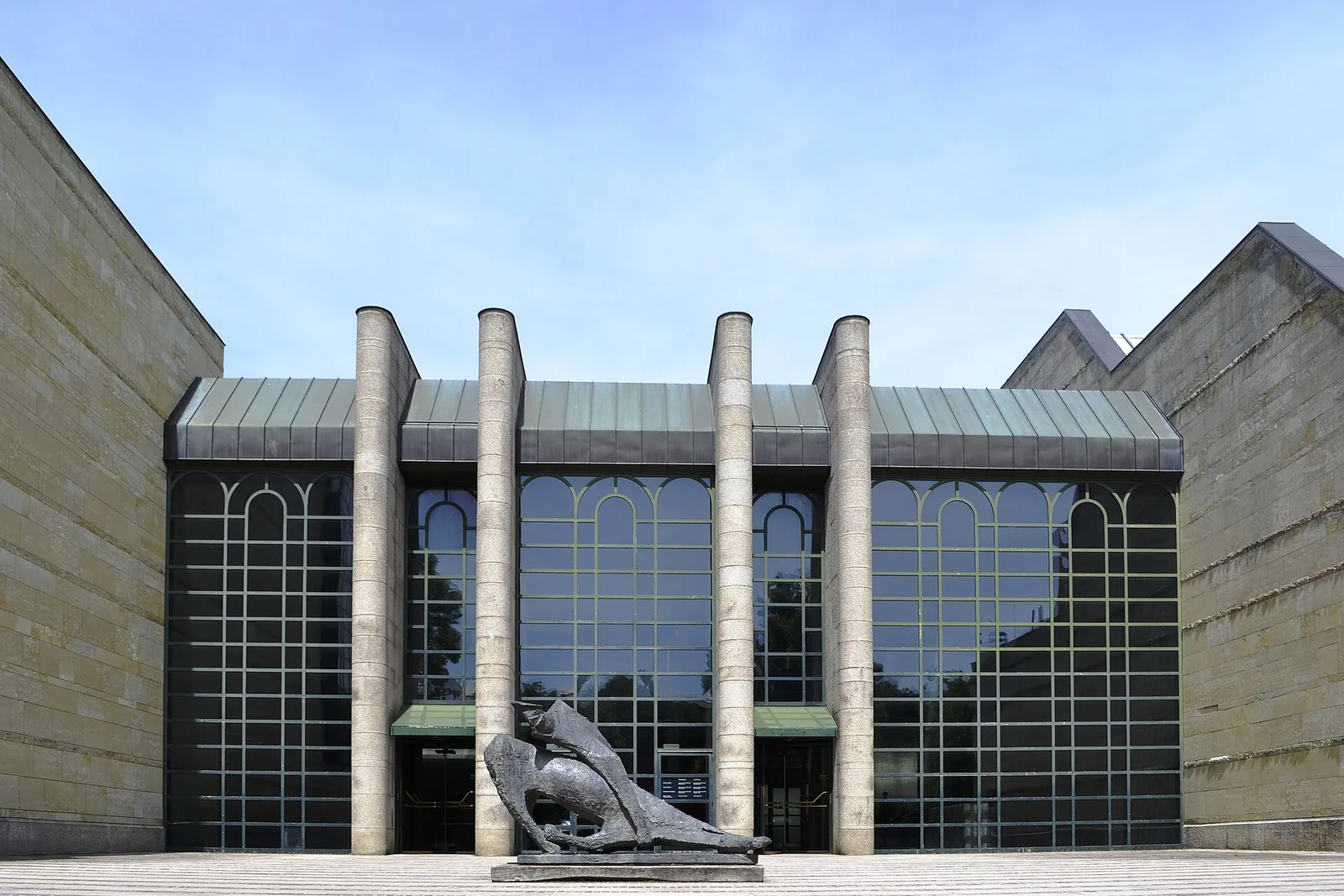
Photo: High Contrast / Wikimedia Commons · CC BY 3.0 DE

- ✓Munich has more than 80 museums; the trick is to pick one or two that match your taste, not to chase a list.
- ✓The art lives in the Kunstareal (the Pinakotheken, Brandhorst and Lenbachhaus); the science lives at the Deutsches Museum on the Isar.
- ✓Many state museums offer a reduced Sunday admission — a real money-saver, if you don't mind the crowds (verify the current rate).
- ✓Almost every museum here is a strong rainy-day refuge, which makes them Munich's natural plan B in bad weather.
How to choose — pick by interest, not by fame
Munich has more than eighty museums, which sounds overwhelming and isn't, because you should ignore almost all of them. The single most useful piece of advice is to choose one or two museums that genuinely match what you love and give them real time, rather than speed-running a famous list and remembering none of it. Museum fatigue is real, and the collections here — among the best in Europe for both art and science — deserve better than a forced march.
This guide groups the city's headline museums by the question that actually decides things: what are you into, how long do you have, which day is it, and is it raining? Use the shortlists below to land on a single anchor for a half-day, maybe with a lighter second museum and a coffee between them. Opening days, late evenings, prices and the Sunday rate all shift between institutions, so treat the notes here as a starting point and confirm the current details on each museum's official site before you build a plan around them.
One more piece of geography helps. Munich's museums cluster, which makes them easy to pair. The art lives in the Kunstareal in Maxvorstadt — the Pinakotheken, the Brandhorst and, on Königsplatz, the Lenbachhaus and the antiquities museums, all within a few walkable blocks. The science lives across town at the Deutsches Museum on its Isar island. And the cars and football sit north of the centre near the Olympic Park. So your choice of museum often decides your half of the city for the day, and the smartest itineraries group a museum with whatever else is nearby — a park, a square, a beer garden — rather than criss-crossing town between front doors.

For science, engineering and curious kids: the Deutsches Museum
The Deutsches Museum, on its own island in the Isar, is one of the largest science and technology museums in the world — and the obvious first choice for anyone who likes how things work, or who's travelling with curious children. Its halls run from full-size ships, aircraft and a mine you can walk through to physics, space travel and a planetarium, much of it hands-on. It is vast enough that you can't see it all in a day, which is fine: pick a few halls, leave the rest, and let the kids press the buttons. Note that parts of the museum have been undergoing a long, phased modernisation, so check which sections are open before you go.
- Best for: science, engineering, aviation and hands-on exhibits; families.
- Time: a half- to full day — far too big to finish, and that's fine.
- Where: its own island in the Isar, walkable from the Old Town.
- Note: a phased renovation is ongoing — verify which halls are open.

For Old Masters and the great art collections: the Pinakotheken
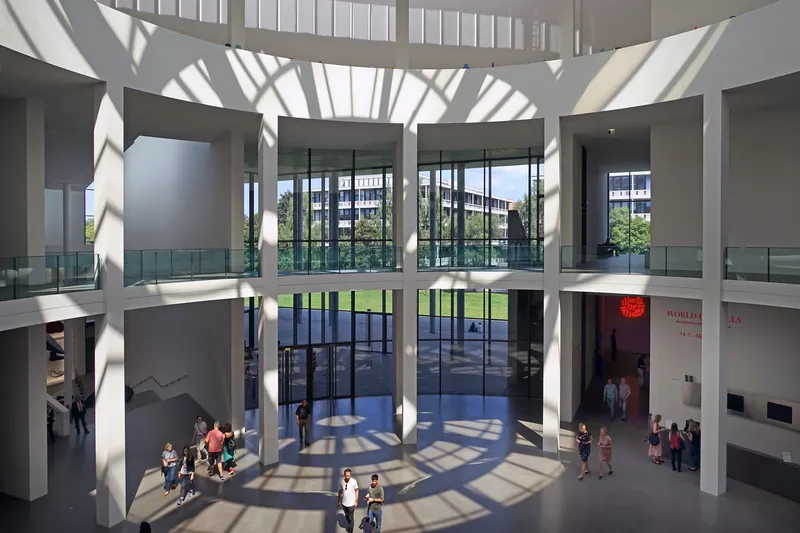
If you came for paintings, head for the Kunstareal in Maxvorstadt, where the city packs its great galleries into a few walkable blocks. The Alte Pinakothek holds European Old Masters across six centuries — Dürer, Rubens, Rembrandt, Leonardo. The Pinakothek der Moderne combines modern and contemporary art, design and architecture under one great rotunda. And the Museum Brandhorst, behind its facade of coloured rods, shows contemporary work with a celebrated Cy Twombly holding. (The Neue Pinakothek, the nineteenth-century house, has been closed for a long renovation — check where its key works are showing.)
Don't try to do all of them. The classic, sane pairings are Old Masters at the Alte Pinakothek finished on the contemporary calm of the Brandhorst, or a modern day at the Pinakothek der Moderne followed by the Lenbachhaus nearby. Pick one as your anchor, add a lighter second if you have the appetite, and build in a coffee in between — Maxvorstadt is full of student-priced cafés for exactly that.
- Best for: painting lovers, from Old Masters to the contemporary.
- Where: the Kunstareal, a ~15-minute walk north-west of Marienplatz.
- The pairing rule: one anchor museum plus a coffee — not four in a day.
- Closed to note: the Neue Pinakothek is under long renovation — verify.
For modern art with a story: the Lenbachhaus and the Blue Rider
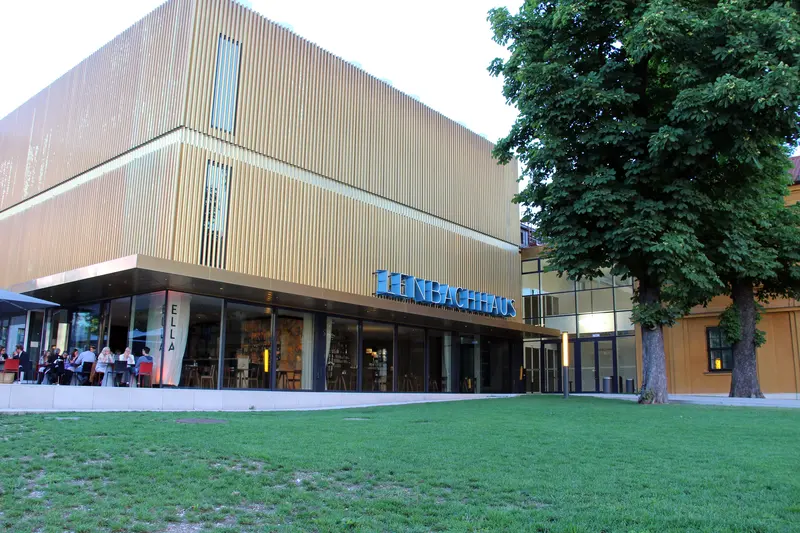
Of all Munich's art museums, the Lenbachhaus on Königsplatz gives you the most for the least time. Housed in a sunny ochre villa, it holds the world's greatest collection of the Blaue Reiter — the Blue Rider group of Kandinsky, Marc, Münter, Macke and their circle, who turned colour loose in Munich and Murnau in the years before the First World War. The rooms are intense, joyful and completely unlike anything else in the city. If you have only one art morning and want it to be unforgettable rather than dutiful, this is the one to choose. Note that, unlike the state-run Pinakotheken, the Lenbachhaus is run by the city, so the state Sunday rate doesn't apply here.
- Best for: a short, intense, joyful art hit — the Blue Rider colourists.
- Time: a focused morning is plenty.
- Where: a villa on Königsplatz, at the edge of the Kunstareal.
- Ticketing note: city-run, so the state Sunday rate doesn't apply here.
For history and memory: the NS-Dokumentationszentrum
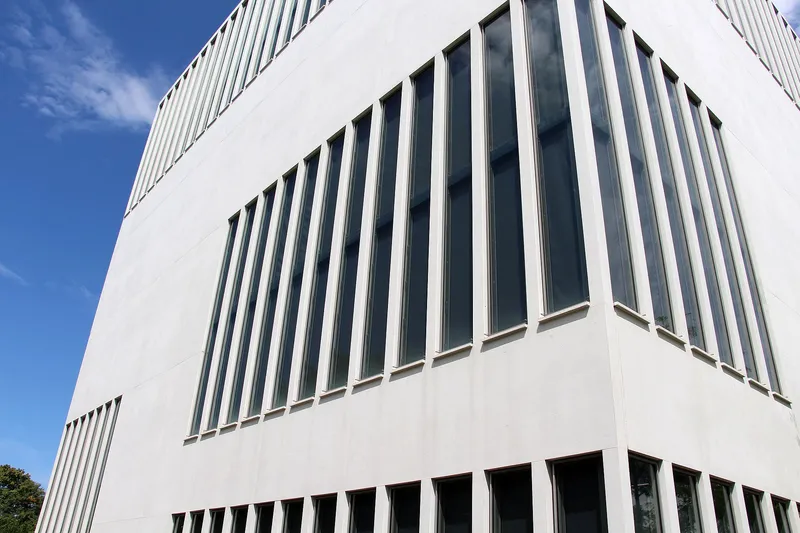
Munich was where National Socialism began, and the city now faces that history directly. The NS-Dokumentationszentrum, a stark white cube on Königsplatz — built on the site of the former Nazi Party headquarters — is a serious, unflinching documentation centre tracing the movement's rise in the city and its consequences. It is not a comfortable visit, and it isn't meant to be; it is one of the most important and thoughtfully made museums in Munich. Pair it, if you have the day, with the antiquities of the Glyptothek on the same square for a deliberate change of register, or with the wider trail of Third Reich sites across the centre.
It works best as a deliberate, standalone visit rather than something squeezed between lighter sights — give it a couple of unhurried hours and a quiet pause afterwards. Visitors who want to go further often follow it with the memorial site at Dachau, twenty minutes out by S-Bahn, a different and even more sobering kind of museum that everyone who can should make time for. Together they are the most demanding but arguably the most important museum hours you can spend in and around the city.
- Best for: understanding Munich's place in twentieth-century history.
- Where: a white cube on Königsplatz, on the former party HQ site.
- Tone: serious and unflinching — give it your full attention.
- Pair with: the Glyptothek's antiquities, or the Third Reich sites trail.

For antiquity and architecture: Königsplatz and beyond
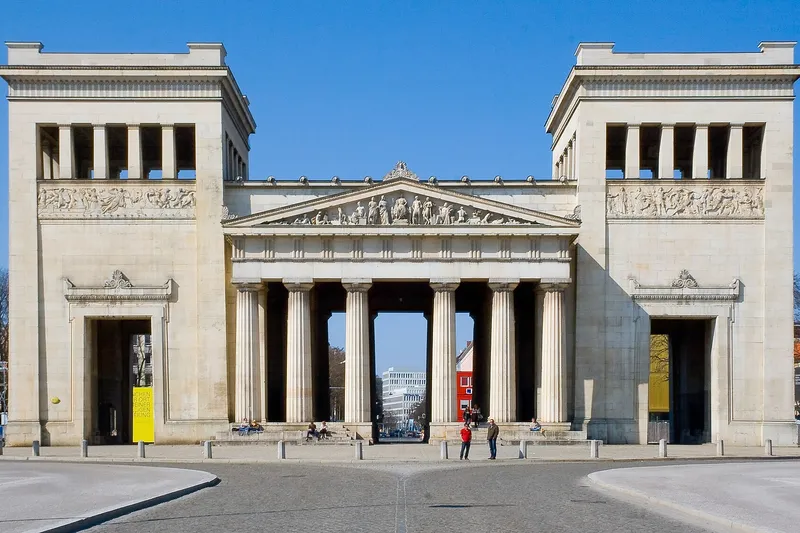
If your taste runs older or more specialist, Munich delivers. Königsplatz, the neoclassical square at the edge of the Kunstareal, is framed by two free-standing temples of antiquity: the Glyptothek, with its Greek and Roman sculpture, and the Staatliche Antikensammlungen opposite, full of ancient vases, bronzes and jewellery. A short walk away, the State Museum of Egyptian Art (Museum Ägyptischer Kunst) hides much of itself underground in a dramatic modern space near the Pinakotheken — one of the most atmospheric museums in the city and rarely crowded.
Munich's museum culture stretches well past art and antiquity, too. Petrol-heads should head north to the BMW Welt and the BMW Museum beside the Olympic Park, a gleaming pairing of free brand showcase and ticketed history of the marque. And the city is dotted with smaller, often near-empty specialist collections — coins, casts, minerals, hunting and fishing, film — that reward a curious half-hour if a name catches your eye. None of these is a must, but together they show how deep Munich's museum bench really is.
- Antiquity: the Glyptothek and Antikensammlungen frame Königsplatz.
- Atmospheric and quiet: the State Museum of Egyptian Art, partly underground.
- Cars: BMW Welt (free) and the BMW Museum (ticketed), by the Olympic Park.
- For the curious: dozens of small specialist museums, often near-empty.

The day-of-the-week and rainy-day angle
Two practical things shape a museum day more than people expect: the calendar and the weather. Many of Munich's state-run museums — including the Bavarian state painting collections behind the Pinakotheken and the Brandhorst — have a long tradition of reduced Sunday admission, which makes a Sunday the cheapest day to see the big galleries (and, predictably, the busiest). Most museums also keep a weekly closing day, often Monday, and at least one late evening; the exact days differ between houses, so always check before you go to avoid arriving at a locked door.
On the weather side, museums are Munich's natural plan B. When the rain sets in — and on a Föhn-less grey day it can settle for hours — the Kunstareal alone can absorb an entire afternoon under cover, hopping between galleries with a café in the middle, and the Deutsches Museum can swallow a whole wet day on its own. If you keep one museum in your back pocket for each day of a trip, you'll never lose an afternoon to the sky.
- Cheapest day: a Sunday for the state museums (reduced rate) — verify.
- Watch the closing day: many museums shut on Monday — confirm per museum.
- Late evenings: most houses keep one — handy for a slow afternoon start.
- Rainy plan B: the Kunstareal or the Deutsches Museum can fill a wet day.
At a glance — match the museum to your day
A quick decision aid. Confirm each museum's hours, weekly closing day, prices, late evenings and the Sunday rate on its official site, as all of these change.
- Science / engineering / kids: Deutsches Museum (half- to full day).
- Old Masters: Alte Pinakothek; modern/contemporary: Pinakothek der Moderne or Brandhorst.
- One unforgettable art morning: the Lenbachhaus (Blue Rider).
- History and memory: NS-Dokumentationszentrum on Königsplatz.
- Tight on time: pick one anchor museum and a coffee — don't chase the list.
- Cheapest day: Sunday at the state museums (reduced rate) — verify.
- Rainy day: the Kunstareal or the Deutsches Museum will fill it under cover.
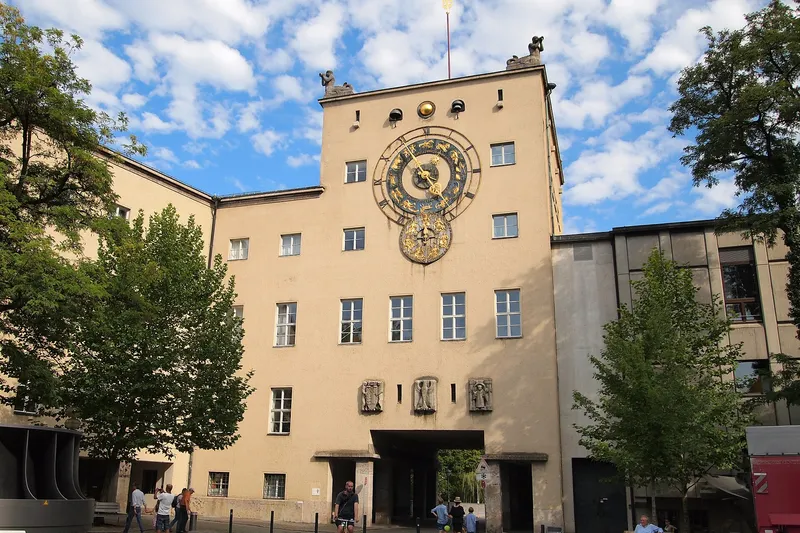
Deutsches Museum, Munich
How to visit the world's largest science-and-technology museum on its own Isar island — which halls to prioritise, how long it really takes, and the family timing that keeps a long day fun.
Read guide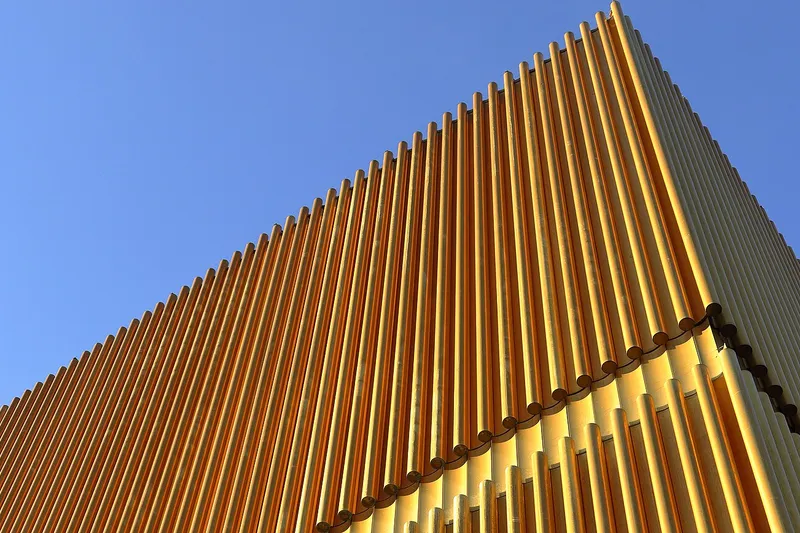
Kunstareal, Munich's Museum Quarter
How to plan a day in the Kunstareal — Munich's museum quarter in Maxvorstadt, from the three Pinakotheken and Brandhorst to the Lenbachhaus, Königsplatz and the cafés in between.
Read guide
Rainy Day Munich
Museums, palaces, beer halls, cafés and covered markets — a warm, weather-proof plan for when the Munich sky closes in.
Read guideMore in Things to Do
6
Allianz Arena, Munich
How to visit Munich's glowing football stadium — the self-guided Erlebnistour, the FC Bayern Museum, match-day logistics, and the easy U6 ride out to Fröttmaning.
Read guide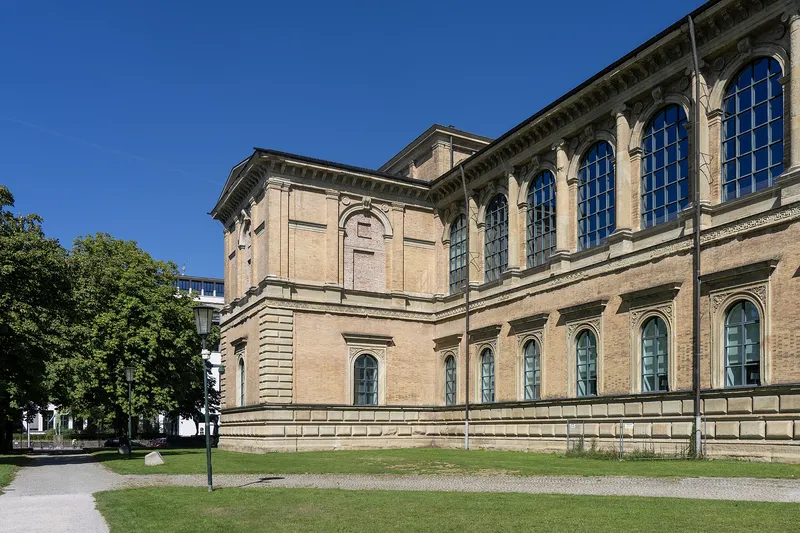
Alte Pinakothek, Munich
How to visit Munich's Old Masters gallery in the Kunstareal — the Dürers and Rubenses worth crossing town for, the Sunday-ticket angle, and how to build a wider museum-quarter day around it.
Read guide
Asamkirche, Munich
How to visit Munich's astonishing late-Baroque Asamkirche on Sendlinger Straße — the church two brothers built next to their own house — without overplanning it.
Read guide
Best Munich Tours
When a guided tour earns its place in a Munich trip — and which kind to pick. Old Town walks, food and beer crawls, football and BMW, the Third Reich history walk, and the big castle and Dachau day trips, weighed by time, cost and effort.
Read guide
Best Photography Spots in Munich
Rooftops, squares, churches, parks and palaces — the most photogenic places in Munich, with the light and timing notes to shoot each one well.
Read guide
Best Things to Do in Munich
A ranked first-trip shortlist — from Marienplatz and the Residenz to the beer gardens, the great museums and the English Garden.
Read guide