
BMW Museum, Munich
A planning guide to the BMW Museum — the ticketed collection of a century of cars, bikes and design — how it differs from free BMW Welt, what to see, how long it takes, and how to combine the cluster.

Photo: Sasha Yudaev / Unsplash

- ✓The BMW Museum is the ticketed, story-led collection — a century of cars, motorbikes, engines and design — housed in the landmark bowl-shaped building beneath the four-cylinder tower.
- ✓It's a different thing from BMW Welt across the road: Welt is the free modern showroom; the museum is the paid history.
- ✓Most visitors spend roughly one to two hours; it's compact, well-curated and a strong rainy-day and family pick.
- ✓It sits in the easy northern cluster with BMW Welt and Olympiapark — U3 to Olympiazentrum serves all three.
Museum or Welt? Get this straight first
The most common confusion in this corner of Munich is between the two BMW buildings, so here is the short version. BMW Welt is the free, futuristic glass hall where you can wander among the latest models and where new owners collect their cars — it costs nothing to enter. The BMW Museum is the separate, ticketed building opposite: a curated journey through more than a century of the marque's history, in the dark, bowl-shaped structure (locals call it the 'Museumsschüssel', the museum bowl) that sits at the foot of the silver four-cylinder headquarters tower. If you want the new and the spectacular and free, that's Welt; if you want the story, the classics and the design heritage, that's the museum.
For many travellers the ideal is both, in sequence — the free hall first, the ticketed museum second — but they are genuinely distinct experiences and it's worth knowing which is which before you buy anything. This guide is the museum.
What's inside: a century of design
The museum tells BMW's story chronologically and thematically across a series of 'houses' and ramps that wind you through the building. It opens with the company's early aero-engine roots — the blue-and-white roundel is often read as a stylised spinning propeller against the Bavarian sky — and runs through the motorbikes that kept it alive between the wars, the elegant pre-war saloons, the model that arguably saved the firm in the 1960s, and on to the design icons, racing machines and concept cars of recent decades. Along the way are the engines, the design studios' clay models, and set-piece installations — including a much-photographed kinetic sculpture of suspended metal spheres that ripples into the shape of a car body.
What lifts it above a simple car park of classics is the curation. This is as much a design and brand museum as a collection of vehicles: it's interested in how the cars were imagined, how the company's identity formed, and how engineering and aesthetics met. Petrolheads will love the hardware; people who couldn't tell a straight-six from a flat-twin often come away surprised by how engaging the storytelling is. The motorbike fans are well served too, with a strong run of historic Motorrad machines.
The building itself is part of the experience. Designed by the same architect as the four-cylinder tower it sits beneath, the dark bowl is a piece of early-1970s design in its own right, opened around the time of the 1972 Olympics next door. Inside, the route is a series of interconnected ramps and 'streets' that lead you through themed houses rather than a single big hall, so the architecture keeps unfolding the collection in front of you. It's a museum that's been thoughtfully renewed over the years, and it shows — the lighting, the staging and the pacing all feel considered rather than dusty.
- Early aero-engine origins and the meaning behind the blue-and-white roundel.
- Classic motorbikes — the Motorrad line that carried the company through lean years.
- Elegant pre-war and post-war saloons, and the model credited with rescuing the firm.
- Design and concept cars, clay models and the studios' working process.
- Motorsport machines and the kinetic 'sphere' sculpture that forms a car in motion.
Highlights worth seeking out
If you have only an hour, a few set-pieces are worth steering toward rather than leaving to chance. The kinetic sculpture of suspended metal spheres — hundreds of small chrome balls that ripple on wires until, for a moment, they trace the silhouette of a car body before dissolving again — is the museum's signature image and a genuinely mesmerising thing to stand in front of. The motorsport and design houses tend to draw the most lingering, with racing machines staged dramatically and the studios' full-size clay models showing how a car begins life as sculpted modelling clay long before it's metal.
Beyond the headline installations, look for the threads the curators follow: the evolution of a single model line across the decades, the way the company's identity and the famous roundel developed, and the recurring conversation between engineering and aesthetics that runs through the whole building. The architecture keeps handing you these stories as you climb the ramps, so it pays to slow down at the transitions between houses rather than rushing the loop. Even on a short visit, picking two or three of these to dwell on turns a quick walk-through into something you'll actually remember.
How long it takes — and pacing it
Most visitors find one to two hours about right. It's a compact, well-paced museum rather than an exhausting marathon — a refreshing contrast to the cavernous Deutsches Museum across town — and the ramped, looping layout keeps you moving naturally through the story without backtracking. Enthusiasts who read every panel and linger over the engineering can happily stretch it to two or three hours; families with restless kids can do a satisfying loop in under an hour and then cross to the free hall or out into the park.
The pacing pairs beautifully with the rest of the cluster. A classic plan is the museum for an hour or so, then the free BMW Welt for as long as it holds interest, then Olympiapark to walk it all off. Because the museum is the one part you pay for, it's the part to time well: it's quietest soon after opening and busier midday, especially on wet weekends and during school holidays.
Tickets and how to combine
The museum charges admission, with reduced rates typically available for children, students and families, and BMW Welt next door remains free. There have at times been combination or experience tickets bundling the museum with tours of the adjacent factory (the BMW Group plant tour), but availability and pricing change, so check the official site for the current options and book the plant tour well ahead if you want it — it's popular, has age limits and sells out. As with anything price-sensitive, verify the current admission and any combo deals before you go rather than trusting an old figure.
If you're choosing where to spend money in this cluster: the museum is the dependable paid highlight for most visitors, the plant tour is the standout for serious enthusiasts, and BMW Welt costs nothing. A common, sensible split is to pay only for the museum and enjoy Welt and the park for free.
Getting there and what's nearby
The museum is at Am Olympiapark 2 in northern Munich, beneath the four-cylinder tower and beside BMW Welt. The simplest route is the U3 to Olympiazentrum, then a short, signposted walk; from the centre it's roughly fifteen to twenty minutes on the U-Bahn. There's parking nearby for drivers, but the U-Bahn is easier and serves the whole cluster from one station. The building is accessible, with lifts between the ramped levels.
Everything you'd want to pair it with is on your doorstep. BMW Welt is a moment's walk; Olympiapark — with its lake, lawns, Olympic architecture and the tower for the city view — spreads out to the south. It's one of Munich's most efficient half-days: a paid museum, a free showroom and a great park, all reached from one U-Bahn stop.
 Olympiapark guideThe 1972 Olympic park beside the BMW cluster — the natural place to walk off the visit.
 Things to Do in MunichBack to the hub to plan the rest of your time in the city.
Map pins
Map data © OpenStreetMap contributors · Tiles © OpenFreeMap
At a glance
A short planning reference. Confirm the volatile details — opening hours, admission and combination tickets — on the official site before you go, as these change.
- What it is: the ticketed museum of BMW's history — cars, bikes, engines and design — in the landmark 'bowl' building.
- Not the same as: BMW Welt, the free modern showroom across the road.
- Where: Am Olympiapark 2, northern Munich; U3 to Olympiazentrum, then a short walk.
- Time needed: about 1–2 hours; up to 3 for enthusiasts.
- Cost: paid admission (reduced rates often for kids, students, families) — verify current prices.
- Pair with: free BMW Welt and Olympiapark for an easy half-day from one U-Bahn stop.
Common questions
Is the BMW Museum free? No — the museum is ticketed; it's BMW Welt next door that's free. How long do you need? Most people spend one to two hours; enthusiasts longer. Is it worth it if I'm not into cars? Often, yes — it's strongly a design and brand-story museum, not just a row of vehicles. Can I do it with the factory tour? Sometimes there are combination tickets with the BMW Group plant tour, but the plant tour books out ahead and has age limits — check and reserve early. What about kids? It's compact and engaging, and pairs perfectly with the free hall and the park. Always verify hours, prices and tour availability on the official site, as they change.
Sources

BMW Welt, Munich
How to visit BMW Welt — the free, architecturally spectacular brand showcase beside Olympiapark — what's actually inside, whether a tour is worth it, and how to pair it with the museum and park.
Read guideOlympiapark, Munich
How to enjoy Munich's 1972 Olympic Park — the famous tent-roof architecture, the lake and rolling lawns, the skyline view from the tower, and how to fold in the BMW cluster next door.
Read guide
Olympic Tower (Olympiaturm), Munich
How to plan the view from Munich's Olympic Tower — what you'll see from the top, ticket and closure checks, timing for the best light, and the free alternatives if it's shut.
Read guideMore in Things to Do
6
Allianz Arena, Munich
How to visit Munich's glowing football stadium — the self-guided Erlebnistour, the FC Bayern Museum, match-day logistics, and the easy U6 ride out to Fröttmaning.
Read guide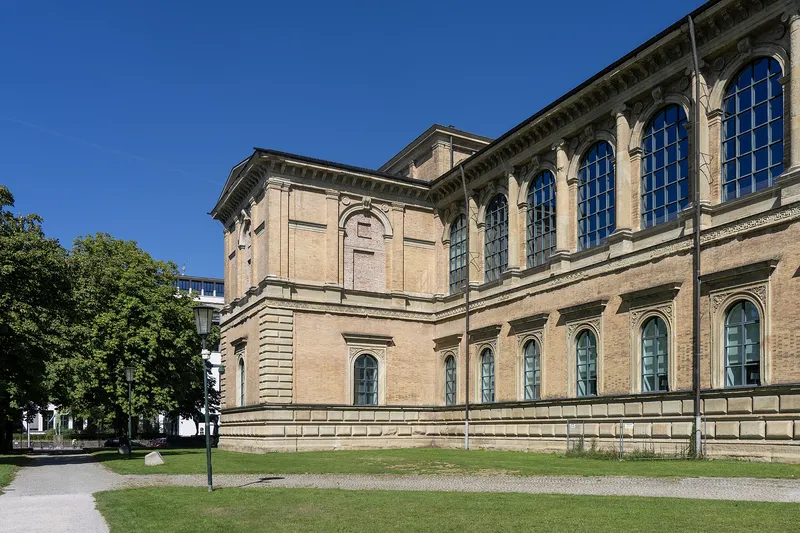
Alte Pinakothek, Munich
How to visit Munich's Old Masters gallery in the Kunstareal — the Dürers and Rubenses worth crossing town for, the Sunday-ticket angle, and how to build a wider museum-quarter day around it.
Read guide
Asamkirche, Munich
How to visit Munich's astonishing late-Baroque Asamkirche on Sendlinger Straße — the church two brothers built next to their own house — without overplanning it.
Read guide
Best Munich Tours
When a guided tour earns its place in a Munich trip — and which kind to pick. Old Town walks, food and beer crawls, football and BMW, the Third Reich history walk, and the big castle and Dachau day trips, weighed by time, cost and effort.
Read guide
Best Museums in Munich
Choose the right Munich museum for you — by interest, by how much time you have, by which day of the week, and by how useful it is on a rainy day.
Read guide
Best Photography Spots in Munich
Rooftops, squares, churches, parks and palaces — the most photogenic places in Munich, with the light and timing notes to shoot each one well.
Read guide