
FC Bayern Museum, Munich
How to visit Germany's biggest club museum inside the Allianz Arena — the trophies, the interactive exhibits, the kids' appeal, and how to combine it with a stadium tour.

Photo: Saurav Rastogi / Unsplash

- ✓The FC Bayern Erlebniswelt is the largest club museum in Germany, set inside the Allianz Arena itself.
- ✓It tells the story of Germany's most successful football club — record Bundesliga and DFB-Pokal titles, multiple European Cup / Champions League wins, and the 2013 and 2020 trebles.
- ✓A combined ticket with the self-guided stadium Erlebnistour is the value-for-money way to see both in one visit.
- ✓Interactive stations, big screens and the wall of silverware make it a genuine hit with football-mad kids and teens.
- ✓It sits at the Allianz Arena on the U6 line at Fröttmaning — easy to reach from the centre, even on a half-day.
Germany's biggest club museum, inside the arena
Tucked into the body of the Allianz Arena, the FC Bayern Museum — officially the FC Bayern Erlebniswelt, the club's 'world of experience' — is the largest museum of any football club in Germany, and one of the most-visited sporting attractions in the country. For anyone in the household who follows the game it is close to unmissable; for everyone else it is a surprisingly absorbing two hours, because the story it tells is the story of how a Munich gymnastics-club offshoot became the most successful football club in the land.
The space is modern, bright and generously sized, and it does what the best sports museums do: it uses the silverware as spectacle while hanging real history on it. You move from the club's founding in 1900, through the lean early decades, to the Beckenbauer–Müller–Maier golden age of the 1970s when Bayern won three European Cups in a row, and on to the era of serial Bundesliga dominance and the two great treble-winning seasons of 2013 and 2020. By the time you reach the trophy hall, you understand why the cabinets are as full as they are.
Because it lives inside the Allianz Arena, a museum visit slots neatly alongside seeing the stadium itself. Most people treat the two as a single outing — and the combined ticket is built for exactly that.

What you'll see: trophies, stories and interactive stations
The centrepiece is the trophy collection — and it is genuinely jaw-dropping in person. Ranks of Bundesliga championship dishes (the famous Meisterschale), DFB-Pokal cups, and the European silverware sit behind glass, with the record-setting numbers spelled out: Bayern hold by far the most German league titles of any club, the most domestic cups, and a handful of European Cup / Champions League crowns. Seeing that quantity of metal in one room is the exhibit that even a sceptic remembers.
Around the trophies, the museum threads the human stories. There are sections on the great figures — Franz Beckenbauer, the elegant 'Kaiser' who reinvented the role of the libero and later coached the club and the national team; Gerd Müller, 'Der Bomber', whose goalscoring records stood for decades; Sepp Maier in goal; and on through Rummenigge, Matthäus, Kahn, Lahm, Müller and the modern greats. Shirts, boots, photographs and film bring the eras to life, and there is space too for the club's more difficult and complicated chapters, told with more candour than you might expect.
Crucially for families, the museum is hands-on. Interactive stations let you test your knowledge, big screens replay famous goals and finals, and there are touchscreens, quizzes and reaction games dotted through the route. It is the kind of place where a football-obsessed ten-year-old will happily lose an hour, and a teenager who claims to be too cool for museums quietly ends up at the penalty-shootout screen.
With or without a stadium tour
You have two main ways to visit, and the right one depends on how much football appetite is in the group. The simplest is the museum on its own — a single admission to the Erlebniswelt, good for anyone who wants the trophies and the story but isn't fussed about walking out into the stands. The more popular option is the combined ticket that bundles the museum with the self-guided stadium Erlebnistour, letting you wander the public parts of the arena and the museum on one ticket and at your own pace.
For the full backstage version — the dressing rooms, the players' tunnel, the pitch-side dugouts — the club runs guided arena tours that you can pair with the museum. These run to a fixed timetable and are deservedly popular, so booking ahead is wise. The one firm rule is the fixture list: guided tours, and some museum access, are restricted or suspended around home matches and major events while the stadium is being prepared. If your dates are tight, check the schedule before you commit.
A planning tip: the museum is generally open more days than the guided tours run, so if you arrive on a match day or an event day you can often still see the museum even when the backstage tour is off. As always, verify current opening days, hours, admission prices and tour availability on the official site before you travel — they shift with the season.
Is it worth it for non-fans? And for families?
Honestly, yes — with one caveat. If nobody in your group cares about football even slightly, there are better uses of a Munich half-day. But the bar is low: a passing interest in the game, or simply curiosity about the cultural weight of Europe's most dominant club, is enough to make the visit rewarding. The production values are high, the storytelling is good, and the sheer scale of success on display is a spectacle in its own right.
For families it is one of the easier wins in the city. Kids respond to the interactivity, the screens and the trophies far more reliably than to a painting gallery, and the on-site stadium adds the thrill of standing inside a real 75,000-seat ground. Buggies are manageable, the route is step-friendly, and there is a café and the inevitable (and large) fan shop on site for the obligatory scarf. If you are travelling with a child who lives and breathes football, this may well be the highlight of their trip — set the expectation, and budget for the shop.
Pair it sensibly with the rest of your plans. Because the arena sits north of the centre, treat the museum-and-stadium combination as its own outing rather than something to squeeze between Altstadt sights; allow a half-day including travel, and you'll come back relaxed rather than rushed.
A short history, for the story behind the trophies
It helps to know the arc before you walk it, because the museum is really a biography of a club that became an institution. FC Bayern was founded in Munich in 1900 by a group of footballers breaking away from a gymnastics club — an unremarkable beginning for what would become a giant. The club won its first national championship in 1932, then endured the disruption and darkness of the Nazi era, when its Jewish president Kurt Landauer was forced out and the club lost much of its leadership; the museum does not skate over this, and the Landauer story is one of its more affecting threads.
The transformation came in the 1960s and 70s. A generation of home-grown talent — Beckenbauer sweeping from the back, Müller scoring at will, Maier unbeatable in goal — drove the club to the summit of Europe, winning three consecutive European Cups from 1974 to 1976 and supplying the spine of the West German side that won the 1974 World Cup on home soil. That era is the emotional core of the collection, and the silverware from it is displayed with obvious pride.
From there the museum charts the modern dynasty: decades of Bundesliga dominance, the heartbreak and eventual redemption of European finals, and the two seasons — 2012/13 and 2019/20 — when the club completed the treble of league, cup and Champions League. By the time you reach the most recent cabinets, the numbers have stopped being abstract; you have watched the institution grow around them, and the wall of trophies reads as the record of more than a century of Munich football.
Getting there and practicalities
Reaching the museum is as easy as reaching the arena, because they are the same place. Take the U6 underground toward Garching-Forschungszentrum, get off at Fröttmaning, and follow the broad pedestrian esplanade across the open ground to the stadium — a signposted ten- to fifteen-minute walk. The whole journey from the Altstadt runs on the city's integrated MVV ticketing, so a single zone ticket or a day pass covers it; validate where required and follow the signs once you arrive.
Inside, expect cashless or card payment at the café and shop, as is standard at the arena. Allow roughly an hour and a half to two hours for the museum, more if you add the self-guided stadium walk or a guided tour. Avoid arriving on a home-match day unless your specific plan is to attend the game — access is curtailed and the station is overwhelmed around kick-off. And, once more for the planners: confirm opening days, hours, admission and tour times on the official channels before you head out to Fröttmaning, since all of these flex with the fixture list and the time of year.
At a glance
What it is: the FC Bayern Erlebniswelt — Germany's largest club museum, inside the Allianz Arena.
Tells the story of: Germany's most successful football club, from 1900 to the 2013 and 2020 trebles.
Don't miss: the trophy hall, the interactive stations, and a combined ticket with the stadium tour.
Best for: football fans of any age, and especially families with sport-mad kids and teens.
Time needed: 1.5–2 hours for the museum; a half-day with travel and a stadium tour.
Getting there: U6 to Fröttmaning, then a 10–15 minute walk to the arena.
- Combined museum + self-guided stadium Erlebnistour is the value option.
- Guided arena tours are restricted around home matches — book ahead and check the fixture list.
- Verify opening days, hours, admission and tour times on the official site before travelling.

Allianz Arena, Munich
How to visit Munich's glowing football stadium — the self-guided Erlebnistour, the FC Bayern Museum, match-day logistics, and the easy U6 ride out to Fröttmaning.
Read guide
Munich With Kids
Family-tested things to do in Munich — the great hands-on science museum, the riverside zoo, parks and a permanent river wave, plus football, towers and weather-proof plans for every age.
Read guide
Munich with Teens
Football, cars, river surfing, big-hitter museums, shopping and easy day trips — how to plan a Munich trip that teenagers will actually rate.
Read guideMore in Things to Do
6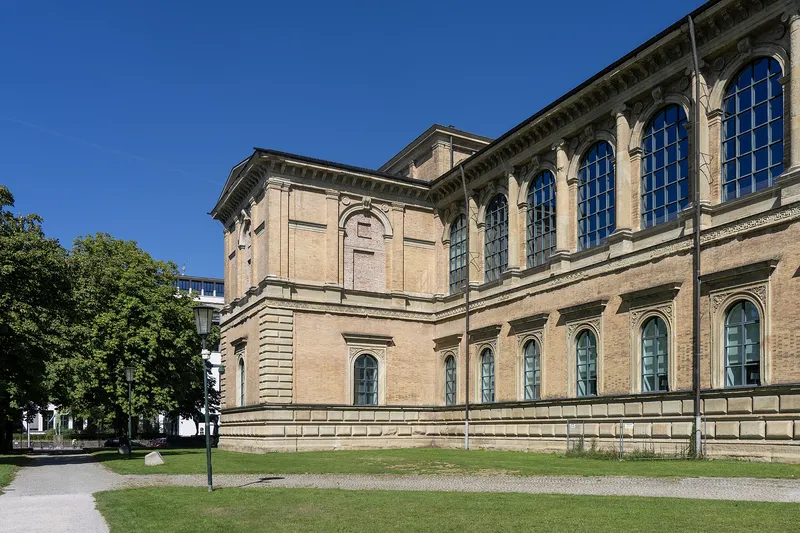
Alte Pinakothek, Munich
How to visit Munich's Old Masters gallery in the Kunstareal — the Dürers and Rubenses worth crossing town for, the Sunday-ticket angle, and how to build a wider museum-quarter day around it.
Read guide
Asamkirche, Munich
How to visit Munich's astonishing late-Baroque Asamkirche on Sendlinger Straße — the church two brothers built next to their own house — without overplanning it.
Read guide
Best Munich Tours
When a guided tour earns its place in a Munich trip — and which kind to pick. Old Town walks, food and beer crawls, football and BMW, the Third Reich history walk, and the big castle and Dachau day trips, weighed by time, cost and effort.
Read guide
Best Museums in Munich
Choose the right Munich museum for you — by interest, by how much time you have, by which day of the week, and by how useful it is on a rainy day.
Read guide
Best Photography Spots in Munich
Rooftops, squares, churches, parks and palaces — the most photogenic places in Munich, with the light and timing notes to shoot each one well.
Read guide
Best Things to Do in Munich
A ranked first-trip shortlist — from Marienplatz and the Residenz to the beer gardens, the great museums and the English Garden.
Read guide