
Neue Pinakothek, Munich
The Neue Pinakothek's building is closed for a long renovation — here's what that means for a visit, and exactly where to see its van Goghs, Monets and Klimts in the meantime.
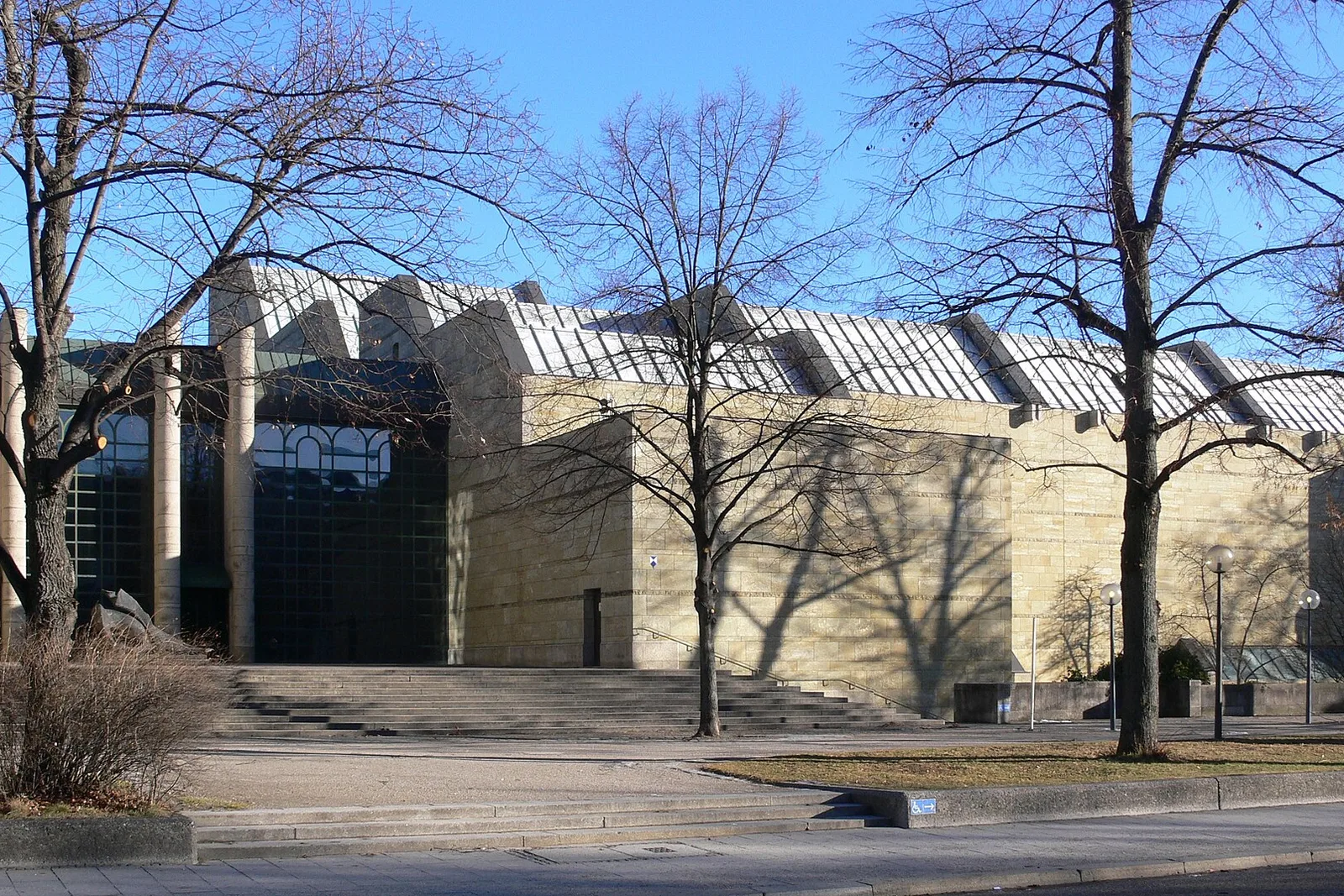
Photo: Andreas Praefcke / Wikimedia Commons · CC BY 3.0

- ✓The Neue Pinakothek's own building in Maxvorstadt is closed for a major, multi-year renovation — do not turn up expecting the gallery to be open.
- ✓Its 19th-century collection runs from German Romantics and the Nazarenes to French Impressionism — van Gogh, Monet, Manet, Cézanne, Degas, Gauguin and Klimt.
- ✓While the building is shut, highlights have been shown in part at the neighbouring Alte Pinakothek and at the Sammlung Schack — but displays rotate, so verify what's on view before you go.
- ✓The renovation timeline has shifted more than once; treat any reopening date as provisional and check the official site close to your trip.
First, the headline: the building is closed
The single most important thing to know about the Neue Pinakothek is that its own home — Alexander von Branca's post-modern building on Barer Straße, opposite the Alte Pinakothek — is shut for a deep, long-running renovation, and has been for several years. The structure needed extensive technical and structural work, and the museum closed entirely to carry it out. So if you've read an older guidebook or pinned a route to the building, adjust: you cannot currently walk in and see the collection in situ.
The good news is that the collection itself hasn't vanished. The Neue Pinakothek's 19th-century paintings are among the best-loved in Munich, and the Bavarian State Painting Collections have kept a rotating selection of the highlights on public view elsewhere in the city while the building is closed — so a determined visitor can still stand in front of the van Goghs. The catch is that what's shown, and where, changes over time. This page is written to stay useful through that uncertainty: take the specifics as a snapshot and confirm the current arrangement before you set out.
If reopening dates matter to your trip, treat any figure you see — here or anywhere — as provisional. The timeline has slipped more than once, and the official site is the only place to trust on the question.
Why the caution? Major museum renovations of this kind routinely run long: structural surprises emerge once work begins, funding and contracting cycles stretch, and a public institution would rather quietly extend a closure than reopen half-ready. The Neue Pinakothek has been through exactly that pattern. So the responsible advice for a traveller is simple — don't build a precious afternoon of your trip around walking into this building, and don't be surprised if a date you read online has already moved. Plan as though it's closed, and treat any reopening as a happy bonus you confirm at the last minute.
A founding museum of modern art — and a building of its own era
The Neue Pinakothek matters historically as well as for its pictures. When Ludwig I founded it in the mid-nineteenth century, it was conceived as one of the first museums anywhere dedicated to contemporary art — the living painting of its day — a deliberate complement to the Old Masters across the road. That original building was destroyed in the war and demolished afterwards; the gallery that closed for renovation is its replacement, an angular post-modern design by Alexander von Branca that opened in 1981. Branca's building, with its irregular, almost fortress-like brick massing and a daylight scheme tuned to the nineteenth-century canvases inside, divided opinion when it opened and has since become a recognisable part of the Kunstareal's streetscape.
All of which is to say: when the building reopens, it will be worth visiting for itself, not only for the art. For now, though, the practical reality is that the structure is sealed behind hoardings, and the experience of the Neue Pinakothek is a distributed one — a few rooms here, a temporary hang there. It's a strange interlude in the life of a great museum, and a reminder of how much of a collection's meaning comes from the rooms built to hold it.
What the collection holds — and why people seek it out
The Neue Pinakothek picks up where the Alte Pinakothek leaves off, covering the long 19th century — roughly the age of Goya to the early 20th century. It's a collection that travels the arc from Romanticism to modernism in a single sweep, and it's the Impressionist and Post-Impressionist rooms that draw the crowds.
- Vincent van Gogh — including his celebrated View of Arles with irises and a sunflower-era painting; among the most prized works in the collection.
- French Impressionists — Monet, Manet, Degas, Renoir, Cézanne, Pissarro and Gauguin, a strong cross-section of the movement.
- German Romantics and the Nazarenes — Caspar David Friedrich, Carl Spitzweg's beloved The Poor Poet, and the religiously minded Nazarene painters.
- Gustav Klimt — Margaret Stonborough-Wittgenstein, a striking society portrait, sits among the Symbolist and Jugendstil holdings.
- Turner, Goya and the wider European 19th century — landscapes, history painting and portraiture that bridge the eras either side.
Where to see the works in the meantime
During the closure, the Bavarian State Painting Collections have kept a curated selection of Neue Pinakothek favourites in front of the public — most visibly within the neighbouring Alte Pinakothek, whose rooms have at times hosted a rotating hang of 19th-century stars, and at the Sammlung Schack, a jewel-box gallery of German Romantic painting elsewhere in the city. Because these displays rotate and the arrangement has evolved, the only reliable move is to check the official site for the current location of the pieces you most want to see, then go where they are.
The practical upside is that you don't need a separate, dedicated trip. If you're already visiting the Alte Pinakothek — and you should be, for the Old Masters — you may catch a clutch of Neue Pinakothek highlights in the same building, on the same ticket day. That makes the Kunstareal a one-stop solution: confirm what's hanging, then fold it into a single museum-quarter afternoon.
A word for the disappointed: if you'd set your heart on the full Neue Pinakothek experience, the closure stings, and there's no pretending a handful of borrowed rooms equals the whole. But Munich is generous with nineteenth-century and modern art even so. The Sammlung Schack is a beautiful, often-overlooked gallery of German Romantic painting that rewards a quiet hour; the Lenbachhaus a short walk away holds the world's greatest collection of Blue Rider work — Kandinsky, Marc, Münter — which carries the story forward into early modernism; and the Pinakothek der Moderne picks up the twentieth century in full. Build a 'modern Munich' day from those three and you'll scarcely feel the gap.
Making the most of the situation
There's a way to think about the Neue Pinakothek's closure that turns frustration into a better trip. Rather than mourning a single locked building, treat its collection as a thread you follow across several of Munich's open galleries — and in doing so you'll see more of the city's art than a one-stop visit would ever have given you. Start at the Alte Pinakothek, where any temporary hang of nineteenth-century stars usually sits; carry on to the Sammlung Schack for the German Romantics in their intimate, gilt-walled rooms; and finish at the Lenbachhaus for the Blue Rider and the leap into modernism. That's a richer, more varied day than the Neue Pinakothek alone, and it spreads your steps across the Kunstareal and beyond.
It also pays to stay flexible about specific paintings. Loans, conservation and the demands of temporary exhibitions mean that even the most famous works move; a van Gogh that was on view last season may be resting or travelling this one. If a single picture is the whole reason for your visit, email or check ahead rather than assume — the museum's staff are used to the question, and a two-minute check saves a long face in front of an empty wall. Approached this way, with curiosity rather than a fixed checklist, the closure becomes a prompt to explore corners of Munich's art world you might otherwise have skipped.

Common questions
Is the Neue Pinakothek open right now? — Its own building is closed for renovation and has been for several years. Check the official site before you travel; do not turn up at Barer Straße expecting to get in.
Can I still see the van Goghs and Monets? — Usually yes, but elsewhere. A rotating selection of highlights has been displayed within the Alte Pinakothek and at the Sammlung Schack during the closure. Confirm the current location of specific works before you go.
When will it reopen? — The timeline has shifted more than once and no date should be treated as firm. The official status page is the only reliable source; verify close to your trip.
Is it worth visiting the Kunstareal anyway? — Absolutely. The Alte Pinakothek, the Pinakothek der Moderne and the Brandhorst are all open and within a few minutes' walk, so the museum quarter remains one of Munich's best half-days regardless of the Neue Pinakothek's status.
At a glance
Status — building closed for a long renovation; reopening date provisional. Verify before travelling.
Location of the building — Barer Straße 29, Maxvorstadt, opposite the Alte Pinakothek (when open).
Collection — 19th-century European painting: Romanticism through Impressionism and Jugendstil (van Gogh, Monet, Klimt, Friedrich, Spitzweg).
Where to see it now — a rotating selection at the Alte Pinakothek and the Sammlung Schack; confirm the current display.
Good to know — don't make a dedicated trip to the closed building; fold the highlights into an Alte Pinakothek / Kunstareal visit instead.
Alte Pinakothek, Munich
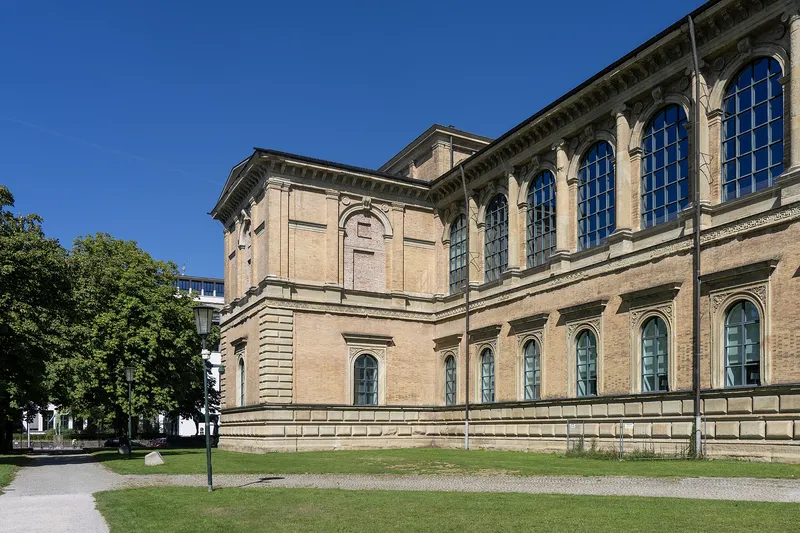
How to visit Munich's Old Masters gallery in the Kunstareal — the Dürers and Rubenses worth crossing town for, the Sunday-ticket angle, and how to build a wider museum-quarter day around it.
Read guide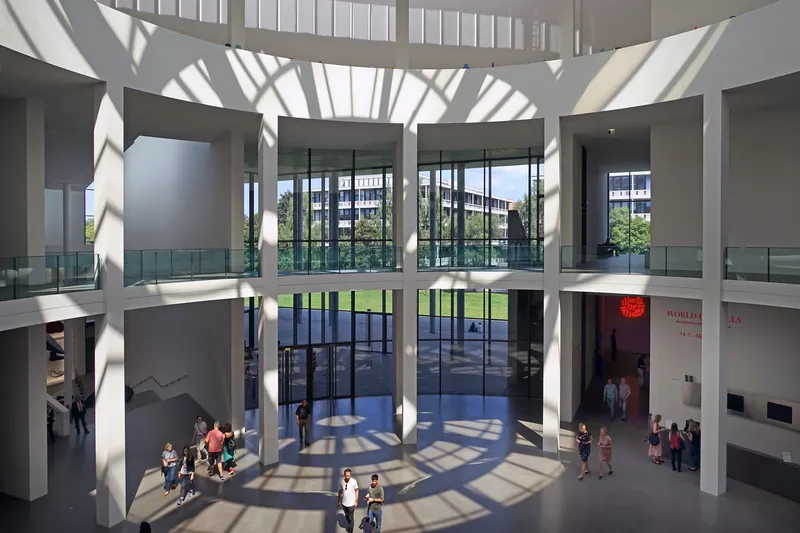
Pinakothek der Moderne, Munich
Four museums under one roof — modern art, design, architecture and works on paper — gathered around a soaring white rotunda in Munich's Kunstareal. How to see the best of it without overload.
Read guide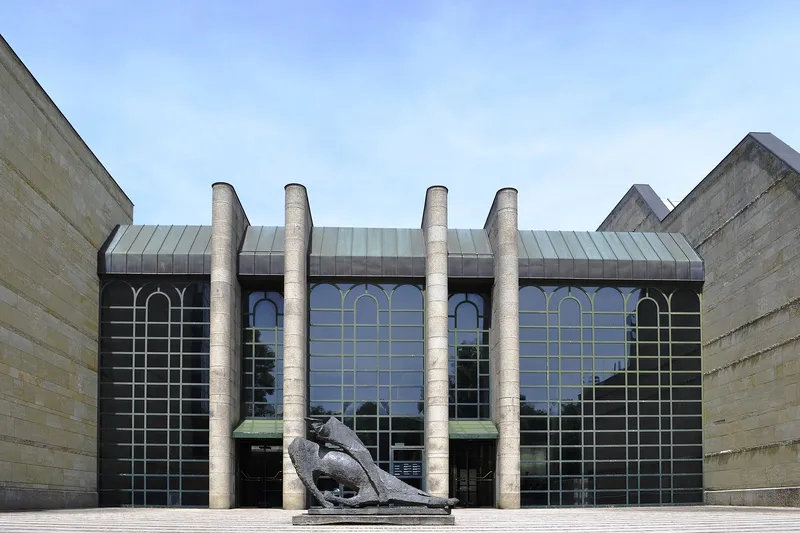
Best Museums in Munich
Choose the right Munich museum for you — by interest, by how much time you have, by which day of the week, and by how useful it is on a rainy day.
Read guideMore in Things to Do
6
Allianz Arena, Munich
How to visit Munich's glowing football stadium — the self-guided Erlebnistour, the FC Bayern Museum, match-day logistics, and the easy U6 ride out to Fröttmaning.
Read guide
Asamkirche, Munich
How to visit Munich's astonishing late-Baroque Asamkirche on Sendlinger Straße — the church two brothers built next to their own house — without overplanning it.
Read guide
Best Munich Tours
When a guided tour earns its place in a Munich trip — and which kind to pick. Old Town walks, food and beer crawls, football and BMW, the Third Reich history walk, and the big castle and Dachau day trips, weighed by time, cost and effort.
Read guide
Best Photography Spots in Munich
Rooftops, squares, churches, parks and palaces — the most photogenic places in Munich, with the light and timing notes to shoot each one well.
Read guide
Best Things to Do in Munich
A ranked first-trip shortlist — from Marienplatz and the Residenz to the beer gardens, the great museums and the English Garden.
Read guide
Best Viewpoints in Munich
Where to see Munich from above — church towers over the Old Town, the Monopteros hill, the Olympic heights and the Alps on a clear day.
Read guide