
Nymphenburg Palace, Munich
Plan a visit to Munich's grand summer palace — the Stone Hall and royal rooms, the Marstallmuseum coaches, the porcelain, and the tram-and-walk approach down the canal.

Photo: Periklis Lolis / Unsplash

- ✓Built from 1664 as a summer residence for the Bavarian electors, Nymphenburg was begun to mark the birth of the long-awaited heir Max Emanuel — a palace born of a happy ending.
- ✓The Stone Hall (Steinerner Saal) at the centre is the showpiece: a full-height Rococo ballroom frescoed by Johann Baptist Zimmermann, free of furniture and breathtaking on its own.
- ✓Ludwig I's Gallery of Beauties hangs here — 36 portraits of the women he found most beautiful, court ladies and commoners alike.
- ✓The Marstallmuseum in the south wing keeps the royal coaches and sleighs, including the fairy-tale gilt carriages of 'mad' King Ludwig II.
- ✓Tram 17 runs almost to the gates; the long walk in down the central canal is half the experience.
A summer palace built to celebrate an heir
Nymphenburg — the 'Castle of the Nymphs' — sits a few kilometres west of the centre, a low, immensely wide cream-and-ochre palace stretched along a formal canal. It was begun in 1664 by Elector Ferdinand Maria and his wife Henriette Adelaide of Savoy to celebrate the birth of their son and heir, Max Emanuel, after years of waiting. Successive electors and kings widened it over the following century into the sprawling complex you see today, with its great central pavilion and the long arcs of wings reaching out on either side.
That origin story sets the mood. This is not a fortress or a seat of grim power but a pleasure palace — somewhere the Wittelsbachs came to escape the formality of the Residenz in the city and spend their summers among gardens, fountains and water. It stayed in the family until the monarchy ended in 1918, and it remains one of the largest royal palaces in Germany, its façade longer than that of Versailles.
For visitors that translates into an easy, unhurried half-day: a manageable set of state rooms rather than an endurance test, a couple of excellent specialist museums in the wings, and a vast park behind that you can wander for free. Couples, families and anyone tired of the Altstadt crowds all find their footing here.

Inside the palace: the Stone Hall and the royal apartments
You enter into the Steinerner Saal, the Stone Hall, and it is worth standing still for a moment. This double-height ballroom runs the full depth of the central pavilion, opening onto the gardens at the back and the canal at the front, and its ceiling is one of Johann Baptist Zimmermann's great Rococo fresco schemes — a swirl of gods, nymphs and pastel sky framed in white-and-gold stucco. There is almost no furniture, which is the point: the room is the exhibit.
From the hall, the visitor route loops through the former apartments to either side — antechambers, audience rooms and bedchambers hung with tapestries, portraits and the painted ceilings the Wittelsbachs commissioned over the generations. The single most famous thing here is Ludwig I's Schönheitsgalerie, the Gallery of Beauties: 36 portraits, commissioned in the 1820s–50s, of the women the king considered the most beautiful in the realm. They range from princesses to a shoemaker's daughter, and the democratic sweep of the wall still surprises people.
Nymphenburg has one more royal footnote that draws visitors: it was the birthplace, in 1845, of King Ludwig II, the dreamer-king of Neuschwanstein. The room shown as his birth room is part of the trail. If the palace lights a curiosity about the rest of the Wittelsbach world, the city-centre Residenz is the natural companion.

The museums in the wings: coaches, porcelain and a king's sleighs
Two specialist museums share the complex and are easy to fold in. The Marstallmuseum, in the south wing, is the former court stables and keeps the royal carriages, coaches and sleighs — and it quietly steals the show. The gilded state coaches are dazzling, but the showstoppers are the carriages and sleighs of Ludwig II: extravagant Rococo-revival confections, dripping with gold cherubs and meant to be driven through Alpine snow by torchlight. It is the clearest window anywhere into that king's beautiful, ruinous imagination.
Above the Marstallmuseum, the Bäuml Collection displays Nymphenburg porcelain, made at the manufactory still operating in the palace grounds — a reminder that this was a working royal estate as much as a residence. Elsewhere in the park are the four garden pavilions, covered on the companion park page.
Three centuries of the Wittelsbachs in one building
Part of Nymphenburg's quiet pleasure is reading its layers. The compact central pavilion you enter is the original 1660s–70s palace, an Italian-influenced villa by the architect Agostino Barelli and his successor Enrico Zuccalli. The vast reach of the wings, arcades and forecourt buildings came later, mostly under Max Emanuel and his son in the early 18th century, as the family turned a summer villa into a sprawling residence to rival the great courts of Europe. Each generation added rooms, pavilions and gardens to its own taste, so a single visit threads you through Baroque, Rococo and Neoclassical sensibilities without ever leaving the building.
The palace stayed a living royal home right up to the fall of the Bavarian monarchy in 1918, and members of the House of Wittelsbach — the dynasty that ruled Bavaria for over 700 years — are still associated with parts of the wider complex today. That continuity is rare, and it gives the interiors a lived-in dignity that a purpose-built museum can't fake: these were genuinely the rooms a long line of electors and kings summered in, married in, and in Ludwig II's case were born in.
If you only have time for the highlights, prioritise the Stone Hall, the Gallery of Beauties and the birth room of Ludwig II inside the palace, then cross to the Marstallmuseum for the coaches. That trio captures the building's whole arc — from dynastic celebration to Rococo glamour to the doomed romanticism that ended the line.
Tickets, time and the approach
A combination ticket typically covers the palace, the Marstallmuseum and the porcelain together, with the garden pavilions usually added in a wider all-sites ticket; the park itself is free to walk. Pricing and the exact bundles change, and the pavilions in particular tend to close for the winter season, so check the official Bavarian Palace Administration site for current admission, hours and seasonal closures before you go (verify). Budget around two to three hours for the palace and museums, more if the park tempts you onward.
Getting there is part of the pleasure. Tram 17 from the Hauptbahnhof runs west to the 'Schloss Nymphenburg' stop, a few minutes' walk from the forecourt; bus and S-Bahn routes (Laim, then a walk or bus) also work. However you arrive, approach on foot down the central avenue so the palace reveals itself across the long canal — the single best first view, and the photograph everyone comes for. The neighbourhood around the gates, Neuhausen-Nymphenburg, is a leafy, local quarter worth a coffee before or after.

Frequently asked questions about Nymphenburg Palace
Is Nymphenburg Palace worth visiting? Yes — it is one of Munich's essential sights and, for many, the high point of a trip beyond the Old Town. The baroque summer palace of the Wittelsbach dynasty has a façade longer than Versailles, a sumptuous Stone Hall, King Ludwig I's Gallery of Beauties, the fairy-tale coaches of Ludwig II in the Marstallmuseum, and a vast free park behind it. The combination of grand interiors, royal history and gardens makes it a comfortable half-day that rewards the short tram ride out.
How long do you need at Nymphenburg? Budget roughly two to three hours for the palace and its wing museums (the royal coaches and the porcelain), and longer if the park tempts you onward to its lakes and four hidden pavilions — which can easily make it a full day. If you are short on time, the palace interiors and the Marstallmuseum coaches are the priority; the park is free and can be enjoyed in any spare time you have.
How do I get to Nymphenburg Palace? Tram 17 from the Hauptbahnhof runs west to the 'Schloss Nymphenburg' stop, a few minutes' walk from the forecourt; S-Bahn to Laim and a walk or bus also works. However you arrive, approach on foot down the central avenue so the palace reveals itself across the long canal — the best first view and the photograph everyone comes for.
What do tickets cover, and is the park free? A combination ticket typically bundles the palace, the Marstallmuseum coaches and the porcelain collection, with the garden pavilions usually added in a wider all-sites ticket. The park itself is free to walk at all times. Pricing, bundles and seasonal closures (the pavilions tend to shut in winter) change, so check the official Bavarian Palace Administration site for current admission and hours before you go.
When is the best time to visit? Late afternoon is the loveliest, when the façade and its canal reflection turn gold — a favourite for couples and photographers. For the interiors, any opening hour works; for the park, autumn is the most beautiful and summer the best for a picnic. Avoid relying on the pavilions in winter, when they are usually closed, and verify current hours for your date.
- An essential half-day sight — baroque interiors, royal coaches, porcelain and a vast free park.
- Allow 2 to 3 hours for the palace and museums; a full day if you walk the park and pavilions.
- Tram 17 to 'Schloss Nymphenburg', then approach on foot down the canal for the best first view.
- Combination tickets cover palace, coaches and porcelain; the park is free — verify current prices and hours.
At a glance
What it is: the Wittelsbachs' baroque summer palace, west of central Munich.
Don't miss: the Stone Hall ceiling, the Gallery of Beauties, and Ludwig II's sleighs in the Marstallmuseum.
Time needed: roughly 2–3 hours for the palace and museums; longer with the park.
Getting there: tram 17 to 'Schloss Nymphenburg', then walk in down the canal.
Cost & hours: combination tickets cover palace + coach + porcelain; the park is free. Pavilions usually close in winter — verify current prices, hours and closures with the official site.
Best light: late afternoon, when the façade and its canal reflection turn gold.
- Begun 1664 to mark the birth of heir Max Emanuel; the façade is longer than Versailles'.
- Birthplace of King Ludwig II (1845); his fairy-tale coaches live in the Marstallmuseum.
- Nymphenburg porcelain is still made on the grounds — the Bäuml Collection shows the best of it.

Nymphenburg Park & Pavilions, Munich
A walking guide to Nymphenburg's gardens — the formal parterre, the canals and cascade, the swans, and the four jewel-box pavilions hidden in the English landscape park.
Read guide
Neuhausen-Nymphenburg, Munich
A leafy, family-friendly district west of the centre — wrapped around Schloss Nymphenburg and its park, threaded with classic beer gardens, and a calmer, better-value alternative to the Old Town.
Read guide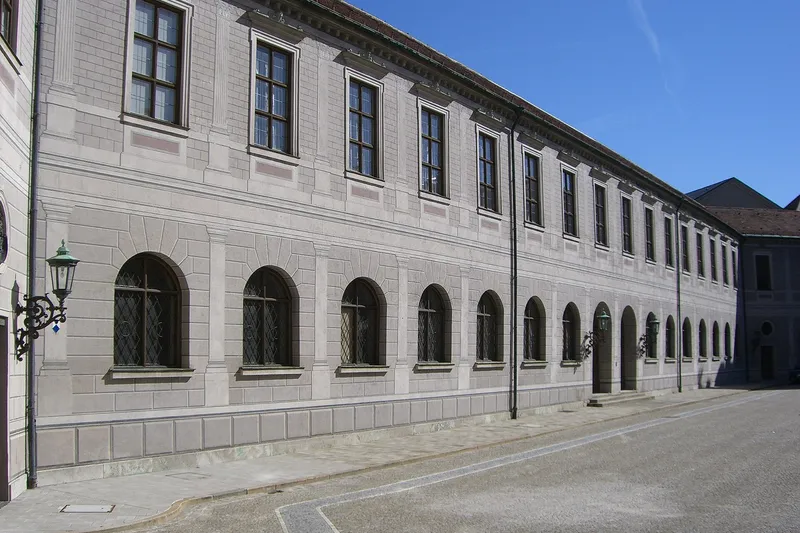
Munich Residenz
A room-by-room planning guide to the Residence Museum, the Treasury, the Cuvilliés Theatre and the Hofgarten — what to see, what to skip, and how to keep museum fatigue at bay.
Read guideMore in Things to Do
6
Allianz Arena, Munich
How to visit Munich's glowing football stadium — the self-guided Erlebnistour, the FC Bayern Museum, match-day logistics, and the easy U6 ride out to Fröttmaning.
Read guide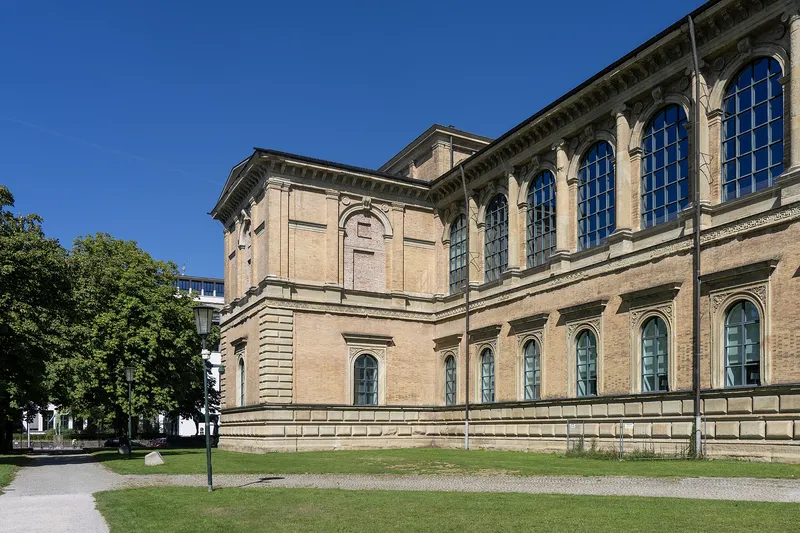
Alte Pinakothek, Munich
How to visit Munich's Old Masters gallery in the Kunstareal — the Dürers and Rubenses worth crossing town for, the Sunday-ticket angle, and how to build a wider museum-quarter day around it.
Read guide
Asamkirche, Munich
How to visit Munich's astonishing late-Baroque Asamkirche on Sendlinger Straße — the church two brothers built next to their own house — without overplanning it.
Read guide
Best Munich Tours
When a guided tour earns its place in a Munich trip — and which kind to pick. Old Town walks, food and beer crawls, football and BMW, the Third Reich history walk, and the big castle and Dachau day trips, weighed by time, cost and effort.
Read guide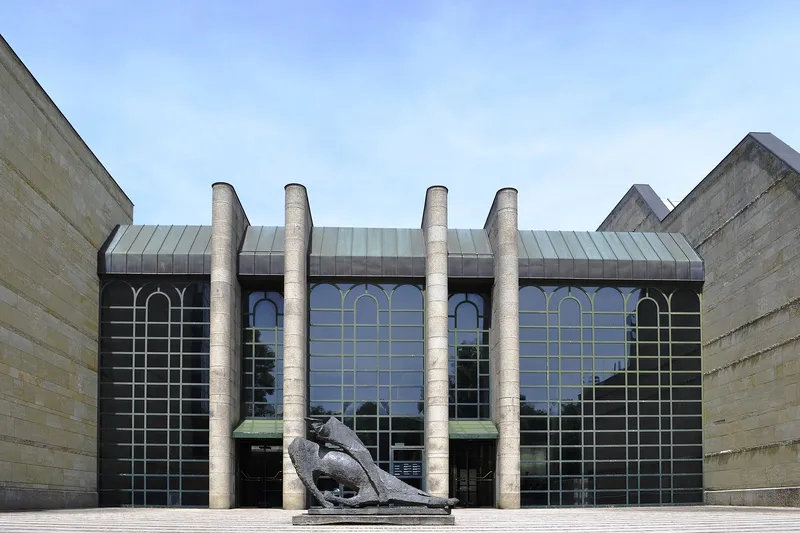
Best Museums in Munich
Choose the right Munich museum for you — by interest, by how much time you have, by which day of the week, and by how useful it is on a rainy day.
Read guide
Best Photography Spots in Munich
Rooftops, squares, churches, parks and palaces — the most photogenic places in Munich, with the light and timing notes to shoot each one well.
Read guide