
Karlsplatz (Stachus), Munich
How to use Munich's grand western gateway — the Karlstor gate into the Altstadt, the fountain and the winter ice rink, the shopping street that starts here, and the transport hub beneath.

Photo: Datingjungle / Unsplash

- ✓Karlsplatz — universally called the Stachus by locals — is the grand western entrance to Munich's Old Town, marked by the medieval Karlstor gate.
- ✓Through the Karlstor begins the pedestrianised Neuhauser Straße / Kaufingerstraße, the city's main shopping run straight to Marienplatz.
- ✓The big round fountain on the square is a summer cooling-off spot; in winter the square hosts a popular open-air ice rink (dates vary — verify each year).
- ✓Beneath it sits a major transport interchange — S-Bahn, U-Bahn, trams and the underground Stachus shopping passage.
- ✓The curved neo-Baroque Justizpalast (Palace of Justice), with its glass dome, anchors the square's western side.
The grand western gateway to the Old Town
Every walled city had its gates, and Karlsplatz is where you cross Munich's western threshold. The square takes its official name from the eighteenth-century Elector Karl Theodor, but no local calls it that: to everyone here it is the Stachus, a nickname so entrenched that the tram and station signs use it too. The story goes that it derives from an old innkeeper, Eustachius, whose tavern once stood nearby — and the name stuck for centuries while the formal 'Karlsplatz' stayed mostly on paper.
The square's defining feature is the Karlstor, a surviving medieval gate of the city's vanished fortifications. Its two flanking towers frame the entrance to the pedestrian zone, and stepping through them is one of those small, satisfying moments of arrival: behind you the traffic and the trams of the ring road; ahead, the car-free shopping street that runs straight into the heart of the Altstadt. For first-timers walking in from the Hauptbahnhof, the Stachus is very often the first proper taste of old Munich.
It is, in truth, more threshold than destination — a place you pass through rather than linger at — but it is a handsome and useful one, and knowing how to use it well makes the whole western side of the centre click into place.

The square itself: fountain, Justizpalast and the towers
Stand on the square and three things define it. To the west curves the Justizpalast, the grand neo-Baroque Palace of Justice from the turn of the twentieth century, crowned with a glass-and-steel dome — a confident, slightly theatrical building that gives the Stachus its civic weight. To the east stand the towers of the Karlstor and the start of the pedestrian street. And in between, on the open plaza, sits the large round fountain: a wide, shallow basin that on hot summer days becomes an impromptu paddling spot for overheated children and tired shoppers cooling their feet.
The square as you see it is partly a postwar reconstruction — the Karlstor's central tower was lost long ago, and much of the surrounding fabric was rebuilt after the bombing of the Second World War — but it reads as a coherent grand entrance nonetheless. The mix of monumental architecture, busy crossing and a generous open space makes it one of the city's great people-watching corners; grab a seat by the fountain and the whole of Munich seems to flow past.
There is history under the surface here, too. Karlsplatz sits on the line of the old city wall, and the Karlstor was one of the principal medieval gates through which roads from the west entered Munich; for centuries this was the edge of the city, where the country began. When the fortifications were cleared in the nineteenth and twentieth centuries the square opened up into the broad civic space it is now, but the gate was kept as a reminder of where the old town's boundary ran. Walking through it, you are quite literally crossing the historic threshold of Munich.

Shopping: where Munich's main retail street begins
For many visitors the Stachus is, above all, the start of the shopping. Step through the Karlstor and you are on Neuhauser Straße, which becomes Kaufingerstraße — a wide, fully pedestrianised run of high-street stores, department stores and flagship shops that leads, in about ten unhurried minutes, straight to Marienplatz. It is one of the busiest shopping streets in Germany, and if you want mainstream brands and big stores in a car-free, easy-to-browse stretch, this is the obvious place.
There is more retail below your feet, too. Beneath the square spreads the Stachus-Passagen, an underground shopping concourse threaded through the transport interchange — handy on a wet day, and a useful through-route between the station entrances. For more distinctive, less chain-driven shopping, the side streets and the smarter quarter toward Maximilianstraße reward a detour, but as a one-stop high street the Neuhauser/Kaufinger axis from the Stachus is unbeatable for convenience.
A practical tip: like most of Germany, the big shops here generally close on Sundays, so plan your retail therapy for a weekday or Saturday (verify current opening hours, which can vary by store and season).
The winter ice rink and seasonal life
Come winter, the open plaza takes on a new role. In recent years Karlsplatz has hosted a popular open-air ice rink through the cold months — a sheet of skating set up on the square, often with a small bar and a festive buzz, drawing locals and visitors out into the dark afternoons. Combined with the Christmas markets a short walk away on Marienplatz and around the Old Town, the winter Stachus is a genuinely cheerful place to be, all cold air, mulled-wine steam and the scrape of skates.
Because seasonal installations like the ice rink are organised year by year, their exact dates, hours and whether they run at all can change — so treat the rink as a lovely possibility rather than a fixture, and verify the current season's programme before you build a plan around it. The fountain serves the same crowd-gathering role in summer that the rink does in winter, which is part of what gives the square its year-round liveliness despite being, fundamentally, a place people are passing through.
The transport hub beneath your feet
What makes the Stachus so useful is largely invisible from the surface: it is one of Munich's key transport interchanges. The main S-Bahn trunk line stops here at Karlsplatz (Stachus), the U-Bahn serves it, and trams and buses converge on the square above ground — so from this one point you can reach almost anywhere in the city and region, including a quick hop to the Hauptbahnhof one stop west or to Marienplatz one stop east. The whole network runs on the integrated MVV ticketing, so a single ticket or a day pass covers your moves; validate where required.
For an arriving visitor this makes the Stachus an excellent orientation point and meeting spot — central, unmissable, and connected to everything. If you are staying near the Hauptbahnhof, you'll likely pass through it daily; if you are sightseeing, it's the natural western anchor of an Old Town walk that ends at Marienplatz. Use it as a hinge between the station district and the historic core, and the geography of central Munich suddenly makes sense.
Frequently asked questions about Karlsplatz (Stachus)
Why is Karlsplatz called Stachus? Officially the square is Karlsplatz, but locals almost universally call it the Stachus, a nickname that long predates the formal name and traces back to a tavern that once stood nearby. Use 'Stachus' in conversation and 'Karlsplatz' on the transport maps and you will fit right in — both refer to the same grand square at the western edge of the Old Town.
What is there to see at the Stachus? The square's centrepiece is the medieval Karlstor gate, one of the surviving gateways of the old city wall, which opens onto Neuhauser and Kaufingerstraße — the Old Town's main pedestrian shopping street running east to Marienplatz. Around the square sit the grand domed Justizpalast (Palace of Justice), a summer fountain that children play in, and, beneath your feet, the Stachus-Passagen, a large underground shopping concourse. It is more a handsome, useful threshold than a destination in itself.
Is there an ice rink at Karlsplatz in winter? In recent years the square has hosted a seasonal winter ice rink, a popular fixture of the city's cold-weather calendar, though the installation, dates and opening times change from year to year. Treat it as something to look forward to rather than count on, and check the current season's programme before planning a visit around it.
How do I get to the Stachus, and what is it good for? It is one of Munich's key transport interchanges — the main S-Bahn trunk line stops here, the U-Bahn serves it, and trams and buses converge above ground — so it is one stop from both the Hauptbahnhof to the west and Marienplatz to the east, and reachable from almost anywhere on a single MVV ticket. That makes it an excellent orientation point, meeting spot and the natural western start of an Old Town walk that ends at Marienplatz. Note that the big shops close on Sundays.
- Officially Karlsplatz, locally the Stachus — both name the same square at the Old Town's western edge.
- See the medieval Karlstor gate, the start of the main shopping street, the Justizpalast and the underground passages.
- A winter ice rink has featured in recent years, but dates and details change — verify each season.
- A major S-Bahn/U-Bahn/tram interchange, one stop from the Hauptbahnhof and Marienplatz; shops close Sundays.

At a glance
What it is: Munich's grand western gateway square — officially Karlsplatz, locally the Stachus.
The landmark: the medieval Karlstor gate, opening onto the Old Town's main shopping street.
Don't miss: walking through the Karlstor down Neuhauser/Kaufingerstraße to Marienplatz.
Seasonal: the summer fountain and a winter ice rink (dates vary — verify each year).
Also here: the domed Justizpalast and the underground Stachus-Passagen shopping concourse.
Getting there: a major S-Bahn / U-Bahn / tram interchange — one stop from both the Hauptbahnhof and Marienplatz.
- More a threshold than a destination — but a handsome and very useful one.
- Big shops generally close on Sundays; verify current opening hours.
- Seasonal installations like the ice rink change year to year — check the current programme.

Shopping in Munich: The Complete Guide
Where to shop in Munich — the pedestrian high street, the luxury of Maximilianstraße, design boutiques, markets and souvenirs — plus the one rule that catches everyone out: Sundays.
Read guide
Altstadt Munich Guide
Munich's Old Town, the Altstadt, holds the city in miniature — Marienplatz and the Glockenspiel, the Frauenkirche, the Viktualienmarkt, the Residenz and the Hofbräuhaus, all inside a flat, walkable ring. Here's what to see, where to eat, where to stay, and how to sidestep the busiest hours.
Read guide
Munich Old Town Walk
A self-guided walking route through Munich's Altstadt — linking Marienplatz, the great churches, the Viktualienmarkt, the royal streets, the city gates and the beer halls in one easy loop.
Read guideMore in Things to Do
6
Allianz Arena, Munich
How to visit Munich's glowing football stadium — the self-guided Erlebnistour, the FC Bayern Museum, match-day logistics, and the easy U6 ride out to Fröttmaning.
Read guide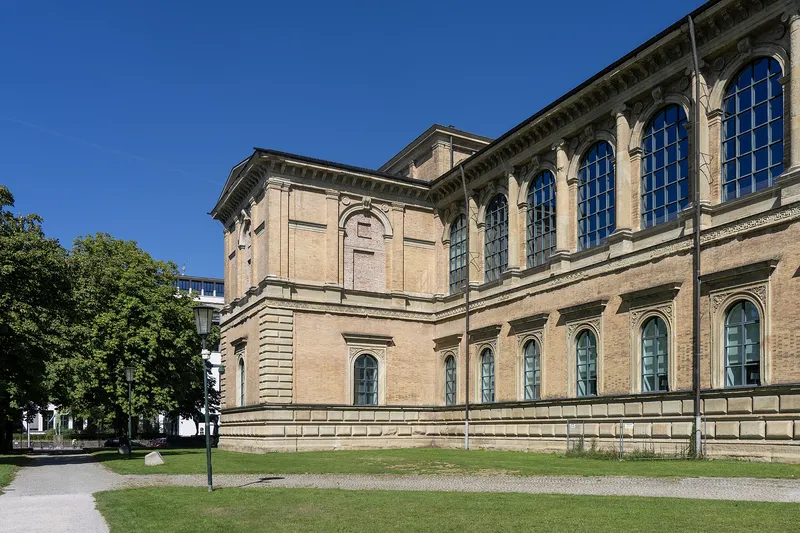
Alte Pinakothek, Munich
How to visit Munich's Old Masters gallery in the Kunstareal — the Dürers and Rubenses worth crossing town for, the Sunday-ticket angle, and how to build a wider museum-quarter day around it.
Read guide
Asamkirche, Munich
How to visit Munich's astonishing late-Baroque Asamkirche on Sendlinger Straße — the church two brothers built next to their own house — without overplanning it.
Read guide
Best Munich Tours
When a guided tour earns its place in a Munich trip — and which kind to pick. Old Town walks, food and beer crawls, football and BMW, the Third Reich history walk, and the big castle and Dachau day trips, weighed by time, cost and effort.
Read guide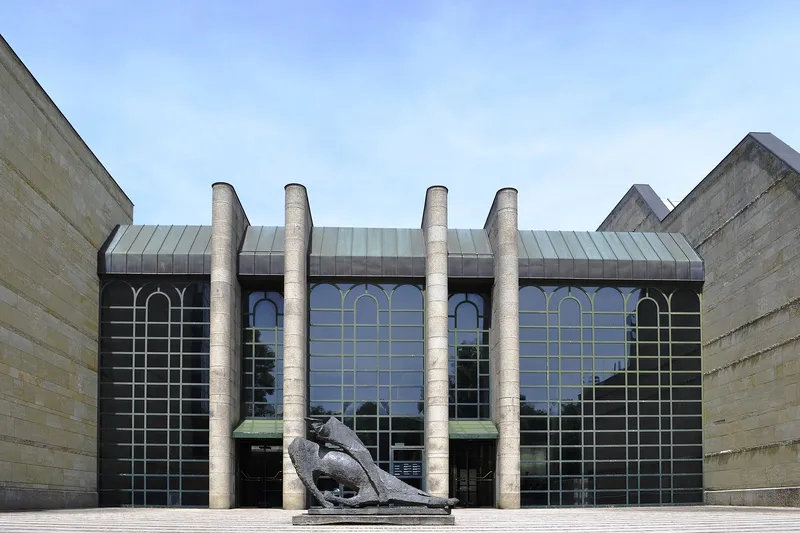
Best Museums in Munich
Choose the right Munich museum for you — by interest, by how much time you have, by which day of the week, and by how useful it is on a rainy day.
Read guide
Best Photography Spots in Munich
Rooftops, squares, churches, parks and palaces — the most photogenic places in Munich, with the light and timing notes to shoot each one well.
Read guide