
The Monopteros, Munich
How to find the Monopteros — the little Greek temple on a hill in the English Garden — and build it into a sunset walk with the city's classic skyline view.


- ✓A small round Greek-style temple set on a man-made hill in the southern English Garden, completed in 1836.
- ✓Designed by Leo von Klenze, the court architect behind much of royal Munich's neoclassical look.
- ✓The gentle climb gives the city's classic park view: meadows in front, the Frauenkirche, Theatinerkirche and St. Peter's spires beyond.
- ✓It's the English Garden's great sunset spot — and a long-standing favourite for picnics, buskers and proposals.
- ✓Free, open at all hours, and a five-minute walk from the Eisbach surf wave.
A Greek temple on a Munich hill
Rise out of the trees in the southern English Garden and there it is: a perfect little circular temple of pale Ionic columns, crowning a low grassy mound. This is the Monopteros — the name simply means a round, single-ringed colonnade with no inner walls — and despite looking as though it has stood since antiquity, it was completed in 1836. It was designed by Leo von Klenze, the architect who gave 19th-century Munich so much of its classical grandeur, from the Königsplatz to the Glyptothek, for King Ludwig I, a monarch besotted with ancient Greece.
The hill it sits on is itself artificial, raised from rubble to lift the temple above the flat parkland and give it a view — a deliberate piece of romantic landscape theatre. The effect is exactly as intended: a folly that feels both grand and intimate, a destination that costs nothing and asks nothing, simply rewarding the short walk up with a place to sit and a view to take in.
It has become one of the most beloved corners of the whole park — somewhere students sprawl with guitars, friends share a sunset beer, and couples come for the view. On a fine evening the steps fill with a happy, unhurried crowd; come earlier or off-season and you may have the columns almost to yourself.

The view, and why it's the city's classic sunset spot
Climb the few steps to the temple and turn back toward the city. The meadows of the English Garden fall away in front of you, and beyond the treeline the skyline of the old town pricks the horizon: the twin domes of the Frauenkirche, the slim spire of the Theatinerkirche, the tower of St. Peter's. It is not a dizzying high-rise panorama — Munich keeps its centre low — but a gentle, layered view of green giving way to spires, and it is one of the most photographed in the city.
Facing roughly toward the centre, it catches the evening light beautifully, which is why the Monopteros is the place Munich comes to watch the sun go down. Bring a blanket and something to drink, find a patch of the hillside, and join a tradition that needs no booking and no budget. It is, unsurprisingly, a much-loved spot for proposals and quiet anniversaries — the cheapest grand gesture in town.
Finding it, and building it into a walk
The Monopteros sits in the southern third of the English Garden, an easy walk from the park's main southern entrances near the Haus der Kunst and Prinzregentenstraße; the closest U-Bahn stops are Lehel and Universität, and Marienplatz is around twenty minutes on foot. There are no signs you really need — the hill and its temple are visible across the open ground, and you simply walk toward them.
It slots perfectly into a southern-garden loop. Start at the Eisbach surf wave (about five minutes away), watch the surfers, climb to the Monopteros for the view, then carry on north to the Chinese Tower beer garden for a Maß under the chestnuts — three of the garden's set-pieces in one unhurried hour or two. In the other direction the temple is a short stroll from the river, so a garden walk can spill onto the banks of the Isar.

King Ludwig I, Leo von Klenze and a city in love with Greece
The Monopteros makes more sense once you know the man who ordered it. King Ludwig I of Bavaria — grandfather of the more famous, castle-building Ludwig II — was deeply enamoured of ancient Greece and antiquity, an enthusiasm that shaped a whole layer of Munich. He even saw his second son, Otto, installed as the first king of a newly independent Greece in 1832. At home he set about turning his capital into a 'new Athens', commissioning a sweep of neoclassical buildings across the city.
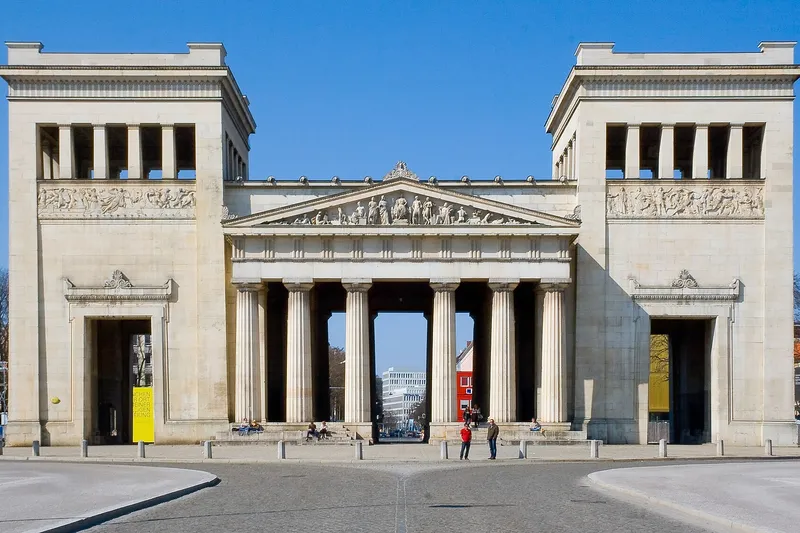
His instrument was Leo von Klenze, the court architect, whose temples and galleries still define so much of central Munich: the propylaea-flanked Königsplatz, the Glyptothek of ancient sculpture, the Alte Pinakothek. The little garden temple of 1836 is a more intimate piece of the same vision — a fragment of imagined antiquity dropped into a romantic English park, where the strict classicism of the columns plays against the loose, naturalistic landscape around them. That deliberate contrast, ancient ideal meeting wild nature, is pure 19th-century Romanticism, and it is part of why the spot moves people even when they can't name why.
Seen that way, the Monopteros is a hinge between two faces of royal Munich: the open, public, leisured world of the English Garden, and the grand neoclassical city of Klenze's squares and museums just to the south and west. A short walk connects the two.
Practical notes
The Monopteros is free and never closes — there is no ticket, no gate and no opening hours, since it stands in open parkland. The path up the hill is short but unpaved and a little uneven, so it is manageable for most but not ideal for wheels; the view is nearly as good from the grassy slope below if the climb is awkward. Bring your own picnic and drinks (the nearest beer garden is a walk away), take your litter with you, and be aware that on warm weekend evenings the hill gets busy and lively well after dark.
A few small courtesies keep the spot pleasant for everyone. It is a public monument, not a climbing frame, so leave the columns and steps as you found them; sound carries on the open hill, so the late-night guitar circles that gather here are charming up close and less so to nearby residents; and because there are no bins at the temple itself, plan to carry everything out. None of this dims the welcome — the hill is one of the most relaxed, come-as-you-are places in Munich — but a light touch keeps it that way.
In any season it earns the detour: green and social in summer, gold and quiet in autumn, starkly beautiful when the meadows are dusted with snow. It asks for nothing but a few minutes' walk and rewards you with the postcard Munich keeps for those who go looking.
Frequently asked questions
How do I get to the Monopteros? Aim for the southern end of the English Garden near the Haus der Kunst and Prinzregentenstraße; the nearest U-Bahn stops are Lehel and Universität, and it is about twenty minutes on foot from Marienplatz. Once you are in the park there is no need for directions — the temple sits on a low grassy hill that is visible across the open ground, so you simply walk toward it.
Is the Monopteros free, and when is it open? Yes, it is completely free, with no ticket, gate or opening hours, because it stands in open public parkland. You can visit at any time of day or night, and many people do — sunset is the classic hour, but it is just as lovely, and far quieter, in the early morning or out of season.
When is the best time to visit? Late afternoon into sunset, when the temple faces the evening light and the steps fill with a relaxed crowd watching the sky over the old-town spires. For photographs and solitude, come at dawn or on a weekday; for atmosphere, come on a warm summer evening, when buskers and picnickers gather on the hill.
Is it worth the visit on its own? It is best folded into a wider walk rather than visited in isolation. Five minutes south lies the Eisbach surf wave, and a short walk north brings you to the Chinese Tower beer garden, so the temple is really the high point of a southern-garden loop that strings together three of the park's set-pieces in an unhurried hour or two.
- Free and open at all hours — it stands in open parkland with no ticket or gate.
- Nearest U-Bahn: Lehel or Universität; about 20 minutes on foot from Marienplatz.
- Best at sunset for the view; dawn or off-season for quiet and photographs.
- Pair it with the Eisbach wave (5 min south) and the Chinese Tower beer garden (north).
At a glance
What it is: a round neoclassical temple (1836, by Leo von Klenze) on a hill in the English Garden.
Don't miss: the sunset view back over the meadows to the old-town spires.
Getting there: southern English Garden, near the Haus der Kunst; closest U-Bahn Lehel/Universität.
Cost & hours: free, open at all times — it stands in open parkland.
Pair it with: the Eisbach wave (5 min) and the Chinese Tower beer garden.
Best time: late afternoon into sunset; quieter in the early day and off-season.

The English Garden, Munich
How to walk Munich's vast central park — the Eisbach surf wave, the Monopteros viewpoint, the Chinese Tower beer garden, the lawns, the streams and the long route north to the Kleinhesseloher See.
Read guide
Romantic Walks in Munich
Five walks for two — the Nymphenburg canal, the English Garden to the Monopteros, the Isar river banks, the Hofgarten-to-Odeonsplatz loop and an Old Town evening route — with timings, golden-hour notes and where to stop.
Read guide
Best Sunset Spots in Munich
Where to catch golden hour in Munich — the church towers and park hills for a skyline, the riverbanks and palace canals for something softer, and the one viewpoint that throws in the Alps.
Read guideMore in Things to Do
6
Allianz Arena, Munich
How to visit Munich's glowing football stadium — the self-guided Erlebnistour, the FC Bayern Museum, match-day logistics, and the easy U6 ride out to Fröttmaning.
Read guide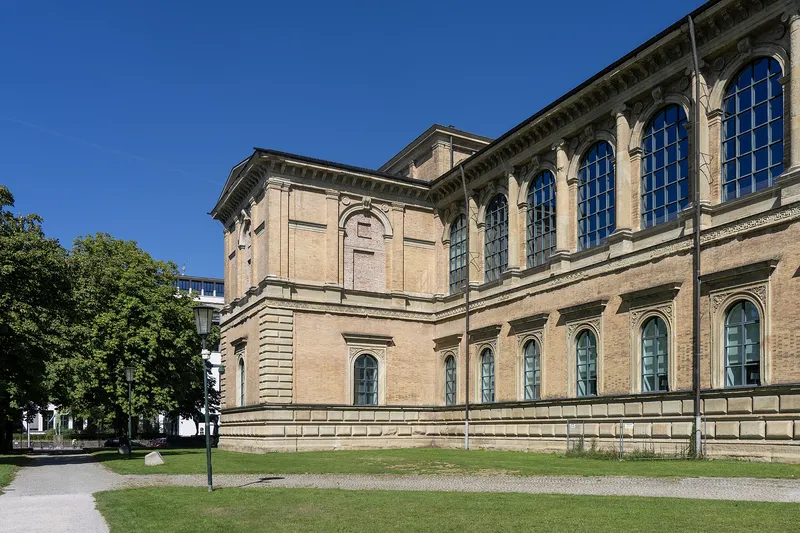
Alte Pinakothek, Munich
How to visit Munich's Old Masters gallery in the Kunstareal — the Dürers and Rubenses worth crossing town for, the Sunday-ticket angle, and how to build a wider museum-quarter day around it.
Read guide
Asamkirche, Munich
How to visit Munich's astonishing late-Baroque Asamkirche on Sendlinger Straße — the church two brothers built next to their own house — without overplanning it.
Read guide
Best Munich Tours
When a guided tour earns its place in a Munich trip — and which kind to pick. Old Town walks, food and beer crawls, football and BMW, the Third Reich history walk, and the big castle and Dachau day trips, weighed by time, cost and effort.
Read guide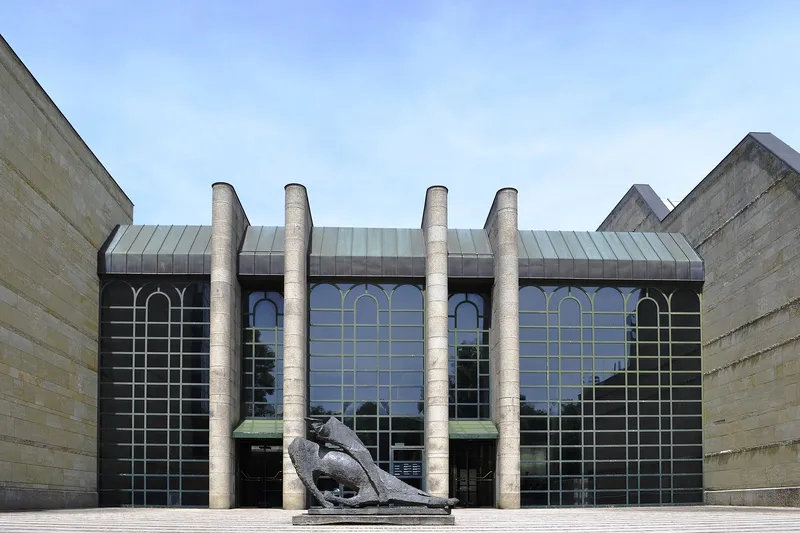
Best Museums in Munich
Choose the right Munich museum for you — by interest, by how much time you have, by which day of the week, and by how useful it is on a rainy day.
Read guide
Best Photography Spots in Munich
Rooftops, squares, churches, parks and palaces — the most photogenic places in Munich, with the light and timing notes to shoot each one well.
Read guide