
The English Garden, Munich
How to walk Munich's vast central park — the Eisbach surf wave, the Monopteros viewpoint, the Chinese Tower beer garden, the lawns, the streams and the long route north to the Kleinhesseloher See.

Photo: Georgy Trofimov / Unsplash

- ✓At around 375 hectares the Englischer Garten is one of the largest inner-city parks in the world — bigger than New York's Central Park or London's Hyde Park.
- ✓It was laid out from 1789 — among the first great public parks in Europe opened to ordinary citizens, not just the court.
- ✓The Eisbach standing wave at the southern tip draws surfers year-round, from morning into the late evening.
- ✓Two beer gardens anchor the park: the huge Chinese Tower garden mid-park, and the lakeside Seehaus by the Kleinhesseloher See.
- ✓The Monopteros, a Greek-style hilltop temple, gives the classic sunset view back over the meadows to the city's spires.
One of the world's great city parks
The English Garden is Munich's green lung and its open-air living room at once — a band of meadow, woodland and water running north from the edge of the old town along the Isar for several kilometres. At roughly 375 hectares it is larger than Central Park, and on a warm day what strikes you first is how thoroughly the city uses it: cyclists, joggers, picnicking families, students stretched on the grass, surfers in wetsuits and, here and there, sunbathers entirely without them, in a long-tolerated local tradition.
Its history matters to the romance of the place. It was begun in 1789 on the orders of Elector Carl Theodor, designed in the naturalistic 'English' landscape style — sweeping informal lawns and serpentine streams rather than clipped French geometry — and, radically for its time, opened to the general public from the start. Benjamin Thompson (Count Rumford) initiated it; Friedrich Ludwig von Sckell gave it its mature form. It was, in other words, conceived as a democratic park, a gift of green to the citizenry, and more than two centuries on that is exactly how it still feels.
You do not 'do' the English Garden so much as wander into it and let it set the pace. The highlights below cluster at the southern end, walkable in a loop from the centre; the northern reaches stay quiet and wild, good for anyone who wants to lose the crowds entirely.
The southern highlights: the wave, the temple, the tower
Three things draw most first-timers, and they sit within an easy walk of one another at the park's southern end. Right at the edge, where the Eisbach stream rushes out from under Prinzregentenstraße, a permanent standing wave forms — and on it, in a continuous queue, surfers ride for as long as they can hold the curl before tumbling into the cold flow downstream. It runs from morning into the late evening, summer and winter, and the bridge above is one of Munich's best free spectator sports.
A short walk north brings you to the Monopteros, a small round Greek-style temple set on a man-made hill. The climb is gentle and the reward is the postcard view: the meadows falling away in front of you and the towers of the Frauenkirche, the Theatinerkirche and St. Peter's pricked along the skyline beyond. It is the garden's great sunset spot and a long-standing favourite for proposals.
Further in stands the Chinesischer Turm, a wooden pagoda rebuilt after the war, around which sprawls one of Munich's largest and most famous beer gardens. Bring your own picnic to the unserved benches or buy a Maß and a half-chicken, and listen for the brass band that still plays from the tower's balcony on many afternoons. It is the social heart of the park.
Going further: the lake, the streams and the quiet north
Keep walking north and the park widens and empties. The Kleinhesseloher See, a generous landscaped lake with three small islands, is the natural turning point: you can hire a rowing boat in the warm months, and the Seehaus beer garden on its bank makes a calmer alternative to the Chinese Tower. Beyond it the garden runs on into the genuinely rural Hirschau and Oberstjägermeister stretches, where most tourists never venture and the city seems to disappear entirely.
Water is everywhere — the Eisbach and its braided channels thread the whole park, shallow and fast and startlingly clear, and on hot days locals float down certain stretches on the current (do so only where you see others doing it, and never near the weirs and the wave, which are genuinely dangerous). The Japanisches Teehaus near the southern entrance, a gift marking the 1972 Olympics, holds occasional tea ceremonies. And the eastern edge runs hard against the Isar, so a garden walk can spill straight onto the riverbank.


An Enlightenment idea: the park as a gift to the people
It is worth pausing on how radical this park was. When it opened in 1789 most great gardens in Europe were private — the playgrounds of courts and aristocrats, closed to the public who paid for them. The English Garden was conceived the other way round. It was the brainchild of Benjamin Thompson, an American-born scientist and reformer ennobled by the Bavarian court as Count Rumford, who proposed it partly as a 'military garden' where soldiers and citizens alike could learn, grow food and take healthy air. Within a few years it had become, by deliberate design, a public park open to all classes — among the first of its kind anywhere.
Friedrich Ludwig von Sckell, who would later remodel Nymphenburg's grounds, gave the garden its mature landscape form: the sweeping lawns, the artful clumps of trees, the views composed to look accidental. The Enlightenment ideals baked into it — health, equality, nature as a civic good — are exactly the qualities that still make it feel so generous and unpretentious today. Nobody is a guest here; everyone is at home.
Those ideals also explain the garden's easy, unpoliced atmosphere: the tolerated nude sunbathing, the bring-your-own beer-garden culture, the free run of the lawns. This was always meant to be a place where the ordinary citizen could simply be, and more than two centuries on it has never stopped being one.

The garden through the seasons
The English Garden is a year-round park, but it reads completely differently across the calendar, and matching your visit to the season is half the art of it. Late spring and summer are the obvious peak: the lawns fill with sunbathers and picnics, the beer gardens and boat hire run at full tilt, the brass band plays at the Chinese Tower, and long evenings make the Monopteros sunset the social event it was built to be. This is the park at its busiest and its most joyous, and the southern meadows can be genuinely crowded on a hot weekend.
Autumn is, for many locals, the loveliest time of all — the floodplain woods turn gold and copper, the crowds thin, and a crisp afternoon walk up to the Kleinhesseloher See has the place almost to itself. Winter strips the park back to its bones: bare trees, low light, the Eisbach steaming in the cold while wetsuited surfers ride on regardless, and the chance of snow turning the meadows into an impromptu sledging ground. The served beer gardens largely close for the season, so bring a flask and verify any winter opening before relying on it. Whatever the month, the rule is the same — the garden rewards an unhurried wander far more than a rushed tick-list, so let the weather set the pace.

Practical notes: access, seasons and safety
The garden is open and free, all day, every day — there are no gates and no admission. The southern entrances are an easy walk from Odeonsplatz, the Haus der Kunst and the Lehel and Universität U-Bahn stations; bus and tram lines skirt the western side. Pack water for the long northern walks, where kiosks thin out, and remember that beer gardens are cash-friendly and seasonal — the served sections and boat hire run mainly spring through autumn (verify current dates and hours locally).
A word of care: the Eisbach is a fast, cold, powerful stream. It is a joy to watch and, in marked calm stretches, to wade — but its weirs and the surf wave have caused fatalities, and you should keep children and non-swimmers well clear of moving water. Treat the surfers as the experts they are and admire from the bank. With that one caution, the English Garden is about as gentle and rewarding a day as Munich offers: green, free, and endlessly walkable in any season.

At a glance
What it is: Munich's vast central landscape park, free and open day and night.
Don't miss: the Eisbach surf wave, the Monopteros viewpoint, the Chinese Tower beer garden, the Kleinhesseloher See.
Size & age: around 375 ha; laid out from 1789 as one of Europe's first public parks.
Getting there: walk in from Odeonsplatz, the Haus der Kunst, or the Lehel/Universität U-Bahn.
Time needed: a half-day for the southern loop; a full day to reach the wild north.
Safety: the Eisbach is fast and cold — watch the wave, don't swim near weirs.
- Bigger than New York's Central Park or London's Hyde Park.
- Two beer gardens: the Chinese Tower (large, central) and the lakeside Seehaus.
- Boat hire on the Kleinhesseloher See in the warm months; brass bands at the Chinese Tower.

The Eisbach Wave, Munich
Where to watch Munich's river surfers ride a standing wave in the middle of the city — how the Eisbachwelle works, the best vantage point, safety, and why you must check its current status before you go.
Read guide
The Monopteros, Munich
How to find the Monopteros — the little Greek temple on a hill in the English Garden — and build it into a sunset walk with the city's classic skyline view.
Read guide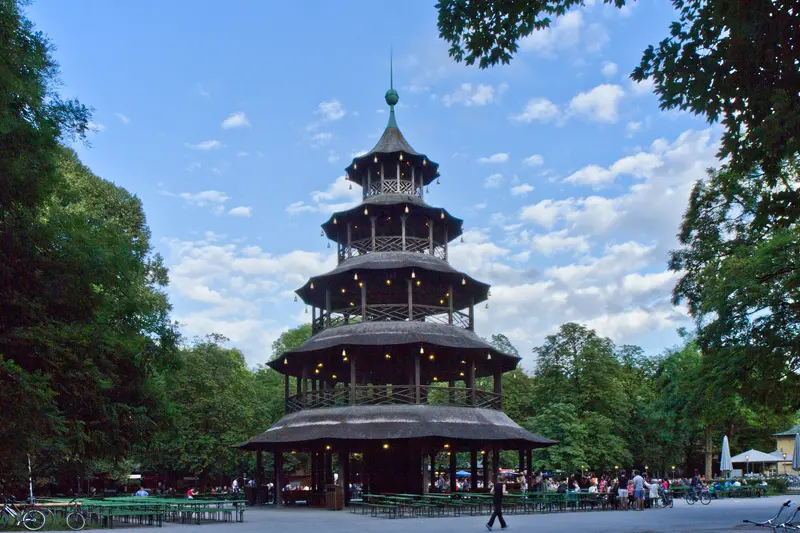
Chinese Tower Beer Garden, Munich
Plan the English Garden's most famous beer garden — the wooden pagoda, the brass band, the self-service benches and the bring-your-own rule, plus the prettiest walking route in.
Read guideMore in Things to Do
6
Allianz Arena, Munich
How to visit Munich's glowing football stadium — the self-guided Erlebnistour, the FC Bayern Museum, match-day logistics, and the easy U6 ride out to Fröttmaning.
Read guide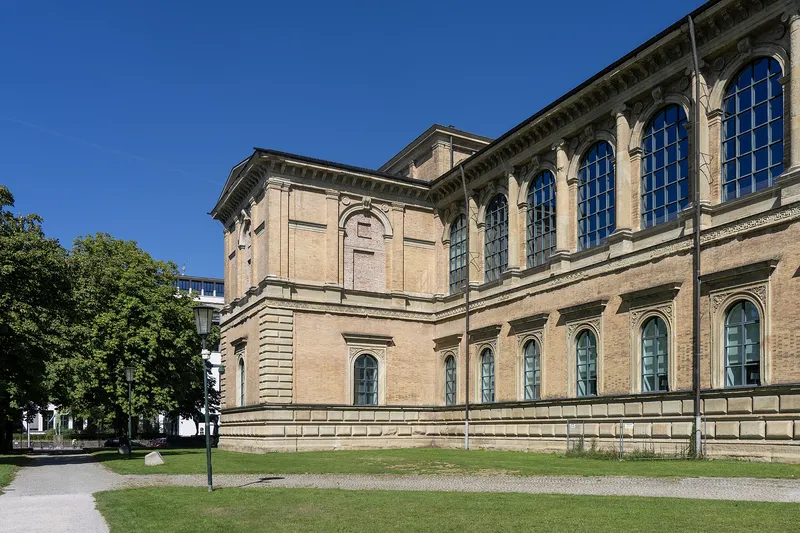
Alte Pinakothek, Munich
How to visit Munich's Old Masters gallery in the Kunstareal — the Dürers and Rubenses worth crossing town for, the Sunday-ticket angle, and how to build a wider museum-quarter day around it.
Read guide
Asamkirche, Munich
How to visit Munich's astonishing late-Baroque Asamkirche on Sendlinger Straße — the church two brothers built next to their own house — without overplanning it.
Read guide
Best Munich Tours
When a guided tour earns its place in a Munich trip — and which kind to pick. Old Town walks, food and beer crawls, football and BMW, the Third Reich history walk, and the big castle and Dachau day trips, weighed by time, cost and effort.
Read guide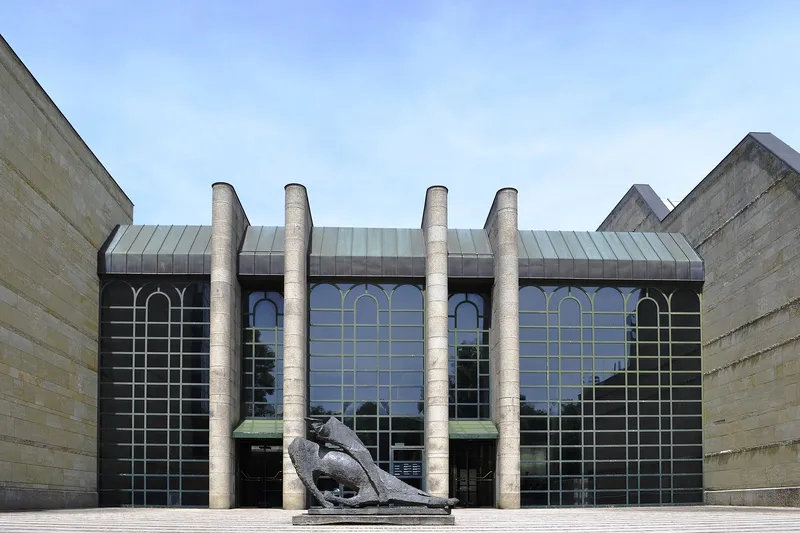
Best Museums in Munich
Choose the right Munich museum for you — by interest, by how much time you have, by which day of the week, and by how useful it is on a rainy day.
Read guide
Best Photography Spots in Munich
Rooftops, squares, churches, parks and palaces — the most photogenic places in Munich, with the light and timing notes to shoot each one well.
Read guide