
Free Things to Do in Munich
Munich on a budget — the parks, churches, markets, viewpoints and river walks that cost nothing, plus the smart, low-cost strategies for the museums and beer gardens.

Photo: Luis Fernando Felipe Alves / Unsplash

- ✓Munich's best single free sight is the Eisbach standing wave, where surfers ride a permanent river wave at the edge of the English Garden, year-round.
- ✓The English Garden is one of the largest urban parks in the world — and entirely free to roam, lawns, beer-garden views and all.
- ✓Every great church in the centre is free to enter, including the Frauenkirche and the astonishing little Asamkirche.
- ✓Smart budget moves — a reduced-price Sunday at the state museums, bring-your-own-food at a beer garden — make even the paid pleasures cheap (verify the current rates).
Munich is more affordable than it looks
Munich has a reputation as an expensive city, and the hotels can be — but the experiences that make the place itself special are very often free. Its parks, churches, markets, riverbanks and squares cost nothing, and the city is small and flat enough that you can string a whole day of them together on foot. This guide gathers the genuinely free sights first, then the low-cost strategies that take the sting out of the few things worth paying for.
Treat this as a budget toolkit rather than a fixed list. None of the parks, churches or viewpoints below charges admission, and most are open through the day; the paid pleasures — a tower climb, a museum, a Maß of beer — come with tricks that make them cheap. As ever, anything time- or money-sensitive (the Sunday museum rate, a tower fee, opening hours) shifts with the season, so confirm the current details before you build a plan around them.
It helps that Munich is so walkable. The whole free circuit below — churches, market, squares, the English Garden and the river — fits inside a small, flat centre, so a budget day costs you almost nothing in transit either. Buy one day ticket for the trams and U-Bahn if you want the convenience, or simply walk: the next free pleasure is usually only a few minutes away on foot, which is exactly what makes Munich such a generous city on a tight budget.

Watch the Eisbach surfers — Munich's best free spectacle
If you do one free thing in Munich, make it the Eisbachwelle. At the southern tip of the English Garden, where the Eisbach channel surges out from under a road bridge, the water forms a permanent standing wave — and surfers in wetsuits queue to ride it, one after another, all year round, even through snow. It is genuinely thrilling to watch, completely free, and quintessentially Munich: a river-surf scene in the middle of a landlocked Alpine city. Lean on the bridge railing for as long as you like; it never gets old.
It's also perfectly placed for a free day, sitting right where the Old Town meets the English Garden. Watch the surfers for a while, then walk straight on into the park — no ticket, no gate — and you've linked the city's best free spectacle to its best free landscape in a single step.

Roam the English Garden
The English Garden is one of the largest urban parks in the world — bigger than New York's Central Park — and every metre of it is free. You can spend a whole afternoon here for nothing: stretch out on the vast lawns, follow the streams, climb the little hill to the Monopteros, a Greek-style temple with the best free viewpoint over the city's spires, and walk on to the Chinese Tower with its huge beer garden (the views and the strolling are free; the beer, of course, is not). On a warm day this is the single most relaxed, generous, and cheapest pleasure in Munich.

Walk the Isar — beaches, gravel banks and tree-lined paths
Munich's other great free landscape is its river. The Isar has been renaturalised through the city into a wild-feeling ribbon of gravel beaches, shingle banks, weirs and tree-lined paths — and on a warm day locals decamp here to swim, picnic, barbecue and sunbathe as though they were at the seaside. Walk or cycle south from the centre toward the Flaucher and you'll pass impromptu river beaches the whole way; it is the loveliest free walk in the city and a window onto how Münchners actually spend their summers. Bring a towel and join in.
Step into the churches — all free, all astonishing
Every great church in the Old Town is free to enter, and several are unmissable. The Frauenkirche, the twin onion-domed cathedral that defines the skyline, guards the legend of the Devil's Footstep just inside its door. The tiny Asamkirche on Sendlinger Straße — built by the Asam brothers as a private chapel — packs more gold, stucco and theatrical drama into one small room than churches ten times its size; it is one of the most extraordinary free experiences in Europe. And St. Peter's, the oldest church in the centre, is free to enter at ground level (only the tower climb costs). A self-guided loop of the churches is a whole morning of beauty for nothing.

Wander the markets and the central squares
Some of the best free hours in Munich are spent simply walking. The Viktualienmarkt costs nothing to wander — the stalls of cheese, charcuterie, honey, herbs and flowers around the maypole are a feast for the eyes even if you only buy a Brezn. Marienplatz is free to stand on for the 11:00 Glockenspiel, when the figures on the New Town Hall tower turn through their wedding dance. And the grand squares of the royal city — Odeonsplatz with its Italianate church and loggia, the formal Hofgarten behind the Residenz, neoclassical Königsplatz — are all open, free, and made for a slow, aimless stroll.

Free palace gardens — Nymphenburg and the Hofgarten
You can taste Munich's royal grandeur without paying a cent. The great park behind Schloss Nymphenburg is free to enter even though the palace itself charges — and it is the bigger pleasure anyway: a baroque sweep of formal parterres, woodland paths, a long central canal (sometimes skateable in a hard winter) and meadows where locals walk their dogs and read on the grass. The pleasure pavilions hidden in the trees need a ticket, but the parkland, the swans on the canal and the photogenic approach to the palace frontage cost nothing. Ride the tram out west and give yourself an unhurried, grand morning for free.
Closer in, the Hofgarten — the formal Renaissance court garden behind the Residenz, off Odeonsplatz — is the most elegant free pause in the centre: gravel paths running to a domed pavilion, framed by arcades, with people playing boules on a fine afternoon. Between the two you get the full royal-garden experience without a single admission fee.


Free viewpoints, window-shopping and people-watching
Some of Munich's best free hours are spent just looking. For a view that costs nothing, climb the little hill to the Monopteros in the English Garden, where the whole skyline of spires and domes lays out below you. The pedestrianised Kaufingerstraße and Neuhauser Straße, running west from Marienplatz, are free to stroll and to window-shop, busking buskers and all, and they funnel you past the Frauenkirche and out toward Karlsplatz. And the city's squares — Marienplatz, Odeonsplatz, Königsplatz — are theatres of free people-watching, especially in the late afternoon when the cafés spill onto the pavement.
Time your trip well and the free calendar gets even richer. In December the Christkindlmarkt fills Marienplatz with lights, a thirty-metre tree and the scent of Glühwein — wandering it costs nothing, even if the mulled wine doesn't. Through the summer there are open-air concerts, festivals and the Tollwood market; and once every seven years the coopers dance the Schäfflertanz through the streets entirely for free. Check what's on for your dates, because Munich's public festivals are some of its most generous free experiences.

Low-cost strategies for the things worth paying for
A few smart moves make even Munich's paid pleasures cheap. Many of the city's state-run museums — including the Bavarian state painting collections behind the Pinakotheken and the Brandhorst — have a long tradition of reduced Sunday admission, so a Sunday is the cheapest day to see world-class art (verify the current rate before you rely on it). The great Nymphenburg park is free even though the palace charges. And the famous tower climbs — Alter Peter, the New Town Hall — cost only a small fee for the best views in the city.
The beer gardens hide the best budget trick of all. Bavarian law lets you bring your own food to the unserved benches of a traditional beer garden and buy only your drink — so locals arrive with a cloth, a Brezn, a radi and some cheese, and pay only for the Maß. A spread under the century-old chestnut trees at a place like the Augustiner-Keller is one of the cheapest great afternoons in the city. Tap water, by contrast, isn't a German custom in restaurants, so a budget day leans on the free fountains and your own bottle instead.
- Reduced-price Sunday at the state museums (the Pinakotheken, Brandhorst) — verify.
- Nymphenburg park is free; only the palace charges.
- Tower climbs (Alter Peter, New Town Hall) cost only a small fee for big views.
- Bring your own food to a traditional beer garden and buy only the beer.
- Carry a water bottle — free tap water isn't a restaurant custom here.

At a glance — a free day in Munich
A budget day, roughly strung together — all of it free except your lunch and an optional small tower fee. Confirm any museum rates, tower fees and opening hours on the official sites, as these change.
- Morning: the church loop — Frauenkirche, Asamkirche, St. Peter's (free).
- Late morning: Marienplatz for the Glockenspiel and the Viktualienmarkt.
- Lunch: a Brezn or Leberkässemmel from the market stalls.
- Afternoon: the English Garden, the Monopteros viewpoint and the Eisbach wave.
- Warm day swap: walk or swim along the renaturalised Isar to the Flaucher.
- Money savers: a Sunday for the state museums; bring-your-own-food at a beer garden — verify rates.

The English Garden, Munich
How to walk Munich's vast central park — the Eisbach surf wave, the Monopteros viewpoint, the Chinese Tower beer garden, the lawns, the streams and the long route north to the Kleinhesseloher See.
Read guide
The Isar River, Munich
Munich's wild green river — where to walk and cycle, the gravel beaches and the Flaucher, the swim-season caveats, and the loveliest sunset stops along the water.
Read guide
Munich on a Budget
A low-cost three-day Munich plan built on the city's many free sights, the value of a day ticket, cheap-but-real Bavarian food and the Sunday-museum and beer-garden tactics that let you see the best of Munich without the prices — with the splurges flagged so you choose where to spend.
Read guideMore in Things to Do
6
Allianz Arena, Munich
How to visit Munich's glowing football stadium — the self-guided Erlebnistour, the FC Bayern Museum, match-day logistics, and the easy U6 ride out to Fröttmaning.
Read guide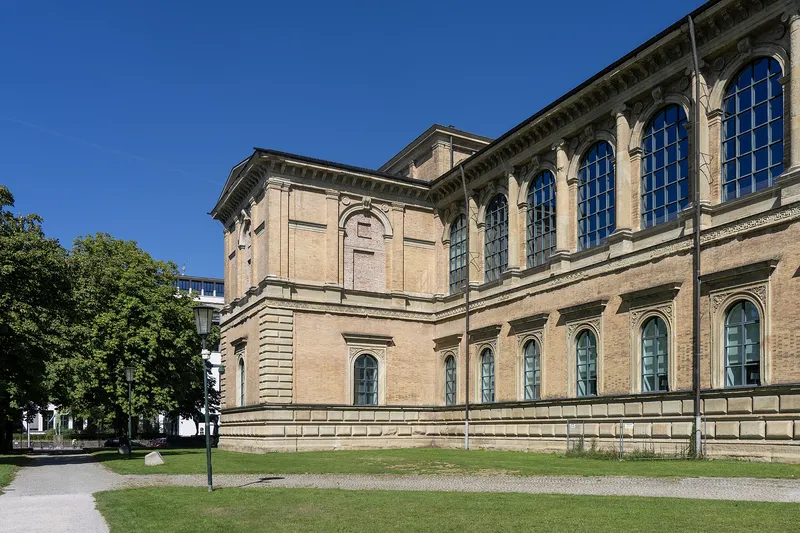
Alte Pinakothek, Munich
How to visit Munich's Old Masters gallery in the Kunstareal — the Dürers and Rubenses worth crossing town for, the Sunday-ticket angle, and how to build a wider museum-quarter day around it.
Read guide
Asamkirche, Munich
How to visit Munich's astonishing late-Baroque Asamkirche on Sendlinger Straße — the church two brothers built next to their own house — without overplanning it.
Read guide
Best Munich Tours
When a guided tour earns its place in a Munich trip — and which kind to pick. Old Town walks, food and beer crawls, football and BMW, the Third Reich history walk, and the big castle and Dachau day trips, weighed by time, cost and effort.
Read guide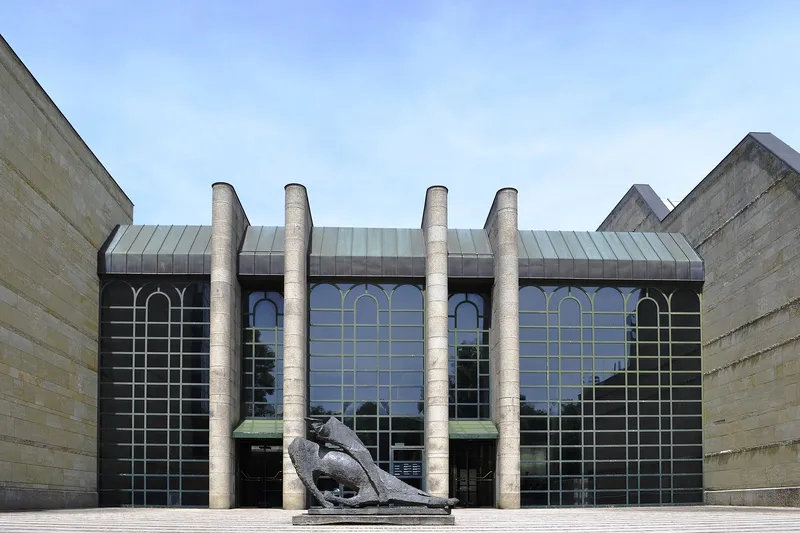
Best Museums in Munich
Choose the right Munich museum for you — by interest, by how much time you have, by which day of the week, and by how useful it is on a rainy day.
Read guide
Best Photography Spots in Munich
Rooftops, squares, churches, parks and palaces — the most photogenic places in Munich, with the light and timing notes to shoot each one well.
Read guide